Another Ohio Village Rebels Against Data Centers, Will 'Representatives' listen?
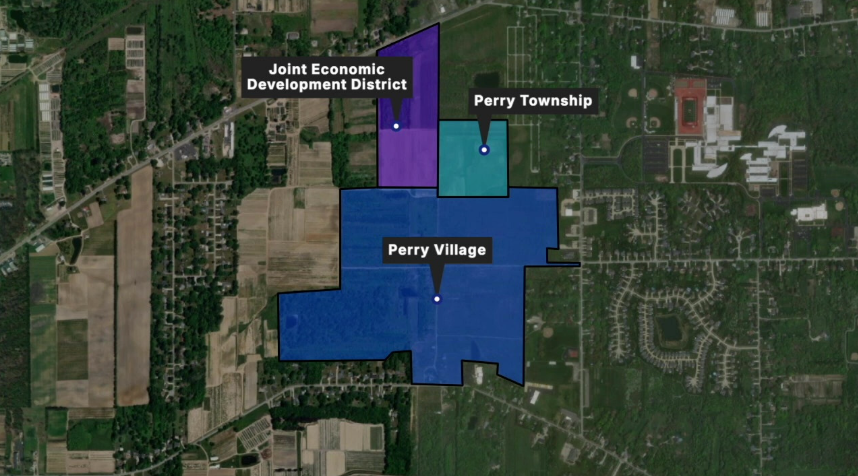
PERRY, Ohio — Thursday night’s Village Hall meeting in this Lake County village of about 1,600 turned into a standing-room-only reckoning over a proposed data center that’s exposing just how lopsided these deals can get.
The project wasn’t even on the April 9 agenda, yet public comment stretched nearly an hour as residents zeroed in on the development agreement signed years earlier. In addition, the contract’s dissolution clause is a real head-scratcher: if the village tries to walk away, it could face massive penalties and legal fees. It’s the sort of arrangement that made residents wonder whose interests were top of mind when the ink dried.
Mayor James Gessic acknowledged signing a nondisclosure agreement early in the process roughly two years ago, which kept details under wraps for months. When concerns about migratory birds along Lake Erie routes came up previously, his response struck more than a few as flippant, drawing audible disapproval from the crowd. Allegations of personal gain were firmly denied, but the NDA itself left a lingering whiff of backroom dealings in a town that prides itself on straightforward farm-and-family values. Debate across the state and nationally persists on the legality and actual binding nature of elected officials signing NDAs in any capacity as potentially legally feckless under ORC 149.43, which supersedes any individual contract, making all records and documents signed and circulated through public offices ‘records of the public’. Additionally, many legal scholars view the entire process, potentially violating sunshine law and the Open Meetings Acts.
Much of the public backlash at the meeting came from the revelations that the contract was set up to penalize the village considerably should they attempt to back out of the agreement, with some estimates putting total fees and costs near $1 million with the developer only liable for around a $70,000 maximum should the inverse occur. Members of the public questions why any representative would sign such an agreement they would be unable or unwilling to pay if they needed to with some accusing the mayor of potentially lining his own pockets under the table in some undisclosed fashion. Mayor Gessic flatly denied the allegations as baseless, though attendees were unconvinced.
All this local paperwork drama underscored the heavier toll data centers tend to exact on health and the environment—stuff that doesn’t show up neatly in any PILOT agreement.
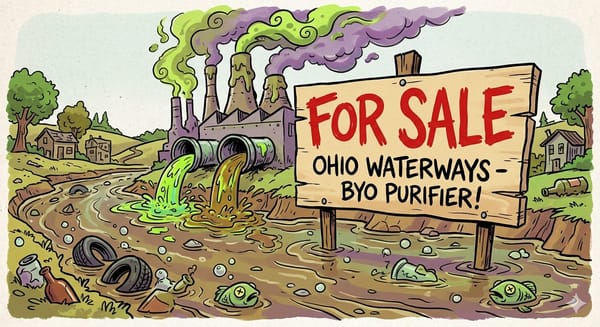
These facilities guzzle water for cooling, often millions of gallons daily, much of it evaporating and leaving behind concentrated salts, minerals, biocides, and other contaminants in the wastewater discharge.
Many rely on PFAS “forever chemicals” in cooling loops and fire suppression systems. These compounds don’t break down, bioaccumulate in water, soil, and bodies, and have been linked to cancer, reproductive issues, immune system damage, kidney and liver problems, and more. Wastewater from data centers can carry them straight into local treatment plants or waterways, where they persist and spread. Given the new guidance from Federal EPA raising human exposure thresholds to accommodate economic development, and the OhioEPA mulling over permittance of lake dumping of said waste, each data center poses a clear and present danger to residents and their children if local municipalities are unable or unwilling to hold stricter guidelines than state/federal allowances.
Backup diesel generators and the fossil-fuel-heavy power draw that keeps servers humming add another layer. They pump out nitrogen dioxide and fine particulate matter, pollutants tied to respiratory illnesses, asthma flare-ups, hospital visits, and premature deaths—even in communities as close as 0.6 miles away. In a place like Perry, nestled near farms, nurseries, and Lake Erie, that kind of chronic exposure raises pointed questions about long-term health for kids at the local school and anyone breathing the air year-round.
The constant HVAC hum—likened by some to a jet that never lands—brings its own low-frequency noise and vibration, while 24-hour lighting could throw off migratory birds along established flyways. None of it exactly screams “quiet village character preserved.”
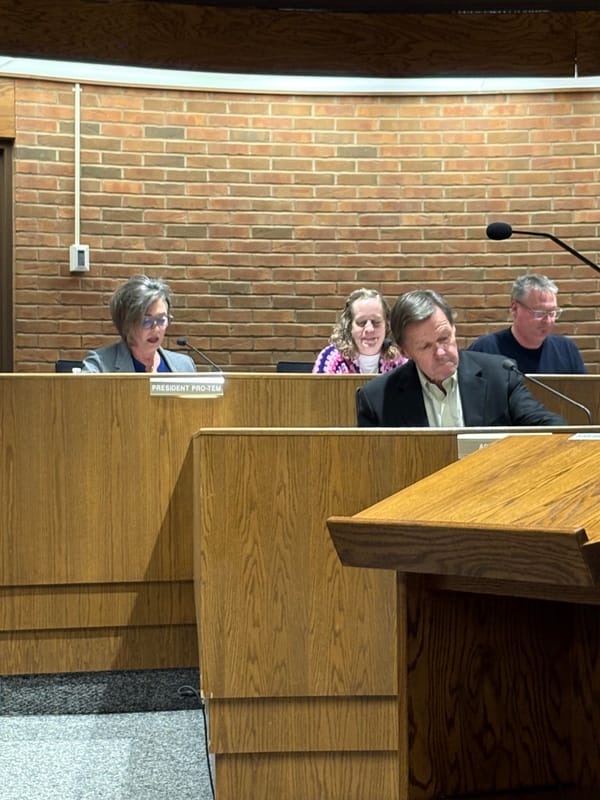
When asked directly if the village council was willing to stop the process or back out of the agreement with the developer, Mayor Gessic refused to answer personally, stating it was ‘up to the council’, while members of the council remained silent.
Council later passed Resolution 21-2026 unanimously, backing Ohio House Bill 695 to ban local officials from NDAs on public matters, void existing ones, and impose fines. They also introduced a matching local ordinance. It’s a small procedural nod toward the transparency folks were demanding, even if it can’t unwind the contract already in place.
Readers can find more of our local and statewide data center covered, which includes reference links to ongoing studies on the health and environmental impacts by search Data Center in the search bar of the main website.