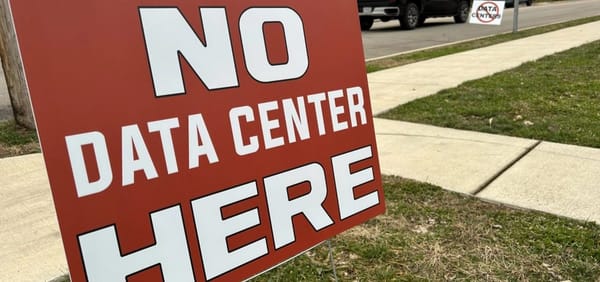
Chester Trustees Vote To Rezone Fire Station Property for Industrial Use
BY JEFF SKINNER
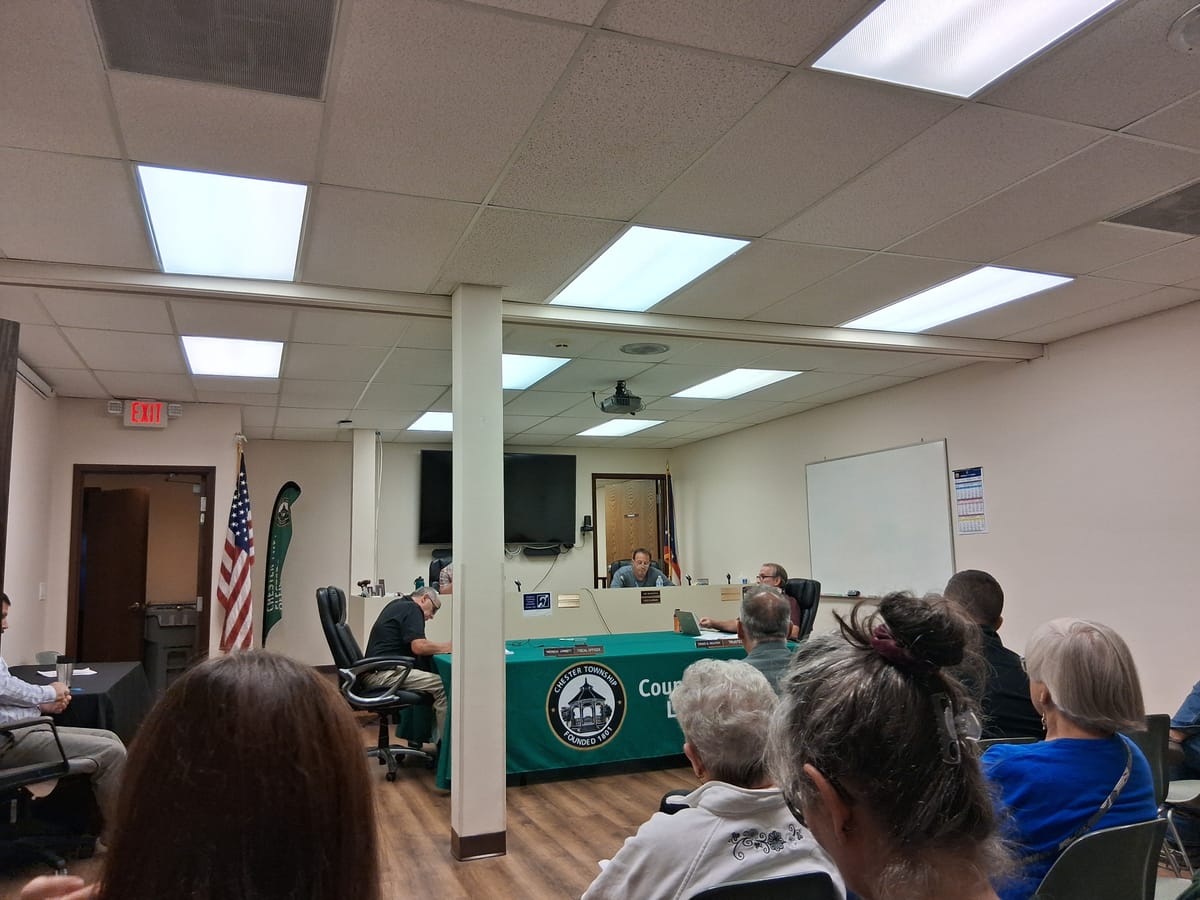
CHESTER TWP - Chester township trustees hosted the second portion of the public hearing regarding the plan to rezone and eventually sell the property that currently houses the old Fire Station number 2. The village hall was once again filled with residents anxiously anticipating the trustee vote that would decide the future fate of the multi acre lot that currently houses Fire House 2, a decommissioned fire house that is currently used by the township for storage of fire equipment and resources.
The initial rezoning plan included several privately owned, residential properties, which would have additionally been rezoned as industrial, however one property owner, Frank Varga, spoke in opposition to the rezoning of his property which impacted the vote. During the hearing, Varga read a prepared statement in opposition of rezoning the fire house property specifically, outlining various reasons he believed the construction of an industrial business would negatively impact not only his own property value, but strike to the heart of the rural feel of Chester, which many have become accustomed to.
“This decision could bring long-term problems for short term gains,” Varga said. “It is difficult to understand why the township would invest in a new building for storage when a perfectly suitable one already exists. Selling the property as industrial opens the door to a much larger development that would not serve the town.”
Varga went on to describe the potential for issues including a business moving in and bringing 24 hour lighting, permanently disrupting the rural feel of the area for which many relocate to Chester to experience.
“I’ve never heard people say they want to move to Chesterland to start a business, What people consistently say is I moved to Chesterland to live,” Varga said. “Pushing more industrial property zoning would lead to Chesterland becoming a city, something the residents never asked for. Not every property needs to generate direct revenue. This decision will impact the safety, property value and integrity of the community.”
Among the trustees, Craig Richter represented a dissenting opinion in the debate on rezoning the property. During discussion, Richter outlined that he felt the current property is under utilized as is and that the potential move to construct a new facility to house the fire equipment, which would be mandatory to maintain the equipment, would be lengthy and expensive, potentially making the move moot.
“There are two parts to this rezonement, the first and biggest is are we utilizing this fire station or this facility to its full capacity,” Richter said. “The problem is if we sell this, we cannot store our fire assets outside.”
According to Richter, any movement by the township to construct a replacement facility would likely incur at least an initial investment of $250,000 just to bring it to design with several million in costs leading to completion.
Trustee Ken Radtke took an extended period to address many concerns surrounding the move. According to Radtke, the station has not been used under its original design for over 20 years, a departure brought about by the outdated way in which Chester previously handled emergencies. He additionally addressed concerns over the potential for environmental impact by stressing that the level of impact may not be any greater than what already may be present. While admitting that any construction has impact, the real question, according to Radtke, is the gradient of impact.
“Fire station number 2 was originally built so volunteers could respond and pick up equipment at the north end of town and respond to emergencies faster,” Radtke said. “At the last meeting there was a question that was carefully crafted to get a specific answer which was 'will there be any increase in dust, noise or air pollution'. Any activity, including starting your own vehicle generates noise, dust and air pollution. There are also about eight thousand cars and trucks a day that traverse Chillicothe road.”
According to Radtke, the township holds the ability to significantly reduce the impact of an industrial facility that may go into the property through performance standards.
“In addition to limiting the types of business in our industrial district, there are restrictive performance standards that must be met including that, industrial activity must be in wholly enclosed buildings, no industrial waste materials are permitted to be discharged in the private sewer systems that can effect quality and quantity of our water supply, garbage rubbish and or solid waste shall be stored inside structures regarding air pollution, no activity shall emit any smoke, ash, dust, vapors, mist, gas, in such quantities that would cause damage to health of animals or vegetation,” Radtke said.
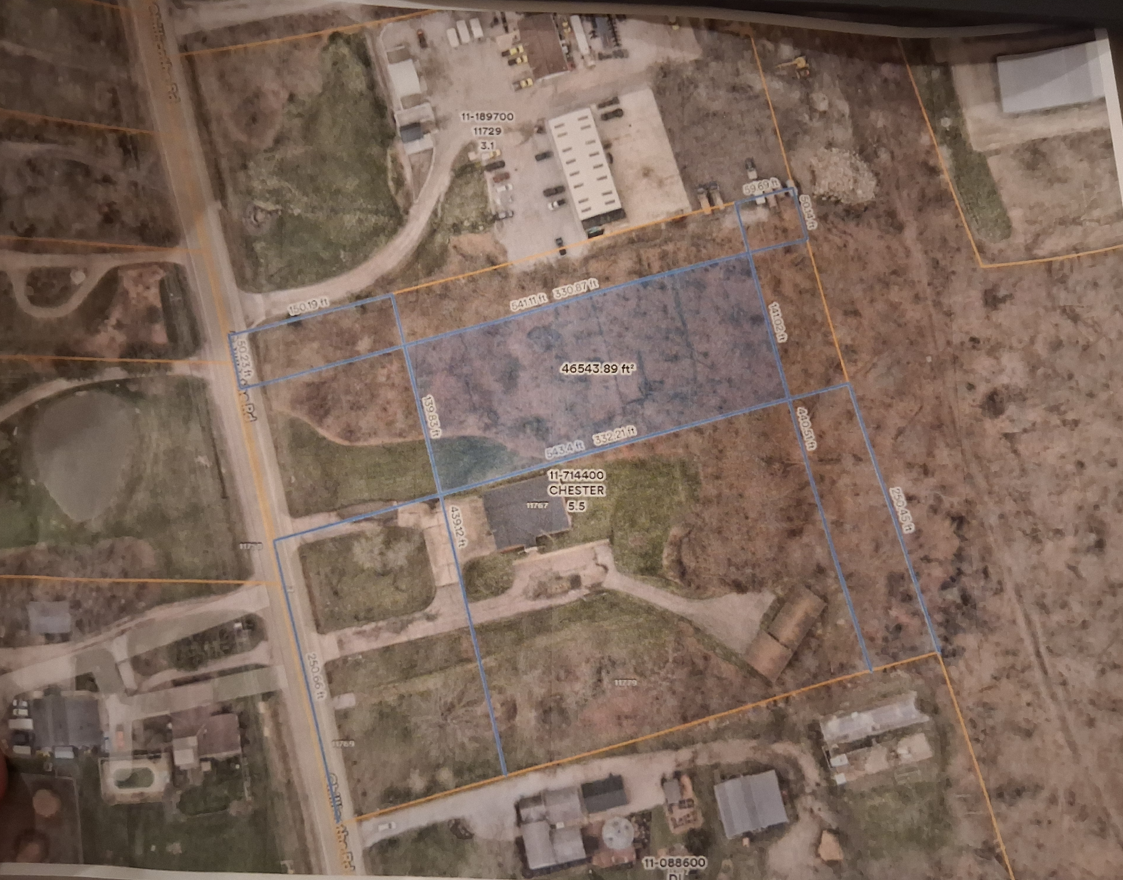
Radtke additionally added that with the neighboring property remaining as residential, there would be a 250 foot setback for development and a 150 foot setback from the road, equating to only around one acre of potential development for the area.
“Governing requires me to take into consideration the past, present and future of the township, not just the immediate moment which is often emotionally charged,” Radtke said. “As an elected official I need to be conscious of my personal biases such that the decisions I make are in the long term interest of the people.”
However, previous zoning decisions have already had some long term impacts in the immediate area. Pastor Greg Glodkowski of Chester Christian, whose property neighbors the fire house, has long envisioned an expanded reach to his ministry which would include a daycare and preschool as well as soccer fields for youth. The multi-acre property that is currently owned by the church is partially zoned for industrial, which has prevented the ministry from expanding its reach. 13 years ago Glodkowski petitioned for rezoning and was denied. While he has been given some hope that rezoning is possible, the current vote does present significant hurdles based on what might be built next door to his church.
“It really is dependent on what business goes in that spot, if we are going to have kids playing there, it really depends what business goes in that space,” Glodkowski said. “We originally had plans for a daycare but in 2013 we were told we could not because where it is, it is industrial. Where our church property is considered industrial. We have 26 acres that is industrial. They would not allow us to do that, we could only have a preschool for our own people but we couldn't open it up to the community because of zoning issues. Since then, we have not pursued the daycare or preschool option but we are looking into putting in sports fields and certain things that are behind the fire station.”
According to Pastor Glodkowski, the ministry has been informed that, with regards to the previous denial for their rezoning ‘things have changed,’ though what those things that changed are, is currently unknown.
“That's what we need to figure out,” Glodkowski said. “My only concern is for the houses that are around us and the potential for the park depending on what goes in that vacant area right now, I understand the township and their desires moving forward.”
The decision to rezone and sell the property was passed on a 2-1 vote with Radtke and Mazzurco voting in favor and Richter voting against. With much still up in the air regarding the potential future and impact to the surrounding area, residents closest to the issue are anxiously awaiting the next stage of this transition, some with strong disappointment over the decision, but maintaining conviction to oppose the measure in whatever way they can.
“We don’t know what's going to happen to the property, could be a business that goes in there, like a roofing company might go in there, But what's going to happen, we don't really know,” Varga said. “I was hoping they would listen to us a bit more but they really didn't take our opinion, I just don't understand why they want to build a new building to house the fire department when they already had one sitting there.”