Clark County Commissioners Vote On Solar/Wind Moratorium
BY NICK ROGERS
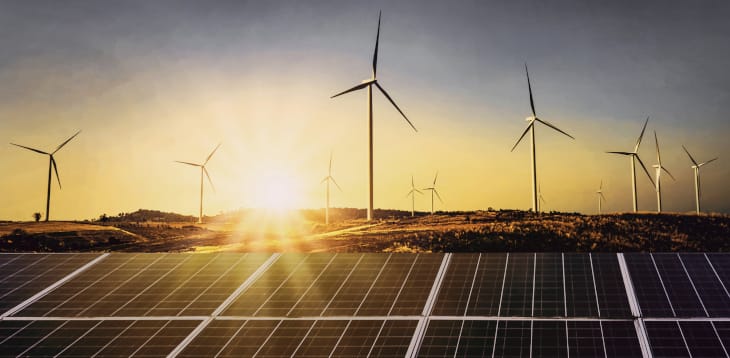
CLARK COUNTY - Commissioners voted two-to-one for a two-year moratorium on large scale wind and solar building projects in unincorporated areas of Clark County. This setback for “green” energy comes on the heels of a major win for solar as the Ohio Power Siting Board (OPSB) greenlit the Frasier Solar Project in Knox County not long ago. The contradiction in these two cases highlights the ongoing public debate surrounding the use of prime farmland for “renewable” energy projects in Ohio. The phrases “public interest” and “property rights” lie at the heart of the debate and, once again, finding out whether or not rural Ohioans want wind and/or solar farms depends entirely on who you ask.
Clark County Commission President Sasha Rittenhouse and Commissioner Charles Patterson voted for the two-year ban. The solo vote against was registered by Commissioner Melanie Flax Wilt.
The vote flipped the county’s current resolution – established in 2022, which rejected a proposal to ban large solar and wind projects – on its head. Wilt thought there was nothing wrong with the current resolution.
“This process allows us to hear those voices from all sides of this issue,” Wilt said. “The policy that we put in place two years ago allows us to restrict, ban, or approve. It still requires every single one of these to go through the Ohio Power Siting Board and every single one of those steps, which is far, far more than we could ever do to regulate.”
The trustees from all 10 townships in Clark County sent resolutions requesting the ban and, because of Ohio Senate Bill 52, local authority still holds water when it comes to approvals and denials of these facilities.
“I’m not proposing to ban solar forever,” Patterson said. “I think we need to listen to the township trustees, which means I feel like we need to take some action…”
Rittenhouse may have been the most conflicted of the three Commissioners.
“I want everybody in the room to understand I have people that I admire and respect on both sides of this. This is the hardest decision I think I’ve had to make…not one second have I taken this lightly,” she said.
The temporary ban will restrict “all large wind farms, large solar farms or economically significant wind farm facility developments…” until December 31, 2027.
A September 3 public hearing at the Springfield Arts and Crafts building fielded around 40 members of the community voicing their opinions on the matter; a majority were for the ban, but others were against it.
Springfield Township trustee Tim Foley supported the ban.
“Every farm in this county does not need to be replaced with high density housing or large-scale wind and solar projects,” he said. “Let’s preserve what green space we have left. Green space is good space.”
Ross McGregor of Moorfield Township disagreed.
“An outright ban would have a chilling effect on the business community here in Clark County and be a detriment to further investment,” he said.
McGregor’s worry about loss of economic opportunity and future growth are shared by those who believe that a private property owner should be able to do with their land what they please (regardless of the effect on neighbors and the landscape).
German Township resident Horton Hobbs said, “As we work to grow Clark County’s economy, adding new employers, expanding housing, and modernizing infrastructure, the demand for reliable, affordable and scalable energy will only increase. Solar income helps families keep the land and keep growing food.”
Wilt said, “For me, it all comes down to what is best for farmers. And what I believe is, that it’s about having choices; to make the best choice for your own farm business.”
Tyler Legge-Bobo, a fifth-generation farmer from New Carlisle, agreed with Wilt.
“Solar gives farms steady income that helps [during] those bad crop years,” Legge-Bobo said. That’s not replacing farming. It’s what lets farmers continue. Instead of having to sell the farm when times get tough, solar income helps families keep the land and keep growing food.”
Harmony Township trustee Jay Flax believes that prime farmland is too precious to replace. “President Trump and Secretary of Agriculture Rollins has opposed wind and solar on prime farmland,” Flax pointed out.
Bill Agle of South Vienna has been told that farmland used for solar facilities can be returned to its previous state years down the line, but he remains skeptical. “They tell us [when] life after the solar panels is over, the land can be returned to farming. I strongly disagree that it will ever be the same,” he said. Evidence from existing solar facilities indicates Agle is correct.
Agle also shares another opinion voiced by many; that solar arrays destroy the rural aesthetic that brought so many residents to these serene areas.
“For five or six years, Polly (my wife) and I had people knocking on our door, sending us letters, wanting us to sign up for solar. Think of all the money we could make, they tell us. Well, that may be true,” he said, “[but] we have taken the time to drive past may solar projects and I get sick to my stomach when I look, thinking of the beautiful farmland ruined by these ugly black panels. Why should we destroy valuable farmland; one of our most natural and valuable resources?”
The debate seems to be summed up by Shawnee Township trustee Clark Spieles during a deliberation on the issue in his area.
“That’s some of our best farm ground in Shawnee Township, but one of the worst things was telling someone what they can and can’t do with their land,” he said.
A majority of the public opinion voiced on September 3 in Clark County seems to say that these large wind and solar facilities are not in the public interest (the criteria most often cited by the OPSB when denying these facilities). But there are those, like Vesper Energy community affairs manager Lindsey Workman, who believe “Public opinion is not public interest,” implying that residents don’t know what’s best for themselves.
“If I yell loud enough, does that give me a win?,” Vesper Energy’s lawyer Michael Settineri said during his company’s Ohio Supreme Court case.
Well, apparently, it can. In Clark County, those yelling loud enough do not want any part of large wind or solar projects on their prime farmland. And still, the debate rages on. Do rural Ohioans want wind or solar projects built in their townships? Depends on who you ask.