Cleveland Smart Meters “Blown Off” Homes: Not An Anomaly
BY NICK ROGERS
CLEVELAND - A transformer explosion at Cleveland’s 41st St. substation left more than 1,000 residents without power in January. The flashes and smoke from this “dramatic electrical event” were visible for miles around, while those who lived adjacent to the substation experienced a virtual fireworks display. On the surface, the incident didn’t appear to be more than a typical unfortunate substation mishap, but a particular detail noted by local fire authorities begs deeper questions into the viability and safety of Smart electrical meters on those homes and others around the country.
Cleveland resident George Dinger described the incident: “All of a sudden sparking, like Vietnam, like you was getting bombed. That’s how bad it was, because, like I said, I was looking right out the window. I could hear it. Wires started dropping down at the corner there. The transformer just started blowing left and right.”
Luckily, only one house fire was reported. At the Pilawa family home, an overhead light in the kitchen blew apart.
Douglas Pilawa said, “We were standing here, and right before all the power went off, this just absolutely exploded. And so glass everywhere. I mean, just literally blown apart. From what the firefighters told us, I think it was 11,000 volts went into each one of the houses.”
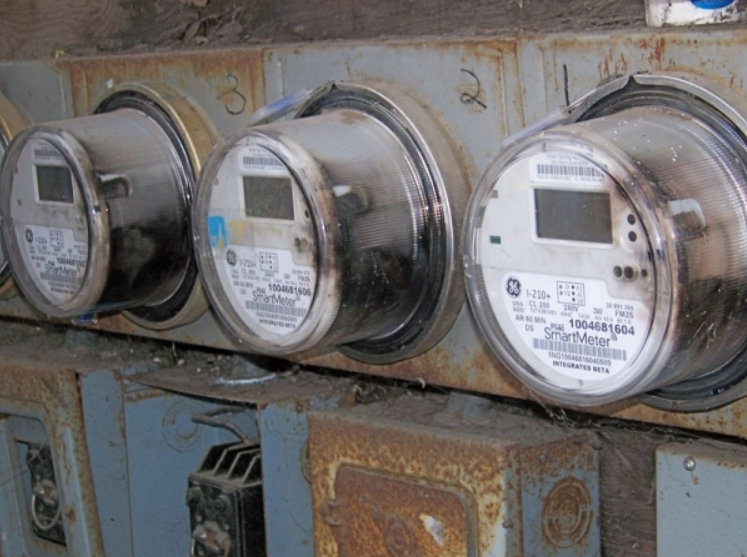
And speaking of things being blown apart, a door-to-door investigation by Cleveland fire fighters revealed a worrying discovery. Numerous Smart meters had been blown off the homes during the surge.
Spokesperson for Cleveland Division of Fire, Lt. Mike Norman, said, “I mean, it indicates a dangerous situation. And I talked to the battalion chief this morning, we’re both surprised that we didn’t have more house fires, actually. With the damage that was done to those electrical meters, a lot of times that can lead to house fires.”
It seems like Lt. Normal is aware of past incidents with Smart meters catching fire.
A 2011 power surge in Palo Alto, California caused 80 Pacific Gas and Electric (PG&E) Smart meters to catch fire and burn out.
Palo Alto’s utilities spokesperson Debbie Katz said at the time, “The idea with Smart meters is to make customers’ and the utility’s life better, but this is a good example of how sometimes the old way is the good way.” She confirmed that surges of this kind had not burned out analogue meters.
In 2015, a drunk driver crashed into a power poll in Stockton, CA causing a surge that led to dozens of Smart meters exploding and/or catching fire.
Part of an excerpt from the Stockton Record at the time: “In some cases, meters were literally blown off the panels. People described it as hearing a whirring sound like the meter was speeding up, then like an explosion. Some of the meters weren’t blown off, but they were fried and the glass was gone.”
These types of incidents have resulted in death and, troublingly, when fires of this kind happen, it has been reported that the utility companies have swooped in like hawks to confiscate the meters and refuse to let go of them.
As insurance adjuster Norman Lambe said, “The problem we continue to face is that the utilities will not relinquish the meter to the insurance company for examination, even though the insurance company has a notice of subrogation signed by the insured giving the insurance company the right to test the meter.”
The only way to obtain the meters, Lambe found again and again, was to “…have the named insured write a letter to the utility company and request the meter be released to the insurance company for examination and testing.”
Quebec City’s fire department says their utility, Hydro-Québec, removed Smart meters at multiple fire events before fire investigators could even look at them.
“We are totally entitled to bring them back to our office,” said Patirce Lavoie, Hydro-Québec spokesperson.”
Quebec City fire spokesperson France Voiselle, said, “A fire is considered a crime scene and at a crime scene evidence should be left alone.”
Lambe points to lithium ion batteries aging and leaking as the main problem in Smart meter fires. Others will point out the shocking amount of these meters that are installed incorrectly, or the shear amount of power they demand which can be a problem with older wiring.
Here is a compilation of Smart meter explosions all over this country and Canada documented in the last decade.
Harrowing stories of home owners’ attempted removal of Smart meters from their homes abound, and those who successfully keep them away from their homes are forced to pay a punitive monthly fee. For FirstEnergy customers of Ohio, that fee is $28.29 a month.
J.P. Blackwood, public affairs liaison for the Office of the Ohio Consumers’ Counsel (OCC), said, “We’re in affordability crisis and consumers need to be paying only what’s necessary. Electricity has to be affordable. It’s a matter of your well-being and health.”
Perhaps Mr. Blackwood is talking about mental health related to the stress of paying electrical bills, but as it pertains to Smart meters, it appears to be about one’s immediate physical safety.
In addition to the known fire and electrical risks, Smart meters carry documented biological health risks for those in prolonged proximity, such as heart palpitations, tinnitus, Rouleaux effect (blood cell stacking), cancers, sleep problems, DNA damage, and more.
It appears that the Cleveland substation was one more drop in the ocean of evidence showing the immense dangers associated with Smart meters. Luckily, all lived to tell this tale.
Whether they were aware of the significance of it or not, thank you to the mainstream media for reporting on the blown off meters.