Election Analysis: Is Public In Opposition To Their Government?
BY JEFF SKINNER
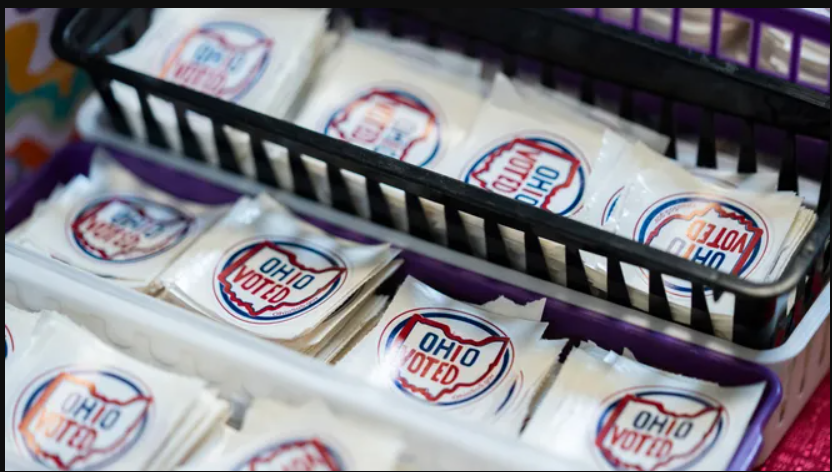
STATEWIDE - Across the state many Ohioans attended the polls to cast their votes during a time when many are questioning the validity of the election process. While turnout was not on par with the general election last November, in most areas, the public outcries were largely the same, voting down multiple new tax levies in various districts across the state.
In Springfield Ohio, a proposed sales tax increase by the local government sought to provide critical funding mechanisms to construct a new jail and safety center. The proposal would have seen an increase in local sales tax by half a percent. Despite the city launching multiple initiatives to convince the public of the benefits of a new jail center for the city, including admitting they currently are in dereliction of their duty by not arresting and prosecuting lower level offenses. So while local disconnected news outlets like the Springfield News-Sun are trying to put out feelers to understand why an overarching strategy for the city was widely shot down, anyone looking at the situation for more than a few minutes would have come to the same conclusion.
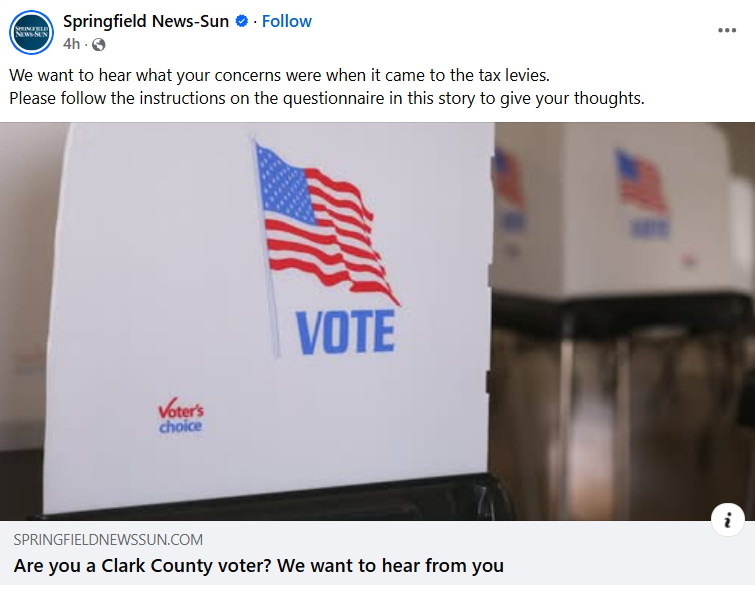
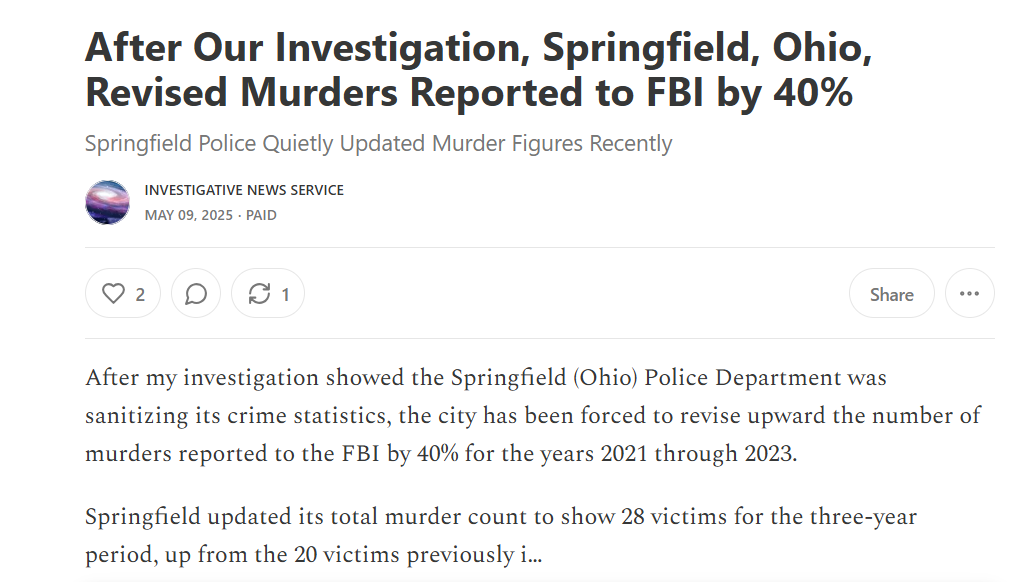
On its face, the statements from the Clark County Sheriff seemed incredibly tone deaf, if not substantively oblivious. Residents have been screaming for years now that local authorities, including those on the commission seats, have ignored the increase in crime and issues pertaining to safety related to the mass influx of Haitian migrants. The city regularly fails to prosecute misdemeanor crimes by Haitian migrants and has gone as far as to encrypt police dispatch communications to prevent residents from listening to them openly in dereliction of their duty.
Combining this with rapid increase in costs of living in what was once an incredibly affordable city, the solution to the crime problem was always self-evident. Prosecute the misdemeanor crimes the city is currently ignoring, such as hit and runs, driving without valid license or insurance or operating illegal nightclubs in violation of liquor laws, which federally will lead to deportation of the offenders on TPS status.
This action would negate the need for more jail space and higher taxes to cover it. However, it has also been clear the local government of Springfield is personally vested in protecting the gradual march towards 15-minute SMART grid technology and mass replacement migration. With a commission this diametrically opposed to the citizens of the city, no initiative seeking to get their consent for increasing their cost of living to continue a two-tiered justice system benefiting immigrants that are pipelined into available jobs and receiving housing and tax subsidies from residents would ever pass.
Turning to Geauga County, residents of Chester and others in the West Geauga School District saw a similar outcome in the overwhelming rejection of a new property tax levy to fund West Geauga School district. A 4.82-mill continuing substitute levy lost by incredibly wide margins. While many publicans are also struggling to understand how the local school board failed to communicate the need, the reality is again, incredibly simple.
West Geauga School district has a consistent history of putting emergency levies on the ballot for which they do not actually need as emergency funding mechanisms. Historically, many of their emergency levies have been used to cover administrative costs, for which they are supposed to use general purpose funds for. The district has even gotten slapped down on several occasions by the county budget commission because it has routinely asked for more levies while sitting on a $20-25 million surplus, essentially ‘hoarding wealth’.
The public discourse surrounding this issue in Chester Township became so great that the district preemptively removed a bond levy initiative from a May special election, where they hoped to sneak by a massive $128,000,000 bond to fund the construction of a new campus. It has long been recognized by the public that government institutions regularly use special elections and non presidential generals to insert bond levies and other tax increases for special projects because it is expected to have low turnout across the board. Historically this has led to annual increases in cost of living throughout the state every year. However, it would seem the consistently engaged public is pushing back against cost of living increases with specific inputs.
In short, roughly 65% of ongoing tax increase measures passed this election. These were initiatives such as tax increases, sales tax hikes and ongoing costs. Comparative to standalone levies which may be one-off increases for specific projects which were at a 75% passage rate, on going cost of living increases failed by roughly 10 percentage points.
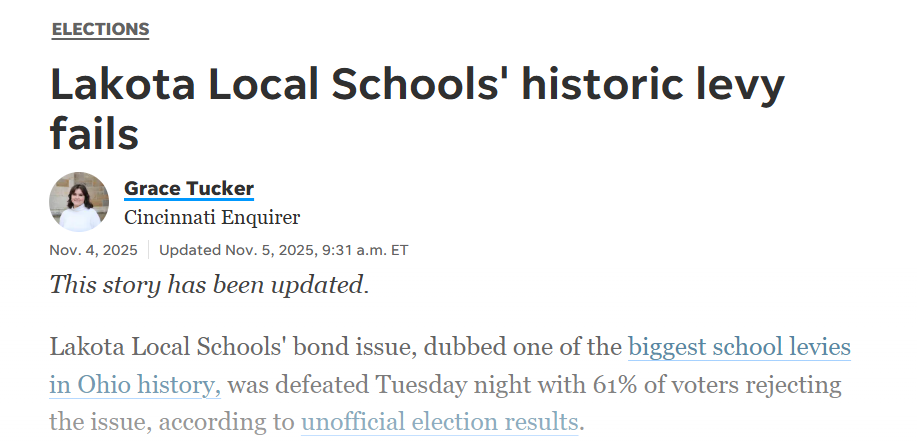
In looking at key areas as indicators for the disparities, be it Springfield in Central Ohio, West Geauga, or Parma’s school levy in the North East region or even the the Southwest region such as Lakota’s $500 million levy in Butler county, the unifying theme is that these expenditure asks came from local authorities that the general public did not trust to adequately manage the budgets they already have, if not a diametrically opposed view of what direction they should be going in.

While the number of passed tax increases was still higher than what the general public would articulate is their true desire, that being a lower cost of living, it’s evident there is a growing sentiment which is increasingly seeing government institutions, no matter the party affiliation, as adversarial, or at the very least, untrustworthy.