Future of Wittenberg Uncertain
BY JEFF SKINNER
Springfield - Historic Wittenberg University, first founded in 1845, is currently facing a crisis which could jeopardize its ability to stay open. The university has been put on probation with its very accreditation hanging in the balance.
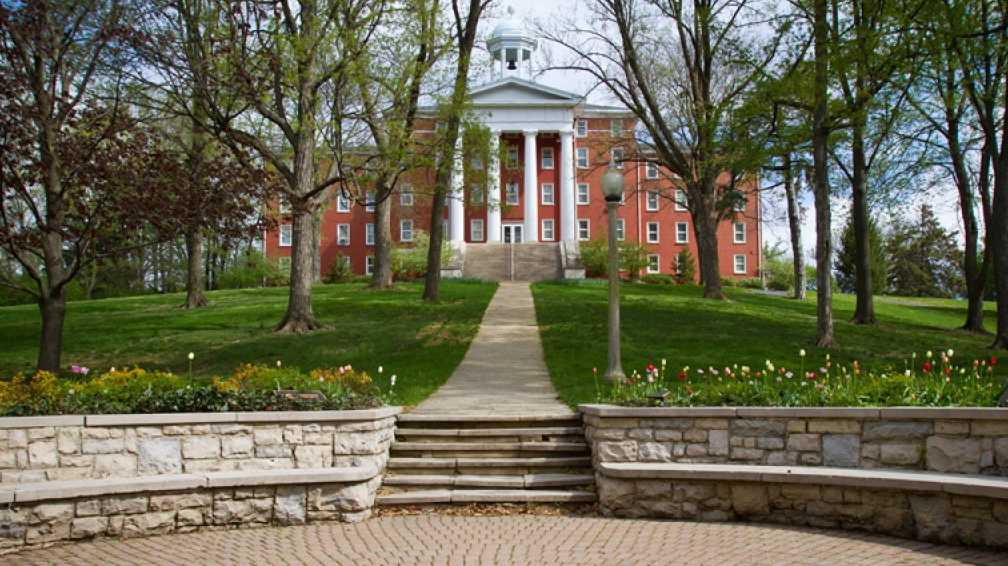
Located in the heart of Springfield, Ohio, Wittenberg University has often been seen as a standout beacon of higher education, as well as revenue generation, for the city. Students from all over the country have historically flocked to the small, private Lutheran institution due to its renowned theater program as well as environmental sciences and biology departments. Now it faces potential closure as the university has been put on probation due to poor financial management.
According to the Higher Learning Commission, which regulates university accreditation status throughout the U.S., Wittenberg University has failed to meet accreditation requirement 4.B, which states that an institution’s financial management balances short-term needs with long-term commitments and ensures its ongoing sustainability. Institution leaders have just two years to correct the funding issues or be faced with the removal of their accreditation.
University leadership has promised that student activity for the currently 1,326 enrolled students during this period will remain unaffected and students will still be able to enroll, graduate and obtain degrees during this time.
The root of the financial conundrum for Wittenberg comes down to poor financial planning from the school’s leadership, rooted in dwindling enrollment numbers. During a time when younger generations are increasingly seeking out trade schools in a bid to find financial stability in the job market, the private liberal arts university has seen shrinking enrollment numbers and elevated costs.
Despite these cultural shifts, Wittenberg’s tuition costs have remained consistently higher than state alternatives, with negligible employment outcomes. In addition, Wittenberg’s approved budget for 2026 originally projected a cash flow deficit of about $10.8 million. While the university now projects a balanced budget, this depends on factors like the release of restricted endowment funds. The university also acknowledged a risk of its line of credit being exhausted by March 2026. In short, Wittenberg’s budgeting plans are hypothetical and could very well fall through.
The university is attempting to address the issues with significant cost cutting measures, such as closing down five academic programs, including music, music education, German, Spanish, and East Asian studies. Time will tell if the moves will aid in addressing the university’s financial woes. Independent of voter sentiment from the past year, the nation is still progressing towards an increasingly globalized job market.
Where once a college degree of any category held weight in employment opportunities, today it is significantly less important when competing against billions of foreign imports willing to work for the lowest possible wages. It is precisely because of this that younger generations are seeking trade schools, where even the most ‘elite’ and highly educated of foreign engineers willing to work for 18 dollars an hour won’t migrate. Time will tell if given these economic realities, a liberal arts university like Wittenberg may not be able to adapt.