
Not Just Tax Dollars: Big Data Is Out For Ohio’s Water, Too
BY NICK ROGERS
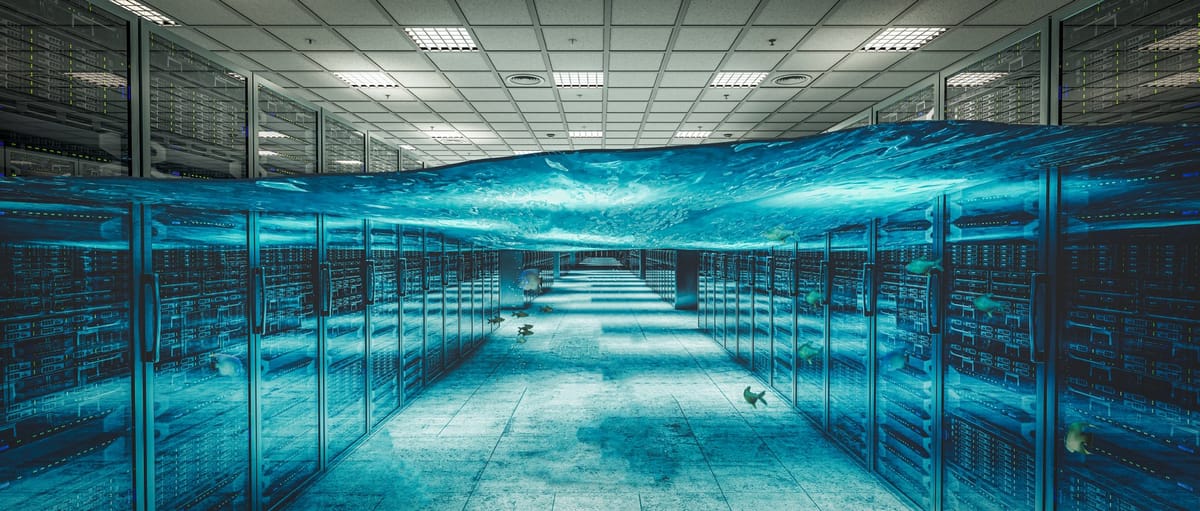
STATEWIDE - As giant, Generative Artificial Intelligence-supporting data centers continue to proliferate in Ohio, the narratives tend to center around job creation, economic benefit, possible electric grid strain, and the increasingly large tax breaks awarded to tech behemoths like Amazon and Google to lure them to the state. Often left out of the conversation is the massive amount of fresh water needed to cool these mega centers. With Ohio experiencing its biggest drought in 25 years in 2024 – along with a rise in toxic fracking practices and the unknown fallout of the East Palestine chemical burn – Ohio’s most precious resource has been placed in the crosshairs with little-to-no public outcry. One Ohio resident is making her voice heard.
Helena Volzer, the Senior Source Water Policy Manager for Alliance for the Great Lakes’ Columbus, a nonpartisan nonprofit whose goal is to protect the natural waters of the Great Lakes, is alarmed by the rate at which Ohio data centers are guzzling fresh water.
Groundwater aquifers, she says, are being badly over extracted by these centers. 42% of Ohioans rely on groundwater as their main drinking water source (20-40% of the water flowing to and from the Great Lakes begins as groundwater), and only 1% of this system is replenished, on average, each year from rain, snow, and groundwater.
"(The Great Lakes) think of ourselves as a water-rich place, but it really is kind of finite. It's a one-time gift from the glaciers that needs proper management," said Volzer.
She says that the state is not prepared for the planned further sprawl of these centers through the state coupled with unpredictable, longer periods of drought; a scenario that could call for deeper drilling (causing groundwater contamination) and even exacerbation of a little-know, ongoing problem: sinking cities (including Columbus).
Volzer said, “(Data centers’) biggest threat to groundwater that we can point to is where groundwater aquifers could really be impacted, based on the fact that when data centers use water, they evaporate it through evaporative cooling. That portion that's evaporated off when (data centers) pull from groundwater isn't returned to the watershed.”
A water “compact” was produced in 2008 but, as long as the water “stays in the region,” data centers are currently free to gobble up as much of the Great Lakes-St. Lawrence River Basin’s water as they want.
“Nobody in the Great Lakes Council is going to tell you how to use your water, but if you want to take it outside the region, the compact kicks in," former Ohio State Rep. Matt Dolan said.
Volzer strongly suggests that water use reporting become mandatory for data centers.
"One of the big problems is that there are no water use reporting requirements for data centers when they're hooked into a municipal system that has the ability to supply them," Volzer said. “Nothing is the perfect solution. There's no free energy, there's no free anything. There's always going to be a trade-off. It's a matter of managing those trade-offs.”
As of now, Ohioans (and Americans in general) seem unwilling to compromise as far as tech usage in concerned. Our insatiable societal demand for AI is fueling this data center influx.
For water quantification context, OpenAI CEO Sam Altman claimed that a single Chat GPT user prompt equates to “roughly one-fifteenth of a teaspoon of water.” However, a 2023 study by researchers at UC Riverside and The Washington Post quantified it much higher, saying that a 100-word email composed using ChatGPT takes up more than 17 ounces. This author would bet that most ChatGPT users are engaging in far more use than that on a weekly basis.
The study goes on to say that if 1/10th of working Americans used Chat GPT in this way once a week for a year, it would require 436 million liters of water, or approximately the household consumption of all Rhode Island homes for a one-and-a-half day period.
Volzer believes that data centers should not be able to add such a burden to the state without paying their fair share of taxes to support the necessary infrastructure needed to add water and wastewater capacity as a result of these centers.
“A second wave of development means more demand on land, energy and, you guessed it: water,” Volzer said. “It’s common sense to require data centers that consume Ohio’s precious resources to fully contribute to the tax base and help pay for that infrastructure.”
So far, DeWine and company seem to disagree.
“AI can be energy-intensive and that’s why we are constantly working to improve efficiency,” said Kayla Wood, an OpenAI spokesperson. How, exactly, this author would like to know.
While many have raised red flags about looming strain on the energy grid, few have identified our most precious resource – water – as collateral damage in the big data boom.
In an era of ongoing geoengineering operations in full swing – with the power to cause drought or deluge at the push of a button and/or spray of a plane’s nozzle – taking the Great Lakes region’s ground water for granted could be a huge mistake. With no end in sight to either the AI-boom or the lucrative Ohio tax incentives divvied out to the Googles of the world, we may be heading toward a dystopian future devoid of clean, fresh water in Ohio.
And for what? To be able to have a machine write an essay for us? To find the funny clip from that movie we can’t remember the title of? To be able to view the hit dispersal chart of our favorite baseball player in the month of June when it's partly cloudy?
Sadly, it appears the AI-run utopia promised to us is really quite the opposite. Imagine that: governments and technocrats lying to us.
But short of any future Big Brother-led end-game scenario for humanity, we must have water to survive, and Ohio’s fresh water appears to be endangered if the datacenterpalooza doesn’t stop soon…or if, at the very least, regulations (like those introduced in New York) are not imposed. As for now, the train keeps on chugging.
Do you consent?