Ohio Organizations Join Children’s Health Defense’s 704 No More Coalition
Ohio Community R Network (OHCRN), Sustainability Medina County, and SWORT (SW Ohio for Responsible Technology) have joined the Children’s Health Defense national 704 No More Coalition, a national coalition to restore local control over cell tower and antenna siting, bringing together parents, homeowners, business owners, and engaged citizens who believe communities deserve a meaningful voice in the decisions that shape their neighborhoods.
The non-partisan organization derived its name from the unconstitutional Section 704 of the Telecommunications Act of 1996. The team is led by Chief Litigation Counsel for CHD’s EMR Team, W. Scott McCollough, who has fought for local control and public safety regarding local cell tower and antenna placement. Its mission is to restore state and local control over cell tower and antenna siting; however the impacts of Section 704 go beyond cell towers and antennas.
Section 704 of the Telecommunications Act of 1996, codified as Communications Act at 47 U.S.C. § 332(c)(7)(B)(iv), states: “No State or local government or instrumentality thereof may regulate the placement, construction, and modification of personal wireless service facilities on the basis of the environmental effects of radio frequency emissions to the extent that such facilities comply with the Commission’s regulations concerning such emissions.”
Some courts have interpreted “environmental effects” to include human health effects. This effectively strips local authorities of the ability to oppose cell tower permits based on health and environmental effects, as long as the emissions fall within the FCC’s limits. Critics has argued this is unconstitutional because it deprives states and local governments of their traditional police powers designed to protect the health and welfare of their citizens but does not provide a federal remedy or other meaningful oversight.
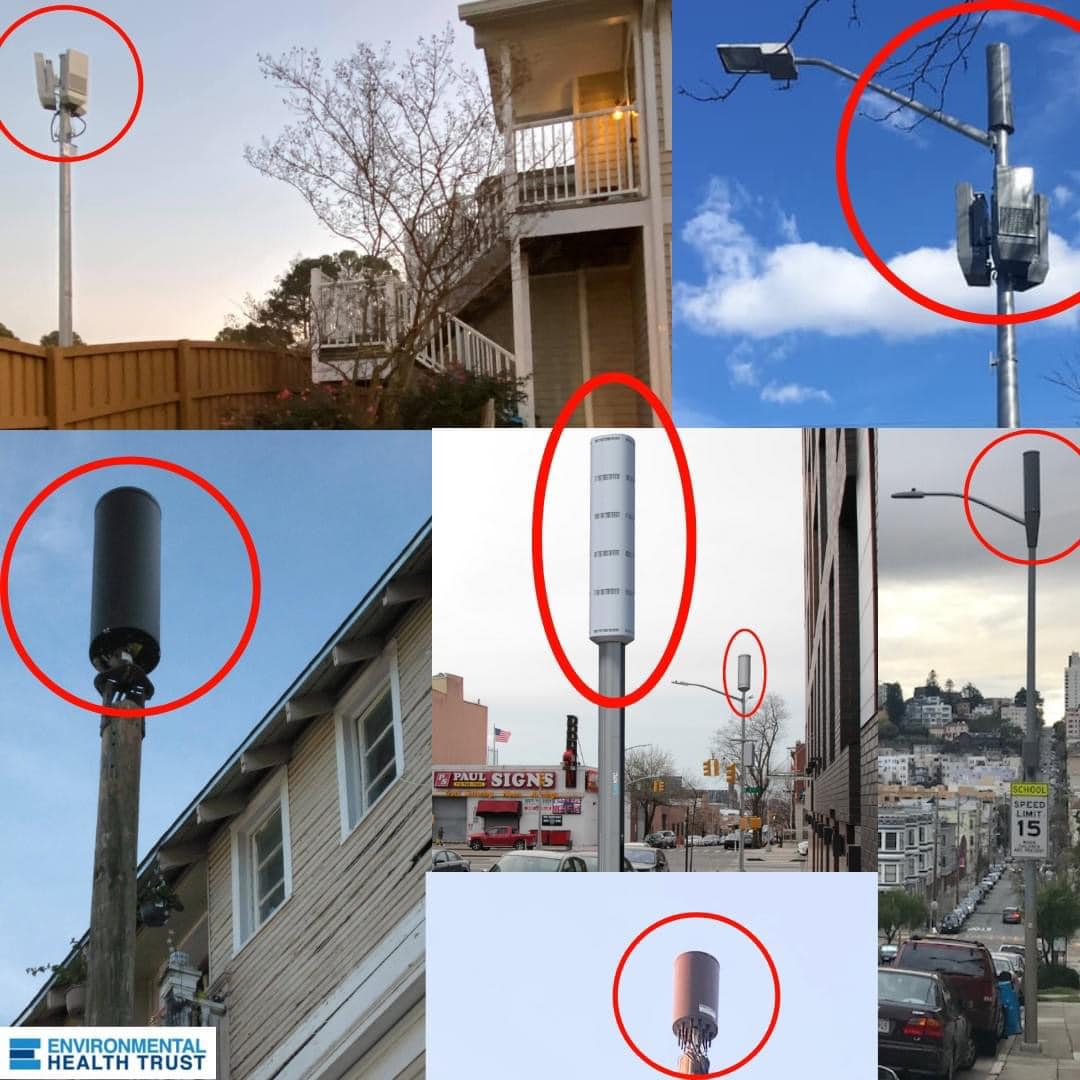
Additionally, several court decisions hold that local jurisdictions cannot regulate other forms of wireless technologies (WiFi routers, cell phones, etc.) because the FCC has sole authority to regulate the safety of these devices. As long as RF emissions fall within the FFC’s limits, people cannot sue the device manufacturer for their RF injuries. This could deprive people of their Constitutional rights, e.g. informed consent, property rights, due process, right to a jury trial, and right to life and liberty.
Critics have argued the legal framework poses significant problems because:
- RF radiation below FCC limits has been shown to harm children’s health and the environment.
- Children harmed by RF radiation exposure are left without remedies or compensation.
- FCC guidelines are outdated, do not take children into account, and fail to consider current scientific evidence.
- Excessive FCC authority overrides local control and judicial oversight.
Section 704 and other FCC preemptive actions enforce the FCC’s outdated RF radiation guidelines, ignoring mounting evidence of harm, particularly to children. These laws and preemptive actions also potentially strip away our personal freedoms and property rights, and override the states’ traditional police powers that protect our health and welfare.
According to the organization, 704 No More provides a webpage for Americans interested in participating in online campaigns and more. There is also a webpage with educational resources that can be downloaded and printed.
Since 2019, non-partisan group, SWORT, has been working with national organizations to try to raise awareness about outdated RF radiation guidelines. One of SWORT’s campaigns has been requesting that Ohio lawmakers to write to the FCC and ask that the agency address the 2021 court order to update the guidelines. Several state lawmakers and the Village of Greenhills have already written letters to the agency. For more information, readers can join SWORT on Facebook and send an email to swo4responsibletech@fuse.net