Public Says Springfield Field Trips Program Still Shaky
BY STAFF CONTRIBUTOR
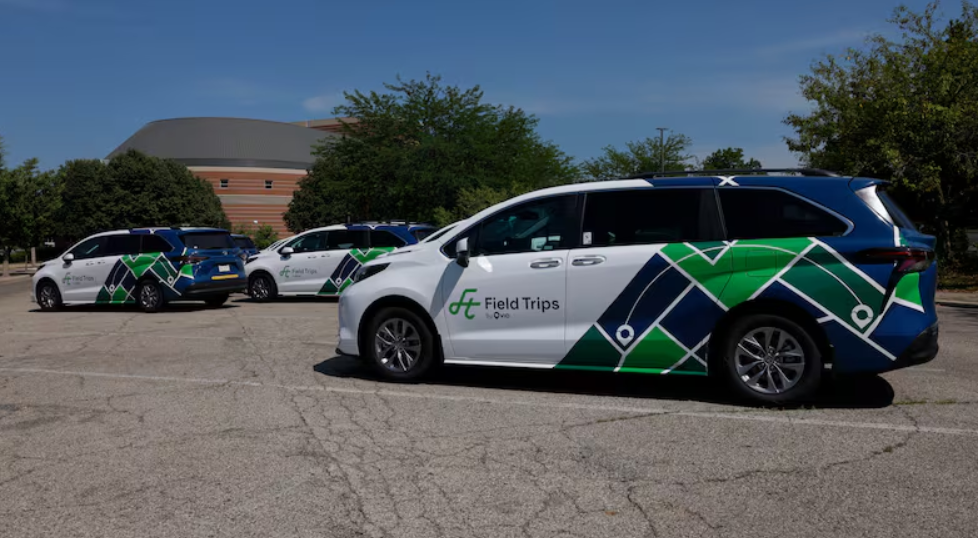
SPRINGFIELD, Ohio — Springfield Commission heard residents sharply criticize the Field Trips program Tuesday, and by proxy the commission themselves, for ceding oversight of the city’s public transportation system to a private operator, raising safety concerns about drivers using cell phones while behind the wheel in an already dangerous city to use the roads.
The criticism came during public comment after the commission moved to approve Amendment No. 3 to a Federal Transit Administration grant agreement. The amendment increases grant funding by an amount not to exceed $300,000 for operating assistance and authorizes an additional local matching expenditure not to exceed $300,000. It also authorizes the city manager, law director and finance director to execute necessary documents.
Staff described the funding as the city’s annual FTA allocation for operating the public transportation system, with 80% typically covered at the federal level. The money supports Field Trips and the microtransit service offered inside the city — an on-demand, van-based model resembling Uber that replaced large-scale buses.
One resident asked directly: “What is going to be the safety and security for hiring the drivers to make sure that the people getting transported around are safe?” He noted mixed online feedback, with half praising the service and the other half expressing safety concerns, and urged more detailed city oversight of the company.
Another speaker recalled seeing drivers holding phones while operating vehicles near North Limestone and Hickory, saying, “having qualified people that can stay off their phone makes sense.”
The commission responded that the private operator, Via Transportation, conducts rigorous background checks, but ultimately the nature of hiring and firings is outside of their control. Deputy Director of Public Safety and Operations is said to work closely with the company on community concerns, and Via has fired or retrained drivers in response to feedback, but ultimately it is their responsibility to handle these issues, proving a difficult situation for residents who seek government accountability for government dollars used.
Officials confirmed the system is not expected to become self-sufficient, as public transportation is inherently government-subsidized nationwide, but that leasing out the public transit program is the most cost effective for the city. Annual operating costs exceed $2 million, with the local match helping leverage more federal dollars. Field trips have seen a roughly 7% decrease compared with the old bus system.
Commissioners asked limited questions before voting unanimously in favor: Riggsby, Tacket, Ricketts and Wallace all said yes.
Earlier in the meeting, the commission unanimously approved vacating a 16.5-foot-wide unimproved public alley east of South Yellow Spring Street from West Clark Street south to the first east-west intersecting alley. The move allows the property owner to consolidate adjacent parcels for potential future development. The alley land will be divided equally and deeded to the adjoining owners.
The alley is overgrown with trees and has been maintained piecemeal by neighboring property owners up to the centerline. Columbia Gas reported no facilities in the right of way. Ohio Edison noted overhead primary facilities that may include service lines, requiring retained easements and adherence to National Electrical Safety Code and OSHA standards.
City staff recommended approval provided utility easements remain open and unobstructed. No structures, sheds, garages or pools can be built on easements, and owners must locate them before construction. No objections were received from neighbors. The public hearing drew no audience speakers and adjourned in under five minutes.