SHADOW COUNCILS AND DATA GRIDS: The Private-Sector Takeover Creeping into Geauga County Government
BY JEFF SKINNER
CHARDON - A quiet push inside the Geauga County administrative chambers to fundamentally shift how the county conducts economic development has broken into the open, sparking sharp criticism over an apparent lack of public accountability, hidden planning, and a creeping alignment with powerful outside regional interests aggressively angling for heavy technology and data center infrastructure.
The proposed initiative introduces a public-private partnership model that would hand significant local planning authority over to a newly formed, co-led Economic Development Council. While presented as a collaborative operational system designed to support traditional municipal infrastructure and local commerce, the foundational mechanics of the partnership have drawn skepticism regarding transparency. Critics argue the structure exposes a rural county to rapid, unwanted development paradigms engineered by well-funded, outside metropolitan networks.
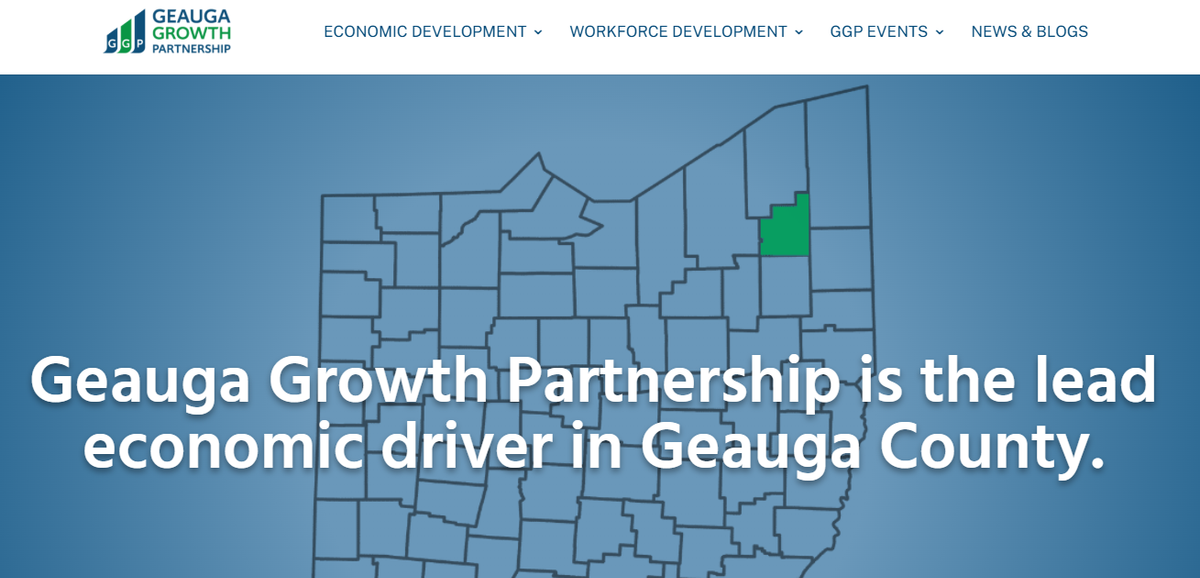
At the center of the brewing controversy is the Geauga Growth Partnership (GGP), a 501(c)(3) member-driven non-profit organization established in 2010. GGP executive leadership—including President and CEO Kimm Leininger, Vice President of Operations Carl Boyles, and Director of Philanthropy Angie Rachuba—presented the regional overhaul framework directly to the Geauga County Board of Commissioners at their July 21 meeting. The group’s current administrative governance features a slate of prominent local corporate officers, spearheaded by Board Chair Diane Popovich, Vice Chair Christian Klein, Treasurer Stephanie Ronyak, Secretary John Steigerwald, and Past Chair John Epprecht. While GGP historically structured its countywide community efforts around three primary programmatic pillars—termed GROW, GUIDE, and PREPARE—this newly proposed initiative pushes the non-profit past its traditional business advisory role and into a position of shared governmental authority.
Skepticism escalated significantly when it was revealed that GGP had unilaterally finalized and submitted a multi-year grant application to the Cleveland Foundation before ever presenting the operational terms to the full public or the entire county board. The Cleveland Foundation, which manages an extensive multi-billion dollar philanthropic endowment, has increasingly funneled money into tech-heavy economic realignments. By tying Geauga County to the Cleveland-based entity as its preferred implementation partner, critics assert that local decision-making is being quietly surrendered to urban power brokers whose broader regional priorities do not match Geauga County’s historic agricultural identity.
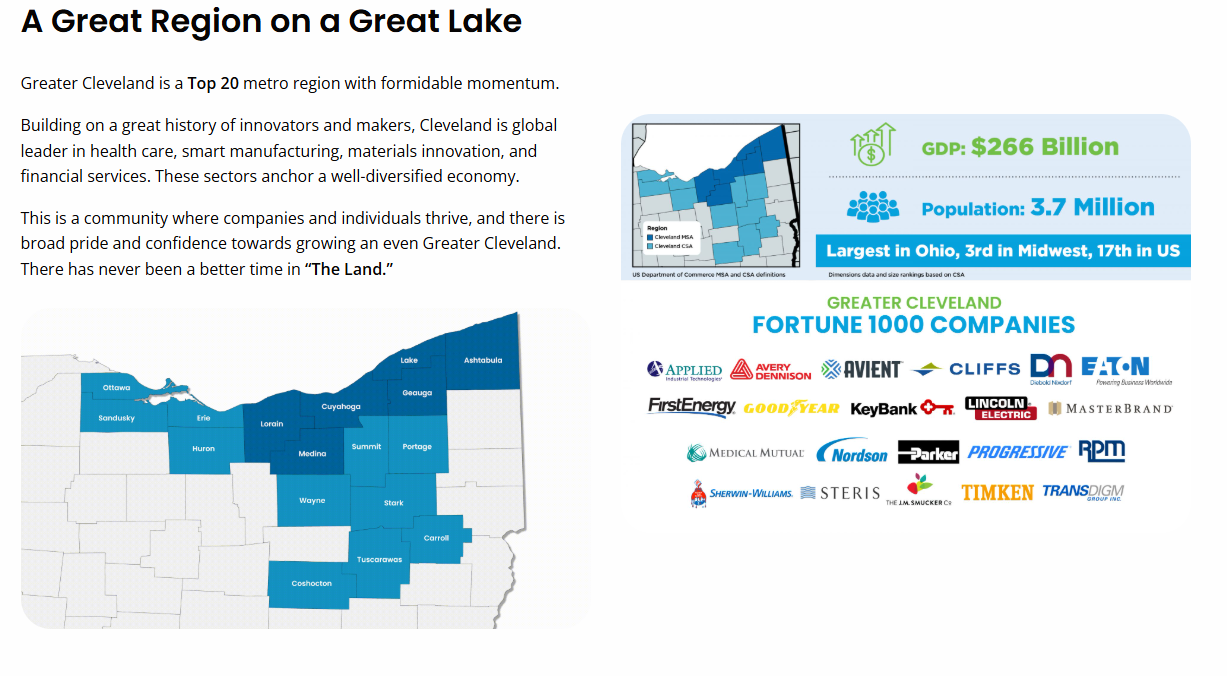
A primary source of community anxiety stems from the Cleveland Foundation’s tight alignment with powerful regional development engines like Team NEO and the Greater Cleveland Partnership (GCP). These larger metropolitan organizations have launched aggressive campaigns across Northeast Ohio to bypass local zoning restrictions in pursuit of high-density tech initiatives, industrial warehouses, and hyperscale data centers. While GGP’s leadership team contains no direct data center developers, the organization maintains active corporate relationships with localized IT infrastructure entities, cloud services providers like ISSQUARED, and regional fiber-optic developers like Everstream. Critics argue that inserting a private, non-profit intermediary into the middle of the county’s industrial planning creates an attractive backdoor for corporate data center developers looking to establish high-power processing grids across rural township boundaries. This matches ongoing infrastructure friction across Northeast Ohio, where groups like GCP actively analyze data center infrastructure under frameworks such as the GCP Smart-Growth Approach for Data Centers.
This evolving framework mirrors the controversial municipal engineering blueprint pioneered by public-private coalitions like the New Albany Company, an expansive development engine tightly bound to billionaire Leslie Wexner. In that central Ohio model, private entities systematically partnered with local governments to quietly acquire thousands of acres of agricultural land, positioning the municipality to rapidly fast-track massive corporate utility grids before local communities could mount zoning resistance. By establishing a private-sector buffer to handle early-stage planning, the New Albany paradigm effectively transformed once-rural township boundaries into the state's largest concentrated technology corridor, attracting massive hyperscale data centers for giants like Amazon, Google, and Meta. Geauga County critics argue that importing this exact infrastructure-heavy public-private playbook will systematically dismantle local agricultural protections, turning a rural community into an extension of the state's expanding high-density industrial tech network.
The structural blueprint of the proposed council would grant GGP a permanent seat alongside elected officials to direct utility access, land usage, and public capital investments. Under the arrangement, the private non-profit would also command a newly formed "Economic Development and Strategic Partnership" staff role. This dynamic has raised immediate legal red flags, as private non-profits are legally exempt from the stringent Ohio Public Records Act mandates that bind traditional county offices. By allowing sensitive, early-stage economic planning to occur under a non-profit umbrella, critics contend that public scrutiny will be effectively choked out, hiding massive real estate deals and infrastructure zoning alterations from the very taxpayers they impact.
The immediate financial burden tied to private-sector integration is another flashpoint for fiscal conservatives. GGP’s financial framework demands a stepped, multi-year funding commitment pulled directly from local county tax revenues. The requested county financial framework includes an initial allocation of $25,000 in the first fiscal year, compounding sharply to $50,000 in year two, and ultimately cresting at a recurring $75,000 baseline by the third year. Opponents note that these tax dollars would be directed out of a highly accountable public coffer and funneled into a private entity to subsidize its expanded corporate operations, despite a lack of proven metrics detailing how such expenditures directly serve the average resident.
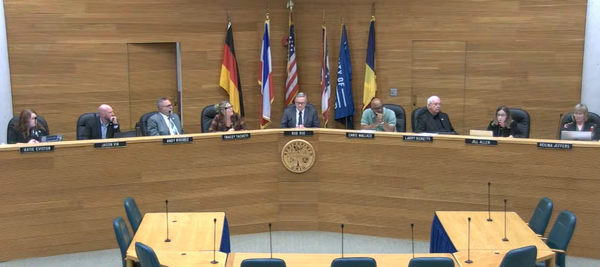
Political fracturing over the deal became unmistakably apparent during a tense board meeting, revealing that the infrastructure plan had been engineered behind closed doors with minimal consensus. The initiative has been actively championed on the commissioners' side by Commissioner Carolyn Brakey and Commissioner James W. Dvorak, who participated in the preliminary private talks with GGP. However, the third member of the governing board, Commissioner Ralph Spidalieri, was entirely excluded from the preliminary negotiations. Spidalieri lambasted the backroom construction of the proposal, explicitly warning that committing the county's name to an active philanthropic grant application without full board knowledge or public debate was a dangerous breakdown in basic governmental transparency.
The hidden manner in which the deal was assembled has drawn comparisons to previous municipal planning failures in the region. Spidalieri pointedly reminded the board of a highly public, fractured development incident involving the Berkshire school system just months prior, which left the county administration looking entirely disorganized due to an identical lack of internal unity and upfront public transparency. Critics warn that rushing into a long-term partnership with a private group while the elected commissioners remain openly divided signals a reckless rush toward private industrialization without a clear, protective blueprint for the county’s infrastructure boundaries.
Because of the mounting administrative friction and the public pushback regarding corporate secrecy, the formal launch of the Economic Development Council has been stalled. The county commissioners have put the implementation of funding on hold until an internal, government-only work session can be scheduled. The purpose of this private delay is to force the commissioners to establish a definitive strategic plan and define rigid governmental oversight rules before any outside non-profit entity is permitted to touch public infrastructure planning or municipal development assets.
The county commissioners acknowledged that any multi-year fiscal commitment of this scale cannot ethically launch without input from an incoming board member scheduled to join the platform. With a changing of the guard approaching on the three-member board, critics say that attempts to prematurely lock Geauga County into an expansive corporate development network are short-sighted and legally precarious. For now, the controversial public-private endeavor remains completely pending, trapped between a push for corporate tech integration and a rural community demanding its right to open, unclouded governance.