
Solar Panel Waste: A Looming Concern for Ohio and Beyond
BY NICK ROGERS
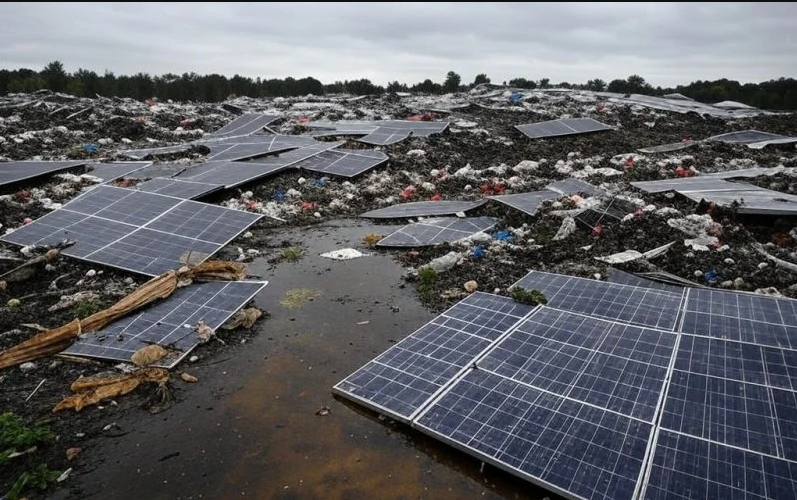
STATEWIDE - As first-generation “solar farms” approach the end of their lifespans, discussion (and worry) over the toxic contents within the panels has mounted. The Environmental Protection Agency (EPA) has now upgraded solar panels to the category of “universal waste,” but the agency has pushed back a rulemaking deadline – originally scheduled to begin in 2025 with completion in 2026 – which would provide federal guidelines on the disposal of solar panels and their lithium batteries. For now, the burden of coordinating and enforcing solar panel recycling and disposal has fallen on the states.
It has been estimated that 78 million tons of solar panels, globally, will be decommissioned by the year 2050. Not only does this present a potential environmental problem – solar panels, though mostly glass, contain aluminum, silver, copper, tin, and lead – but solar panels that are not properly recycled present a massive, missed opportunity for repurposing/reselling of the valuable resources contained within (upwards of $15 billion worth, it is estimated, by that 2050 date).
At the moment, 35 of the 50 US states have some sort of regulations in place for the proper disposal of solar panels; a process that includes meticulous separation of the materials contained within. Ohio is one of these 35 states; one that requires future decommissioning plans for new solar sites of 50 megawatts (MW) or more. Further details on Ohio’s solar panel recycling guidelines can be found here.
For states with no “retirement plan” like Florida and Arizona – both of which are inundated with solar farms – solar panels simply end up in landfills with most other waste contents destined to leach into ground water.
Regarding the change in waste classification of solar panels, the EPA said, “This change in the Resource Conservation and Recovery Act regulations (RCRA), once finalized, should benefit the wide variety of establishments generating and managing solar panel waste by providing a clear, practical system for handling discarded solar panels.”
Anna Weitz of the North Carolina Clean Energy Technology Center said, “They [the EPA] were supposed to come out with this proposed rulemaking in June of this year, but we didn’t see that yet.”
Companies like Solar Panel Recycling (SPR) are eager for streamlined federal requirements because it would guarantee revenue. This point was stated simply by Connor Hogan, CFO of OnePlanet solar recycling company. “The goal of policy is to establish a level of certainty,” he said. The consensus by those representing the burgeoning solar recycling industry at the latest Solar Industry Conference was a desire for states to create an across-the-board landfill ban for solar panels.
In 2017, Washington state experimented with a plan called the Photovoltaic Module Stewardship and Takeback Program, but the program was met with animosity from the industry. According to solar representatives, the requirements for manufacturers to present a long-term plan for funding the eventual disposal of solar panels were unclear and hasty given the lack of existing recycling services at the time. Since then, the industry has grown significantly, and the time has come, they say, for recycling regulations.
Whether the motives are legitimately environmental or solely financial, proper recycling of solar panels and lithium batteries seems like a no-brainer. The alternative would add exponentially to the growing list of toxins we are exposed to every day.
“Progressive” environmentalists have bemoaned President Trump’s climate mandate rollbacks, oil and gas expansion, and layoffs at the likes of the EPA and National Oceanic and Atmospheric Administration (NOAA). His administration, opponents say, has largely ignored clean energy initiatives such as solar farm construction. Depending on who you ask, this may be a good thing. But as long as solar farms exists, federal regulations may be the best way enforce proper disposal of these potentially toxic panels. Trusting the EPA to keep its word is another story.
California and Hawaii currently lead the way as they have both – independent of the EPA – declared solar panels to be “universal waste.” If regulations are not met, state EPA and/or Occupational Safety and Health Administration (OSHA) punitive measures may await the offenders. The EU has long since been far ahead of the US in solar panel recycling regulation. Landfill dumping is banned, and manufacturers are financially responsible for the recycling.
While solar panel waste may be a “drop in the ocean” compared to the amounts of coal fly ash and fossil fuel waste produced, this is simply a matter of quantities and popularity of the respective energy sources. As solar farms continue to sprout up worldwide in lieu of the former types of traditional energy production, this drop may turn into a consistent pour.
Will the EPA continue kicking the regulatory can down the road? Will the regulations, once in place, actually be enforced? Time will tell. What we do know is that there’s a lucrative business in solar panel recycling, and eager entrepreneurs are popping out of every corner hoping to cash in.