Springfield Hears Update on Wexner-Style 'Public-Private Partnership' Through Via Transportation
BY JEFF SKINNER
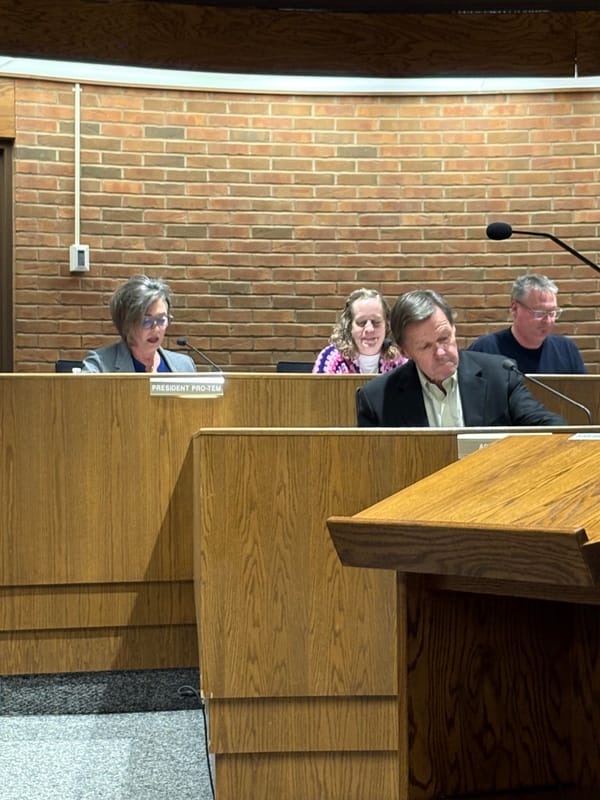
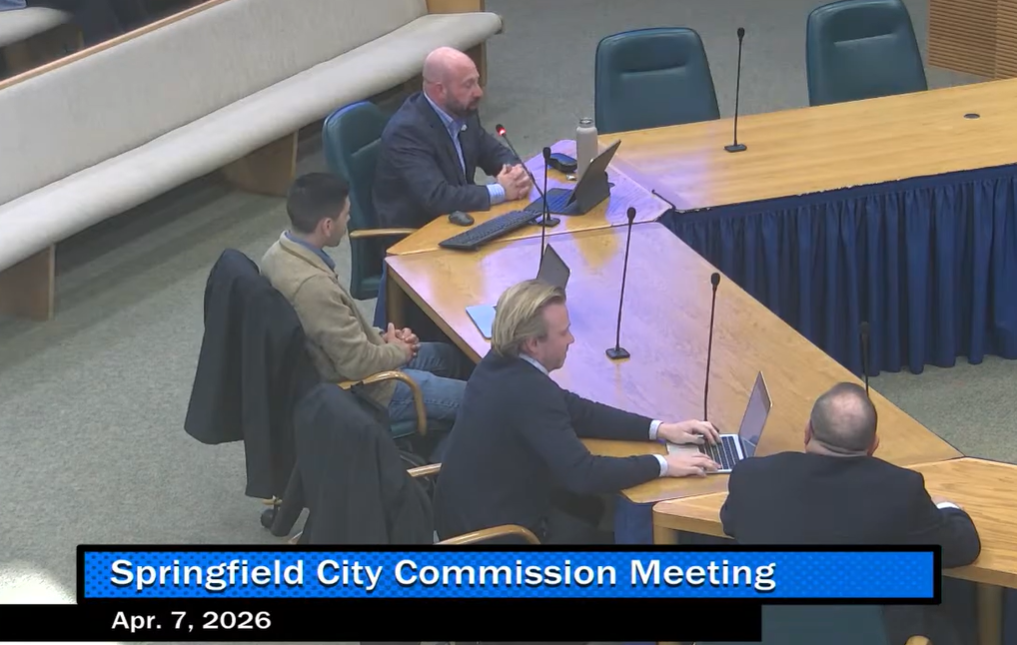
SPRINGFIELD - City officials heard an update Tuesday, April 7, on the Field Trips on-demand micro transit service operated by VIA Transportation, which replaced the traditional fixed-route Springfield City Area Transit system last July, citing improved coverage, ridership and efficiency. However, skepticism remains surrounding the WEF tied organization and the impact on transferring the city to greater 'Public-Private' control.
Officials and VIA staff highlighted data-driven operations, including AI-enabled cameras for driver monitoring, a safety scoring system that rewards safer drivers with preferred shifts, and real-time adjustments based on rider feedback. App usage has climbed to nearly 88%, with customer satisfaction scores in the low 90s — well above industry averages. The service supports wheelchair-accessible vehicles in about 40% of the fleet and offers multilingual support, including Haitian Creole.
Clark County Transportation Planner Glenn Massie noted the shift has generated far more usable data than the prior system, improving metrics such as riders per vehicle hour from the mid-2s to 4.2. Commissioners praised the flexibility for work, school, medical appointments and even youth athletics, with one noting improved attendance when school is not in session.
VIA Transportation, a New York-based tech company providing mobility solutions, maintains documented ties to the World Economic Forum (WEF), the Swiss-based international organization known for its annual Davos meetings and promotion of multi-stakeholder governance on global issues. A VIA executive, Eleanor Joseph, director of strategy and business development, has contributed to WEF reports, including "Guidelines for City Mobility."
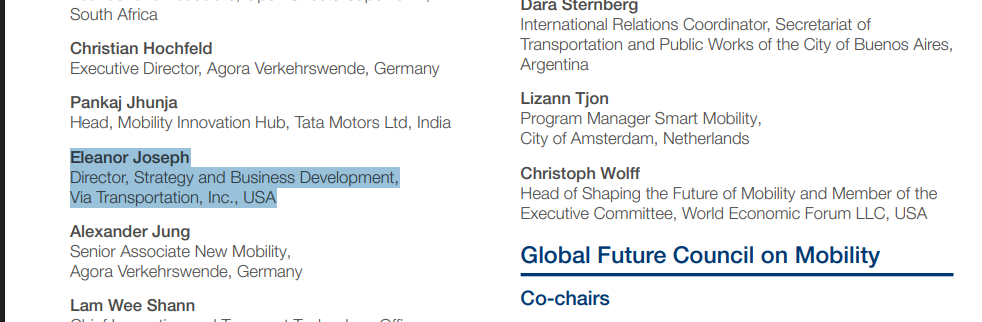
VIA's models align with WEF priorities around sustainable urban mobility, Mobility as a Service (MaaS), and reducing vehicle miles traveled through shared, on-demand systems. The published report can be found at the bottom of the article.
WEF initiatives, such as the Global New Mobility Coalition, emphasize public-private partnerships to advance 'low-carbon transport', electrification, and reduced private vehicle dependency to meet climate goals. Critics have argued the WEF initatives are ultimately designed around restricting movement of citizens within the confines of a '15-minute city', with micro-transit being touted in studies as a basis for implementing the concept in practicum.
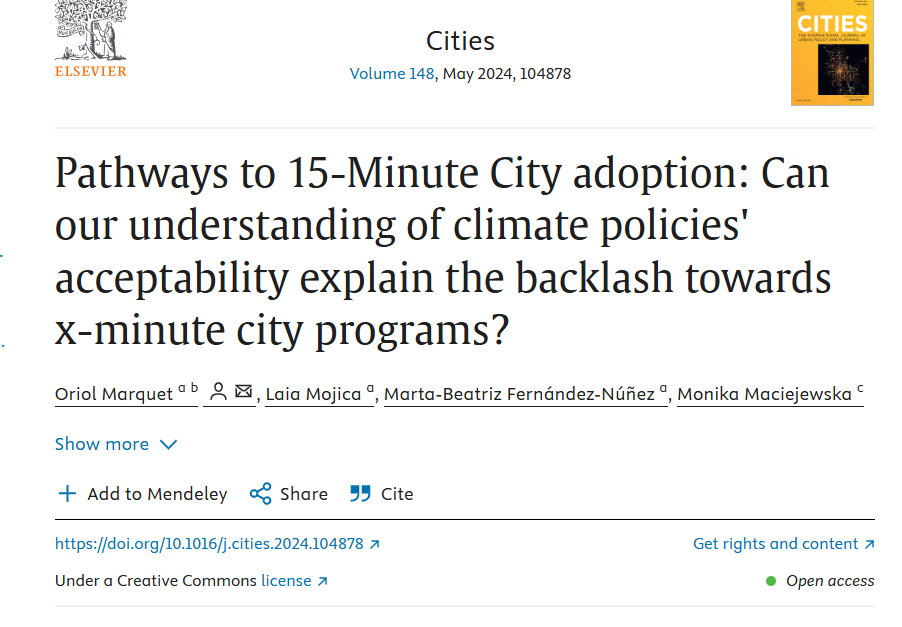
Critics of such alignments argue that WEF-linked efforts to promote "sustainable mobility" often frame transportation restrictions — through pricing, zoning, data-driven routing, or incentives for compact "15-minute city" models — as necessary for environmental outcomes. The 15-minute city concept, frequently discussed in WEF forums, envisions residents accessing daily needs within short distances via walking, biking or shared transit, potentially limiting longer personal travel to cut emissions. These areas would eventually be enforced through something like a carbon tax or credit score, prohibiting certain transportation through increased digitization.
VIA's technology, which aggregates rider data on origins, destinations and demand flows while optimizing routes algorithmically, fits into broader MaaS frameworks that WEF and partners promote for "efficient" and "sustainable" systems. In Springfield, this includes detailed KPI reporting to city partners on operations, safety and ridership patterns, for the time being.
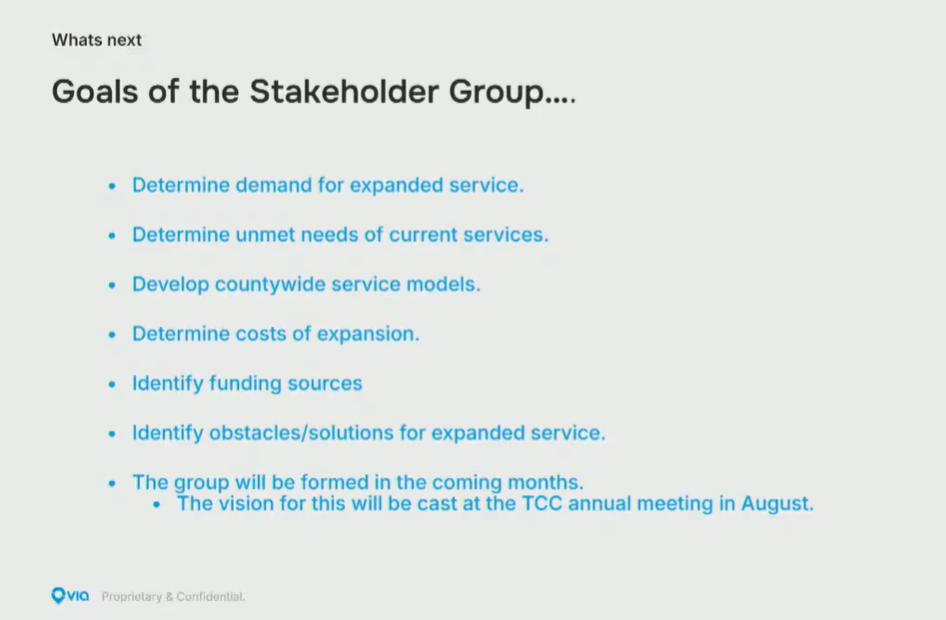
The hearing's second major focus was the formation of a new stakeholder group to guide potential expansion of the service, possibly countywide. Massie described the committee as including human services agencies (such as TAC Industries, United Senior Services, mental health providers, Mercy Health and the Veterans Office), TCC member organizations, the cities of Springfield and New Carlisle, elected officials, the chamber of commerce, Job and Family Services, private employers, townships, villages and temporary employment agencies.
The group, to be rolled out at the August TCC annual meeting after a full year of Field Trips data, aims to assess demand for expanded hours and service areas, identify unmet needs, develop countywide models, determine costs and funding, and address obstacles. Proponents called it a data-driven way to connect more residents and build on the program's success.
However, the approach echoes concerns raised in analyses of Ohio governance, particularly public-private partnerships that can shift decision-making away from direct public oversight, as previously discussed in an article detailing how the Leslie Wexner New Albany Group effectively overtook local governance and is spreading the model statewide using influential private stakeholders and multi-sector collaborations in the state to create layered governance structures that prioritize consensus among elites over traditional citizen input or elected accountability.
Such stakeholder models, while presented as inclusive, can function as mechanisms where unelected representatives from nonprofits, businesses and agencies shape policy alongside government entities, potentially superseding broader public referenda or transparent municipal processes. In transportation, this risks embedding sustainability-driven priorities — such as limiting certain travel patterns for environmental reasons — into local planning with less direct voter recourse.
Springfield officials framed the committee as responsive to community and employer feedback, including from Commissioner Estrop on workforce needs. No decisions on expansion were made Tuesday; the work session concluded with thanks for the presentation.