Springfield Tightens Belt in Some Areas, Approves Additional Spending for Food Bank
BY JEFF SKINNER
SPRINGFIELD - The Springfield Commissioners met on Tuesday, October 3, to pass several resolutions related to curbing city spending and heard input from representatives of the Second Harvest Food bank which introduced a new resolution to contribute additional funds to help meet the need of residents no longer receiving SNAP benefits.
During the regular session, the Springfield Commission approved Resolution 00525 Providing for Supplemental Appropriations within various funds. According to City Manager Bryan Heck, the city’s budget commission has been meeting regularly to go over line items and reduce or reallocate spending where applicable to ensure the city government can be funded into the future. It is likely the move has become necessary as the city has stated income tax has effectively flatlined, despite massive replacement labor influx from Haiti, with increased spending on emergency services. According to Heck, the city was able to parse out around $1 million in spending during this process.
“Supplemental appropriations are adjustments that can be both increases and decreases to the budget or appropriations that the commission has already approved,” Heck said. “I would like to highlight here that this specific list reflects a reduction of approximately $1 million in appropriations or budget within our general fund and that's a result of going through departmental budget meetings as we look at ensuring that the city is financially sustainable moving forward for the years to come.”
Whether the move will ensure government funding for the future is up for debate. At the end of the meeting, the city moved to support a resolution allocating city funding to the Second Harvest Food Bank to subsidize gaps in federal subsidies through the SNAP program. During the session, Alex Jackson, Executive Director of the Second Harvest Food Bank, spoke on the increased need food pantries are experiencing during this time period.
According to Jackson, the food bank serves three different counties and sees around 50,000 individuals annually, however last month the demand has nearly doubled. According to Jackson, the demand has been coming both from SNAP recipients and members of military families who have not been paid since the shutdown began.
“In the last month, we have seen double the need come through,” Jackson said. “We actually ran out of food at a mobile pantry last week and had to start sending more out. “We are being stretched very thin. have already pulled into next year's food budget. So we've spent about $100,000 of what we had budgeted for food for next year already. That is without this stretching on. Now, we did hear today that some SNAP benefits are going to be coming, but it's going to be about half of what recipients were originally expecting. So, we're going to see a continual need. And on top of that, we've also seen federal workers not paid. We did a distribution to the Air Force base last Thursday where we distributed over $20,000 worth of food to our federal workers here, members in uniform that have not been paid. So, we're getting hit from all different directions right now and we could really use this help.”
The Springfield Commission voted to support the initiative to the tune of $50,000. The move comes on the heels of nationwide concern over the prospect of impending turmoil in grocery stores as urban epicenters become a hotbed of discontent over the lack of SNAP access and has opened debate nationally on the abuse present within the SNAP benefit system. And while Jackson acknowledged the Food Bank's work for military families, a vitally important demographic in the conversation of the impact of the shutdown, allocated emergency funding from the state are unlikely to target those families, focusing more tightly on single parent households.
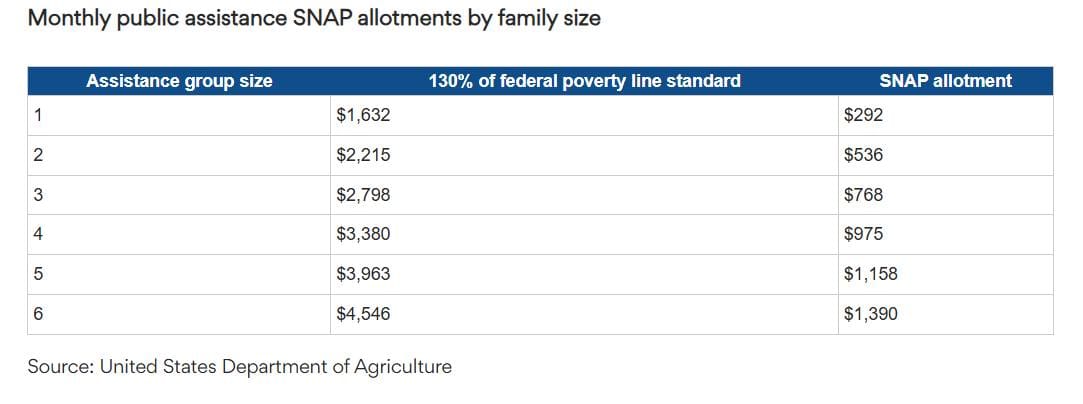
In Springfield, according to U.S. Senator Jon Husted in 2024 roughly 4,324 Haitian migrants in Clark County are known to receive food assistance. Others have rejected that number, stating the true value is much higher, nearly 5,279 approved applications for SNAP in 2024. While total numbers of Haitians in the city are not fully known, estimates range from 10,000 to 20,000, meaning anywhere from nearly half the Haitian population to one quarter are dependent on government subsidies. According to some records from Clark County Job and Family Services, Haitians entering through the TPS system could be eligible for anywhere from $700 a month to $1,724 depending on how many dependents are claimed on the application.
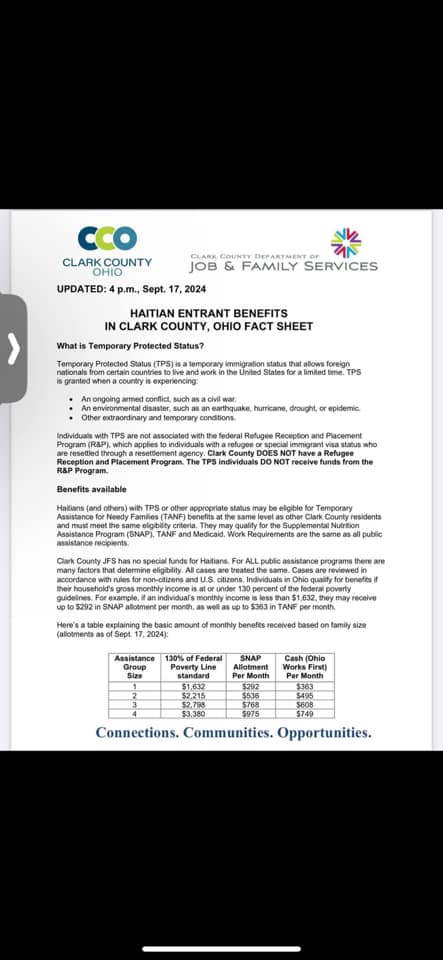
This number is also in question as other documents obtained show the amounts much higher based on family size.
This would be in addition to the income they may be receiving from the ‘much needed’ job positions through companies others who have used Haitian TPS labor, replacing heritage Springfield workers. As many businesses have learned over the years, paying workers suboptimal wages is only feasible provided the federal government fills in the gaps. And while this has been an effective business strategy for multinational corporations, in the case of imported Haitian labor in Springfield, it is likely the case that many businesses may be starting to look around for support. Many businesses in the city have found the influx optimal as they can pay lower wages while SNAP and TANF subsidize the rest.
Questions remain on if this current financial ask of the Food Bank will be a one time ask or perhaps just this month. With the organization stating they have already dipped into funding reserves for the following year, if the shutdown drags on, many doubt it will be the last ask of the commission. Ultimately, there is no way to know what could transpire in the city should 25-50 percent of the imported population lose access to what has effectively been a tax payer funded subsidized life in Clark County.