
Yes, Acetaminophen Can Lead To Autism: The Uncontroversial Mechanism of Action
BY JEFF SKINNER
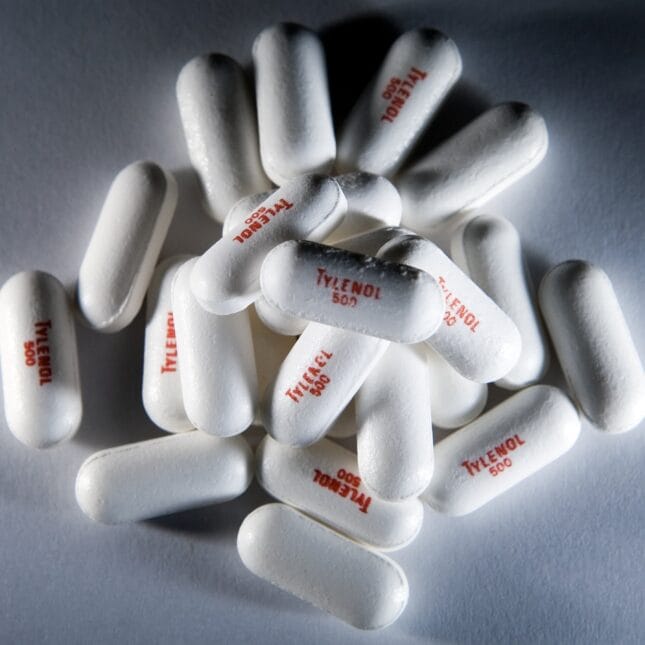
Yesterday, President Donald Trump held a press conference with Director of Health and Human Services Robert Kennedy Jr where he made comments regarding the commonly used pain reliever Tylenol (acetaminophen), stating HHS is recommending pregnant and nursing women limit their use of this petrochemical due to its links to Autism Spectrum Disorder, or ASD. The announcement was meant to herald the announcement of a label change on Tylenol from the FDA to warn of the potential link.

Naturally, this set off a firestorm of controversy in news media and left-leaning social media accounts quick to defend pharmaceutical companies and claim the link is nonexistent. Unfortunately, the link is very real and has been studied extensively.
The link between acetaminophen and ASD has been studied extensively for many years, with multiple comprehensive studies, including a massive meta analysis published by Mount Sinai University analyzing the linkage between the two.
“Our findings show that higher-quality studies are more likely to show a link between prenatal acetaminophen exposure and increased risks of autism and ADHD,” said Diddier Prada, MD, PhD, Assistant Professor of Population Health Science and Policy, and Environmental Medicine and Climate Science, at the Icahn School of Medicine at Mount Sinai. “Given the widespread use of this medication, even a small increase in risk could have major public health implications.”
Further, a 2019 Johns Hopkins University study testing biomarkers in umbilical chords after birth showed a clear linkage between high levels of acetaminophen in the blood and ASD and autism. Additionally, an international consensus statement issued in 2021 in Nature Reviews Endocrinology warned strongly of the causal links between acetaminophen and ASD. While many are arguing the science is ‘unsettled’ the mechanism of action of how Tylenol can lead to ASD is very clear.
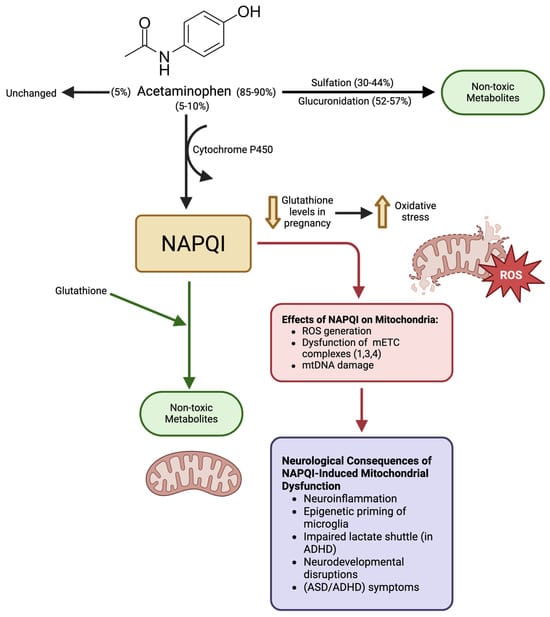
One of acetaminophen’s funny mechanisms of action is the depletion of glutathione, the body’s most potent antioxidant. This particular antioxidant is used to purge high-levels of toxins from the body. Acetaminophen is metabolized by Cyclophilin 40 (CyP40). Normally during processing, Tylenol is metabolized by cytochrome P450 (CYP) enzymes, particularly CYP2E1, into a highly reactive, toxic byproduct called N-acetyl-p-benzoquinone imine (NAPQI). Thankfully, the body uses glutathione to dispense of this toxic byproduct. However, infants and developing fetuses do not have excess amounts of glutathione the way adults do.
Thus, when Tylenol depletes glutathione, the infant's body is left with high levels of toxic NAPQI which creates reactive oxygen species (ROS), particularly in mitochondria, by binding to mitochondrial proteins, impairing mitochondrial respiration, and causing mitochondrial dysfunction. This creates a cycle where NAPQI-induced mitochondrial damage leads to increased ROS generation, overwhelming the cell's antioxidant defenses and contributing to cell death. The link between ROS damage in the brain and ASD has also been studied and reviewed extensively.
“Recently, a number of studies have increasingly highlighted the significance of oxidative stress in the pathophysiology of ASD, suggesting an imbalance between the production of reactive oxygen species (ROS) and antioxidant defenses in both the periphery and the brain. Notably, elevated levels of reactive species result in genotoxicity and trigger a sterile inflammatory response, as well as microglial activation in the brain, contributing to the development of ASD.”
The effects of this reaction are further amplified if Tylenol is administered after other compounds known to create neuroinflammation, such as injections containing aluminum, which are known to cause neuroinflammation. Aluminum nanoparticles are a common adjuvant used in most vaccines. The nanoparticles can cross the blood-brain barrier leading to the development of ROS in the brain and inflammation. As Tylenol depletes Glutathione, the mechanism of action for the body to clear out these neurotoxins is significantly inhibited, leading to greater neurodamage.
The connection and mechanism of action of how these compounds interact leading to ASD is rather uncomplicated and uncontroversial once the pieces are properly outlined. The extrapolation, and perhaps the source of many individuals responding to this information with aversion in the news media, is that ASD is largely avoidable if these compounds are not applied during child development. Further, once one understands the mechanism of action of how these compounds can create ASD, the door opens to the very real possibility that ASD Can be treated or even majoritively alleviated in most cases using detoxification protocols. Perhaps more controversial a question to ask is why these links, which have been outlined for decades, are only just now being acknowledged by figures in positions of power and influence.