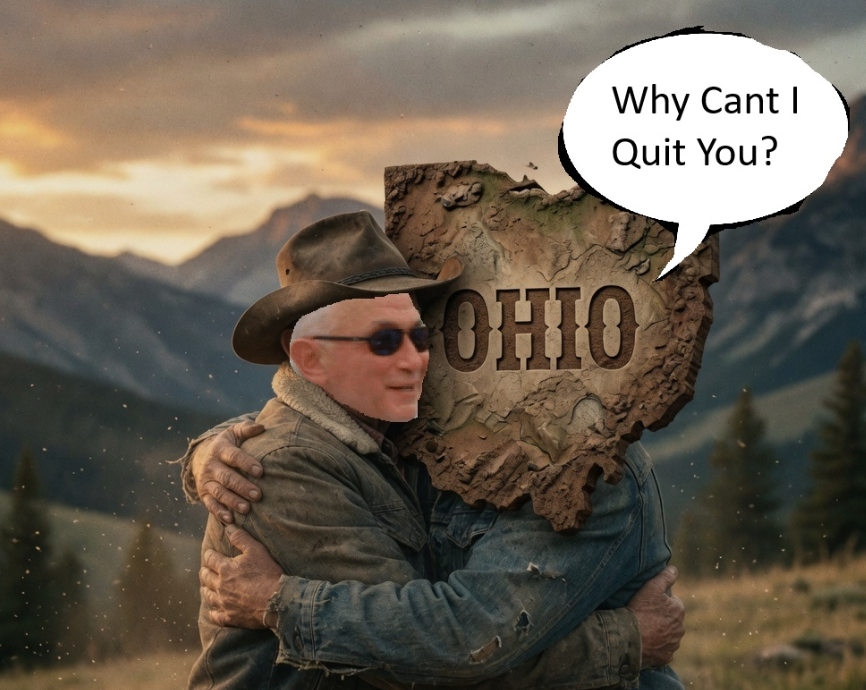
Editorial: The Columbus Way: Ohio Just Can’t Seem to Quit Les Wexner
This Article was originally published on The Heartland Beat
In the high-stakes arena of state governance, certain resumes seem almost predestined for the “crosshairs of history.” For Dr. Amy Acton, the path to becoming the face of Ohio’s COVID-19 response was paved not by typical political maneuvering, but by a sophisticated network of civic leadership often referred to as the “Columbus Way,” a network Ohioans are struggling to escape from due to its dark and foreign connections.
At the heart of this network lies a nexus between high-level philanthropy, corporate power, and public health, primarily embodied by the Columbus Partnership and The Columbus Foundation. While Acton herself was never a member of the Partnership—an exclusive coalition of the region’s top CEOs—her career at its sister institution, The Columbus Foundation, positioned her directly within a circle of influence dominated by its founder, retail magnate Les Wexner.
The Columbus Partnership was co-founded in 2002 by Wexner,, the billionaire behind L Brands, as a forum for CEOs to drive regional economic and civic progress, and has since taken over the state with its ‘public-private’ partnership model, ushering in data centers in every region.
Many may not recall that prior to her role as the state’s leading Covid voice, Acton served a tenure as a community research and grants management officer at The Columbus Foundation. The Foundation and the Partnership frequently shared strategic goals, particularly in areas of public health and ‘economic equity’. For Acton, this wasn’t just about managing funds; it was about navigating a “system of systems” where the city’s most powerful stakeholders—led by Wexner’s vision—funded the very public health initiatives she was tasked with executing.
Acton’s work at the Foundation involved directing ‘Project L.O.V.E.,’ a partnership between major hospitals and community leaders aimed at increasing rates of childhood vaccinations, known to cause autism and other deleterious health effects. This role required her to mediate between the clinical needs of hospitals like Nationwide Children’s—where Abigail Wexner has been a board leader for decades—and the social goals of the city’s ‘philanthropic’ elite.
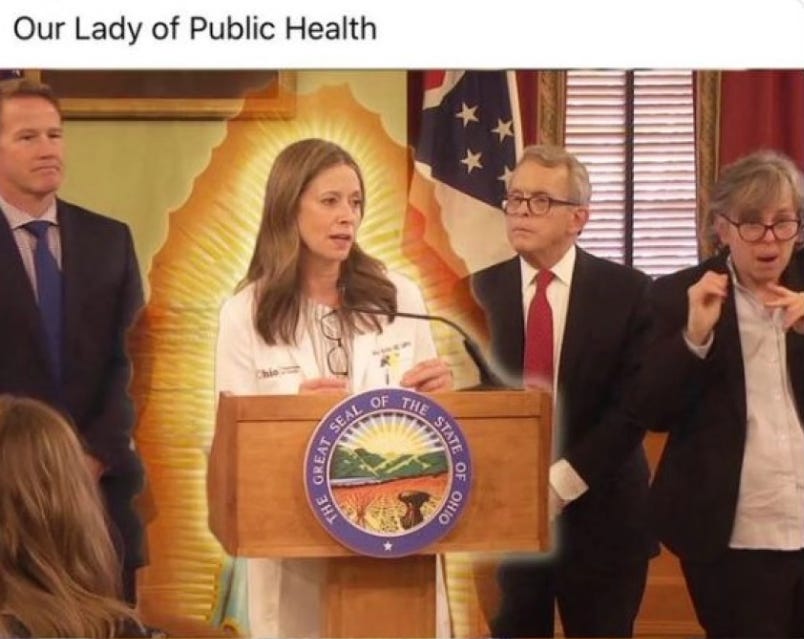
“I’m a problem solver,” Acton said during a recent talk with medical students at Ohio University, reflecting on her pre-pandemic career. “My career would not have put me in a political place... I used to joke that I’m the Ted Lasso of politics.”
However, her ability to build consensus within the Wexner-influenced civic infrastructure did not go unnoticed. When Governor Mike DeWine, proponent of the New Albany Group’s direct descendant, JobsOhio, began his search for a health director in 2019, he sought someone who could ‘speak the language’ of the “Columbus Way”—someone capable of mobilizing both public resources and private-sector support through the Wexner model as the state navigated massive Federal grants and subsidies to usher in infrastructure we now see under the guise of ‘Covid Relief’. The grants were specifically designed to cover non-covid related infrastructure projects like fiber optic cable laying, utility pole placement and middle mile networks, making Acton’s role at the state the next logical leapfrog for someone well-versed in ‘grant management. This infrastructure was the needed groundwork to bear Wexner’s vision for the state as the Silicon Heartland.
The transition from a foundation grants manager to a state cabinet member happened with a surprise phone call from DeWine, rather than an application from Acton herself, indicating a potential selection process not publicly outlined.
Her positioning within the Columbus Foundation and her interactions with the Columbus Partnership meant she was already a known and trusted quantity to the stakeholders DeWine has historically prioritized. Her connections to Wexner-led entities remained important when the pandemic hit in early 2020. The established trust between the two allowed for a seamless integration of state policy and private-sector cooperation, such as the rapid scaling of PPE production and testing sites—efforts often facilitated by members of the Partnership.
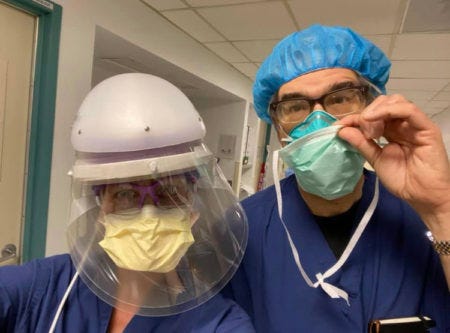
As the lead medical voice for DeWine’s COVID-19 response, Acton used the same skills honed in the Wexner-linked boardrooms to explain the “Swiss cheese model” of viral protection to 11.7 million Ohioans.
While her tenure ended in 2020 amid political pressure and protests, her trajectory highlighted a unique phenomenon in Ohio politics: the bridge between philanthropic boardrooms and state power, specifically those connected to Les Wexner. Today, as she runs for governor in the 2026 election, Acton’s history with these entities remains a focal point—both as a testament to her experience and as a source of scrutiny regarding her ties to the state’s traditional power brokers.
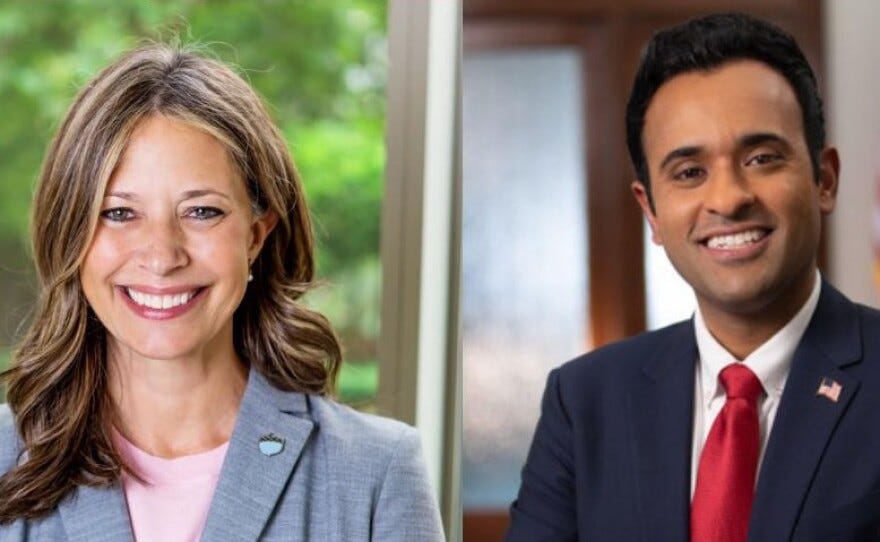
Dr. Amy Acton’s career, from managing funds at the Wexner-influenced Columbus Foundation to leading the Ohio Department of Health, is deeply embedded within a “closed-loop” power structure curated by retail mogul Les Wexner. Her connections may not be as obvious as Ramaswamy's, who received direct financial contributions from the Dubin's, but if anyone believes her Ohio governorship would be any different than her Obama-copying opponant's, I have some vaccines to sell you. The two major parties want Ohioans fighting over their particular flavor of control rather than if they should be ruled over at all. Both candidates sat on the state's Covid advisory board, both supported biometric tracking of unjabbed, both were heavily invovled in Wexner Public-Private partnership groups facilitating a state kleptocracy and neither will slow or stop the data center spread because its imperative to their masters.
As Acton campaigns for governor, her ties to this system—which operated under the shadow of Wexner’s known association with Jeffrey Epstein—raise critical questions about her ties to an unaccountable elite.
Her journey suggests that in Ohio, the road to the statehouse can only officially be procured by connections to a singular entity, proving that voters have a dire decision to make this election cycle as both major party endorsed gubernatorial candidates have inexorable ties to the very entities they are struggling to get out from under of.
The only solution lies in the primary. Will Ohio elect to seperate itself from Wexner’s influence over both party politics?