Findlay Law Director Letter Muddies EPA Waters
BY JEFF SKINNER
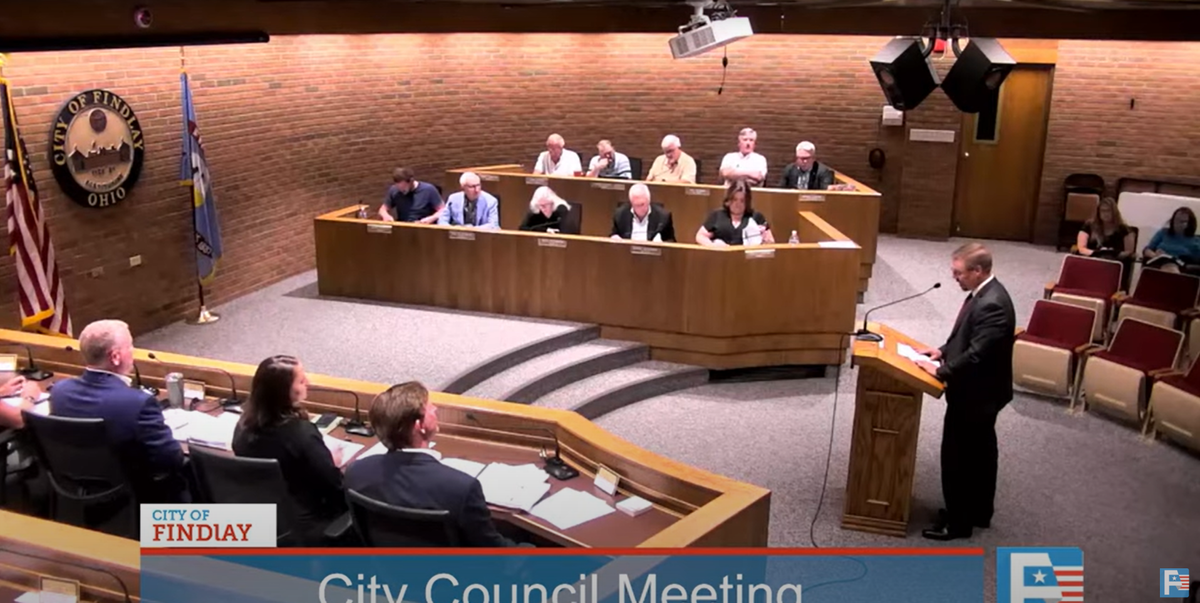
FINDLAY - On Tuesday, September 16, Findlay city council filed a letter to record between the Ohio EPA and Findlay Law Director Robert Feighner. Most alarming about the letter filed was the allusion to a phone conversation Feighner had with the Ohio EPA dated the same day as the one Council Member Frische had, leading some to wonder if there was some involvement between the Findlay government administration and the Ohio EPA.
At the September 2 city council meeting, council member Holly Frische revealed she had a phone conversation with the Ohio EPA asking multiple questions regarding the recent park construction project expected to cost the taxpayers $40 million. At least part of the project will involve construction over a parcel of property known to be contaminated by hexavalent chromium, with many residents concerned over potentially additional contamination into the water and soil if the area is further disturbed and not fully remediated.
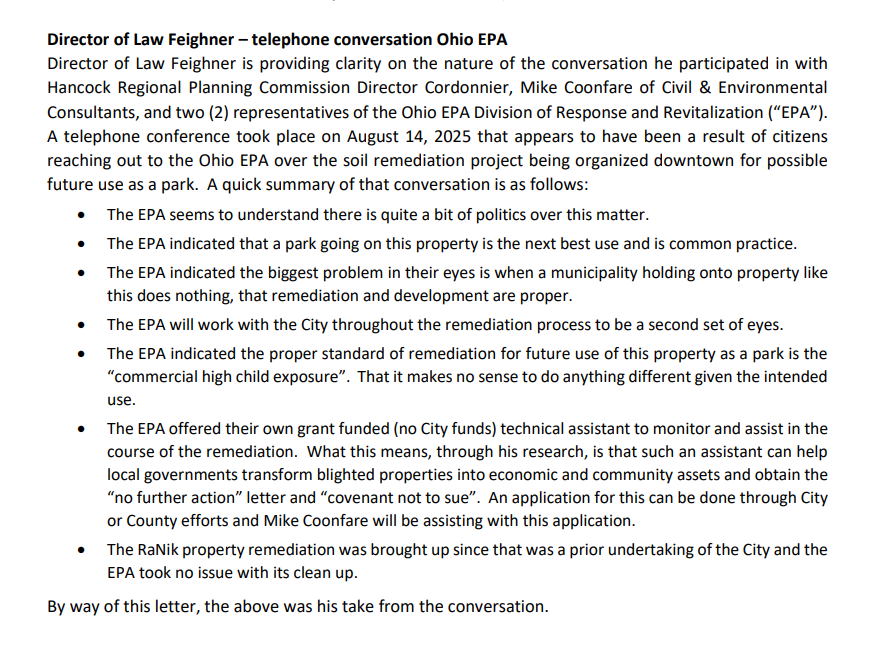
After communicating with the Ohio EPA, Frische received a second phone call, on August 14, with the U.S. EPA, essentially telling her to drop the issue and that there was “nothing to see here.” Quizzically, within the council agenda for the September 17 meeting, law director Feighner entered a letter of record commemorating a conservation he had with the Ohio EPA. According to the letter, the Ohio EPA has chalked the discourse up to ‘political issues’ and plans no additional action to be taken. The letter did not answer why they had initially reached out to Frische and not other members of council nor did it specify if the call and conversation occurred before or after their conversation with Frische. Feighner did specify that it was a separate conversation than the one Frische had with the Ohio EPA.
In new business, the council heard a presentation from the Hancock Hardin Wyandot Putnam Community Action Commission, or HHWPCAC, on the push for transferring the city's public transportation system to a ‘micro-transit’ system. According to the presentation, the city of Findlay is currently overwhelmed by the set route system and has had to deny passengers rides due to vehicles being at capacity.
Within the new system, residents will need to book rides through a digital application and smaller vehicles, like vans, will pick up residents to transport them to their destinations. Along the way other passengers may be picked up as well in something of a mix between Uber services and public transportation. Micro-transit initiatives are most associated with green initiatives in developing ‘smart’ cities as a means to decrease emissions and increase transportation burdens in theory. In practice, cities that have implemented the initiatives have seen great difficulties in maintaining the programs stability.
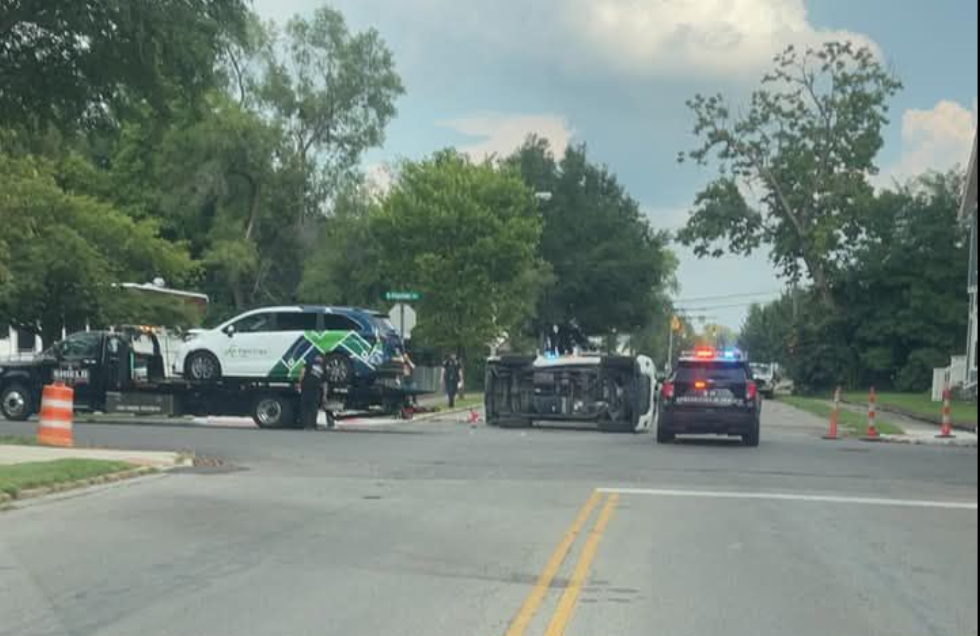
In the city of Springfield, Clark County, just two hours south, residents have found nothing but heartburn around the ‘Field Trip’ program, a micro transit initiative which has completely replaced the public bussing system in the city. According to many residents, the Springfield City’s ‘Field Trip’ micro-transit program currently employs drivers from the recent haitian influx, many of which still struggle with learning the rules of the road and driving in general. Many vehicles are turning up as part of accidents and flipped vehicles throughout the city if the drivers themselves were not attempting to take financial information from unsuspecting elderly customers.
At this time, the city is not considering completely removing the bussing system, but given how progressive the micro-transit system has moved to usurp traditional bussing, the probability is high that micro-transit will be the transportation of the future for Findlay.