Midwest Grid Upgrade Loan Finalized, But Who Benefits?
BY NICK ROGERS
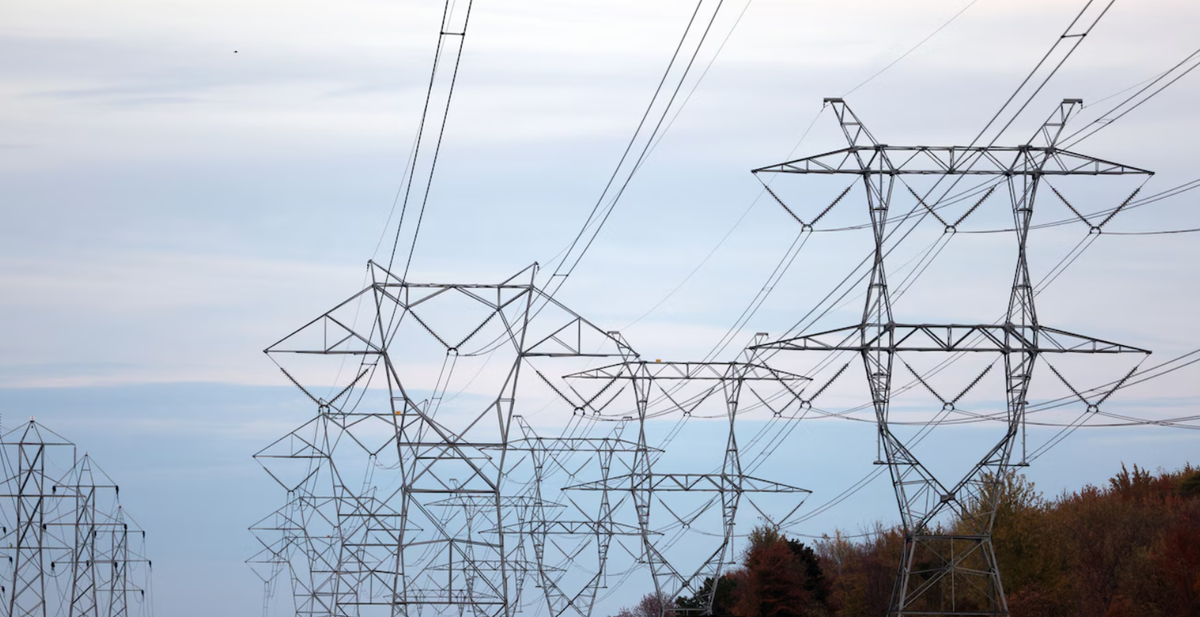
STATEWIDE - A $1.6 billion loan was approved by the Department of Energy (DOE) to upgrade approximately 5,000 miles of power lines through Ohio, Indiana, Michigan, Oklahoma, and West Virginia. American Electric Power (AEP) – the beneficiary of the loan – has vowed to pass on cost benefits to its customers but, in the short-term, experts believe Ohio’s energy bills will continue to rise. Long-term implications could be worse.
Trump’s One Big Beautiful Bill Act created the “Energy Dominance Financing Program” (EDFP), a thinly-linked extension of the Biden-era plan to offer $22.4 billion to eight different utility companies as part of the Inflation Reduction Act aimed at bolstering the grid and promoting “clean” energy. The latter part of that plan, however, has generally been balked at by the Trump Administration, such as the $4.9 billion “Grain Belt Express” loan blocked by his DOE’s Loan Programs Office in July (among many others on the chopping block).
Energy Secretary Chris Wright said, “The President has been clear: America must reverse course from the energy subtraction agenda of past administrations and strengthen our electrical grid. This [AEP] loan guarantee will not only help modernize the grid and expand transmission capacity but will help position the United States to win the AI race and grow our manufacturing base.” The government’s “AI Action Plan” aligns with his statement.
A large portion of the U.S. energy grid was built 65 to 75 years ago, and 70% of existing power lines are more than 25 years old. The approved loan indicates that the Trump administration is taking seriously the massive amounts of power transmission states like Ohio – with booming data center proliferation – will require. As far as energy creation goes, they clearly do not feel “clean” energy is a relevant or viable part of the equation.
Part of the loan agreement is an assurance from AEP that financial benefits of the loan will be passed onto its customers (AEP Ohio serves around 1.5 million customers in central southern, and northwestern Ohio), but no specifications of how that will be reported or enforced have been provided.
With the passage of HB 15 and the elimination of the corrupt HB 6 coal plant subsidy – along with other provisions such as the banning of utility company ownership of power plants – many have heralded a new era of consumer protection and lower energy bills in the state. Energy experts, however, say not so fast.
Noah Dormady, Associate Professor with a focus on energy policy at Ohio State University’s John Glenn College of Public Affairs, said, “AEP is anticipating a 50% load growth by 2030 if the forecasts are accurate. When you see demand increase and you don’t see supply correspondingly increase, any economist will tell you that’s a recipe for increase in price.”
AEP responded to Dormady by saying, “The formal load forecast submitted to PJM, the regional grid operator, is handled by American Electric Power’s economic forecasting department, not AEP Ohio. It is important to know that energy forecasts start with our customers.”
Perhaps the most prevalent customers AEP is referring to are its data center customers, an industry inextricably linked to the AI arms race.
“As a utility in a deregulated state, AEP Ohio cannot build generation in Ohio to help balance the supply of energy with the demand for it. Generation suppliers have not built in Ohio, which means Ohio is importing power from other states, requiring greater investments in the transmission system that carries large amounts of energy over longer distances,” AEP said.
They added, “We hope to see more generation built in the state to help bring supply and demand in balance and to alleviate the financial burden on our customers.”
Here’s to hoping.
It appears that the $1.6 billion dollar loan – while set to theoretically upgrade a large portion of transmission lines in dire need of upgrade – will do little to address the supply/demand issue as, per AEP’s own admission, there is currently not enough base load power creation in the state.
That’s why Senator Rob McColley said Ohio needs “…primarily base load power, primarily natural gas that can be extracted here from inside the state…” in comments he made supporting HB 15.
HB 15 was passed with an emphasis on the need for more power generation facilities in the state and, while the realization of this goal may benefit consumers down the line, it’s going to take a while. In the meantime, many of the newest power generation site application approvals are for sites owned and operated by data centers themselves; exclusively for data centers.
It all leaves us to wonder if these grid improvements are actually aimed in any way at lowering Ohio customers’ bills and/or at guaranteeing reliable power to our homes. More and more it seems our government’s concern is rooted in catering to the needs of data center behemoths like Google and Amazon, with some speculating a full transition to AI governance is on the horizon.
For the average Ohioan, if you add up the Trump administration’s obsession on beating China to the AI finish line, the state’s data center explosion, and the recent history/behavior of the entities our Public Utilities Commission (PUCO) supposedly regulates, the sum equates to a future of energy rationing and AI government surveillance . Do you consent?