OSU hires Carter Replacement Closely Tied to Charles Lieber

BY JEFF SKINNER
COLUMBUS - The Ohio State University has recently announced the new appointed president of the university. Interestingly enough the appointee has direct ties to Charles Lieber, the genetic research tied to the heart of the Covid-19 pandemic, as well as Jeffrey Epstein and Les Wexner by proxy.
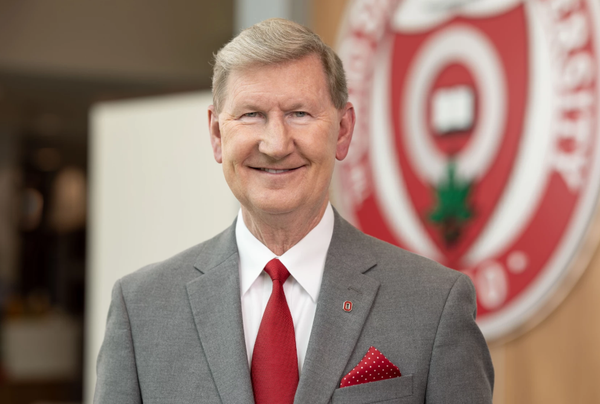
In a public statement issued to by the university, Ravi Bellamkonda, PhD, has been selected to replace former president Ted Carter, who recently resigned in scandal. The university describes Bellamkonda as ‘a dynamic, visionary leader whose academic accomplishments and administrative experience have earned deep respect across Ohio State and the higher education landscape.’
Bellamkonda’s appointment was done without a wider candidate search after being hired on by the board, chaired by Les Wexner’s personal attorney, John Zeiger, who has repeatedly refused to help serve Wexner subpoenas for multiple case filings. His appointment seems almost a foregone conclusion when diving into Bellamkonda’s background and his ties to somewhat nefarious figures and research which ultimately lead back to Jeffrey Epstein and Les Wexner in a much shorter game of six-degrees-of-globalist than ever thought possible.
Bellamkonda’s specialty and specific field of research focuses on using biomaterials to interface with and treat the human nervous system. Bellamkonda was spotlighted for his work on The "Tumor Monorail", a device to help track and treat persistent tumors which the FDA-designated a "Breakthrough Device". However his work started through partnering with controversial geneticist Charles Lieber, whose research cut to the heart of Covid-19.
In 2009, Bellamkonda co-authored a paper with Lieber titled Nanomaterials for Neural Interfaces, which focused on brain-machine communication using nanotechnology, known to be Lieber’s obsession later on. The coauthored paper goes on to outline how tailored nanostructures, such as flexible polymers and carbon-based materials, can minimize immune responses, reduce electrical impedance, and improve long-term signal stability for neural implants. In short, creating tiny radio devices that could be used to help humanity, or, as Lieber's later funder suggested, significantly hurt them.
Charles Lieber most famously worked for Harvard University and received several DARPA contracts for his research, primarily in the field of creating microtubule delivery systems for viruses and nanoparticles that could control or manipulate the brain. One of his major independent funders was Jeffrey Epstein, who, along with DARPA, had a strong interest in the field of genetic manipulation, specifically in the philosophy of transhumanism and digital-biological surveillance. During the time of his donations, Les Wexner was Epstein's only financial client, or which he controlled all of Wexner's vast fortune, painting a significant overlap of where the finances logically originated. Harvard was recently embarrassed when news broke of their acceptance of millions of dollars to Lieber's department.
Lieber himself was arrested on suspicion of espionage in January of 2020, just prior to the Covid pandemic, due to his financial ties to work he was conducting with the University of Wuhan, China. While the direct nature of work with the Wuhan institute is still not fully vetted, his research domestically led to the development and rollout of early detection Covid-19 tests, which many have suspected may contain more than just the listed contents.
Lieber only served two days in jail and was released on supervision. He now lives in China where he works as the Chair Professor at the Tsinghua Shenzhen International Graduate School (SIGS).
Ravi Bellamkonda will now oversee the multiple controversies surrounding the university, including the public demands to remove Wexner's name and associations from the university he is so tightly involved with.