Private Fiefdoms in the Sky: Data Center Defense Act Could Arm Corporations to Silence Dissent
BY JEFF SKINNER
STATEWIDE - A contentious new data center defense bill moving through Congress is drawing fierce backlash from civil liberties groups and community activists, who warn the legislation marks a "dystopian" structural shift in American governance by effectively privatizing airspace policing and handing corporate interests a powerful tool to silence dissent.
The legislation, introduced as Senate Bill 4380 by Sen. Tom Cotton (R-Ark.) and known as the Critical Infrastructure Airspace Defense Act, would grant private owners and operators of critical infrastructure, which would be data center owners, the statutory authority to independently detect, track, and mitigate in-flight drone threats. While the bill’s proponents argue the measures are desperately needed to shield the North American electric grid and high-risk facilities from asymmetric airborne attacks, critics contend the bill's vague language creates a slippery slope ripe for corporate abuse or potential expansion.
At the heart of the outrage is Section 3 of the bill, which authorizes federally trained private security contractors to take actions "necessary to mitigate a credible threat" posed by an unmanned aircraft. Legal scholars and civil rights advocates point out that the term "credible threat" is left dangerously open to interpretation.
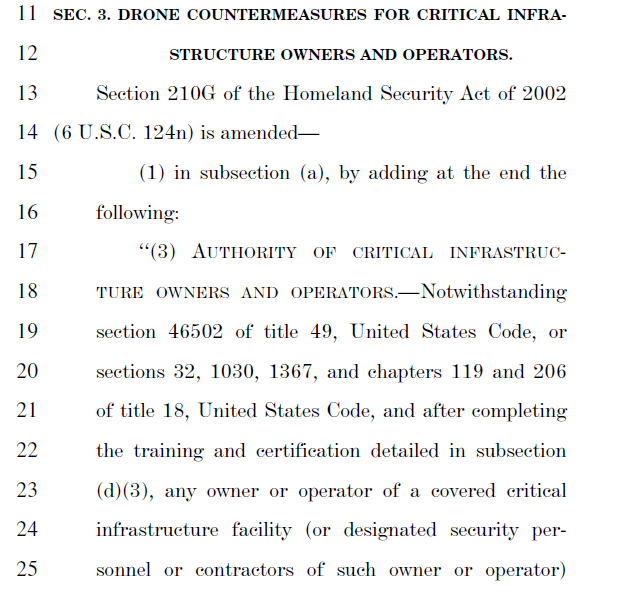
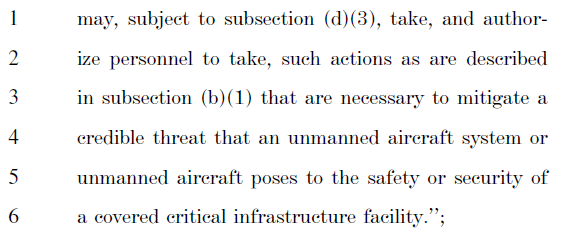
The debate lands amid a compounding wave of community opposition against the rapid expansion of massive data centers nationwide. Tech conglomerates face intense pushback from local residents over the immense strain data centers place on regional power grids, water supplies, and quiet residential zones. Activists, investigative journalists, and environmental groups frequently utilize consumer drones to document the physical footprint, construction violations, and resource consumption of these heavily guarded corporate compounds.
Under the broad umbrella of "Information Technology" critical infrastructure, data center operators could soon have the legal authority to target these eyes in the sky. Opponents fear tech giants will routinely classify investigative or journalistic drone flights as "credible threats" to corporate security simply to suppress public scrutiny and community organizing.
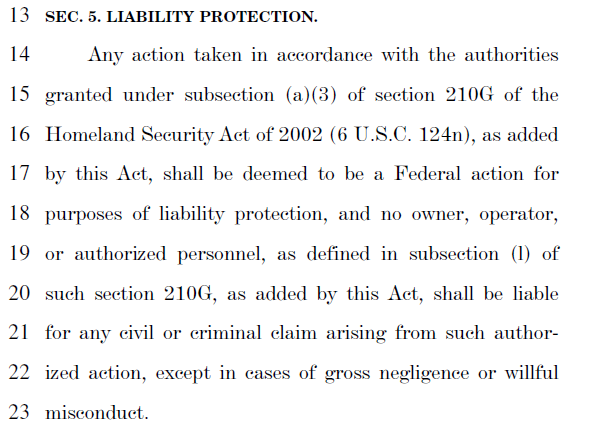
Making matters worse, critics say, is the unprecedented legal shield cooked directly into the bill. Section 5 establishes broad liability protections, stating that any defensive action taken by private operators shall be deemed a "Federal action". It explicitly immunizes corporations and their hired guards from any civil or criminal claims arising from the destruction or seizure of a drone, except in rare cases of proven "gross negligence or willful misconduct".
Constitutional experts warn the bill represents a fundamental abdication of the sovereign government's monopoly on the use of force. Traditionally, the Federal Aviation Administration (FAA) has strictly guarded the national airspace as a public commons, ensuring that only federal agencies or certified law enforcement could legally intercept aircraft. By decentralizing this authority to private boardrooms, the act fragments airspace regulation into a patchwork of corporate fiefdoms.
The bill authorizes $250 million for a federal grant program through fiscal year 2031 to help private entities purchase and install approved counter-unmanned aircraft systems. Unless strict amendments are introduced to narrow the definition of a threat and protect public oversight, civil rights groups vow to fight the legislation at every step, warning it builds the legal architecture for a corporate panopticon.
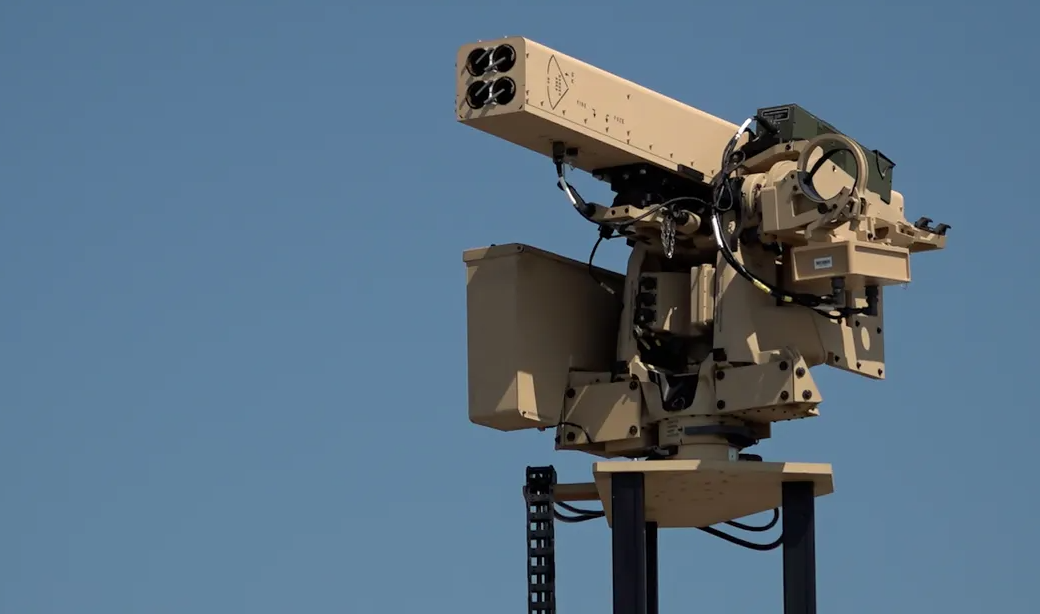
While the legislation does not currently permit data centers to deploy offensive missiles or weaponized drone swarms, critics warn that could change. Even within the current framework, the "non-lethal" hardware authorized under Section 4 carries its own severe risks for surrounding neighborhoods. Under the bill, private facilities could be outfitted with military-grade Radiofrequency (RF) Jammers, GPS Spoofing arrays, and kinetic net-deployment systems. Because RF jamming and spoofing operate by blanking out electronic signals over a geographic area rather than striking a single pinpoint, community groups fear these systems could easily bleed past corporate property lines. Residents in adjacent neighborhoods could face sudden localized cellular blackouts, dropped Wi-Fi, or disrupted GPS navigation for delivery drivers, first responders, and everyday commuters whenever a data center operator triggers a countermeasure leaving local emergency services in jeopardy.