FINDLAY MAYOR CRITICIZE DISCOURSE AMID LEAKED BACK-CHANNEL DATA CENTER DEAL, DEFICIENT WATER PLAN
BY CAREY MORGAN
FINDLAY - Amid intensifying local scrutiny over data center development, the Mayor's administration are warning the public against "inaccurate information" being spread at independent educational forums. The statement comes on the heels of TOR's investigatory report on the theatrical production of New Albany site visits and in ironic opposition of the fact that the administration is sharing draft zoning legislation with private, state-funded economic brokers weeks before residents were allowed to see it.
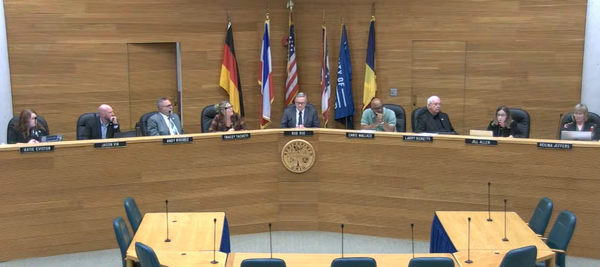
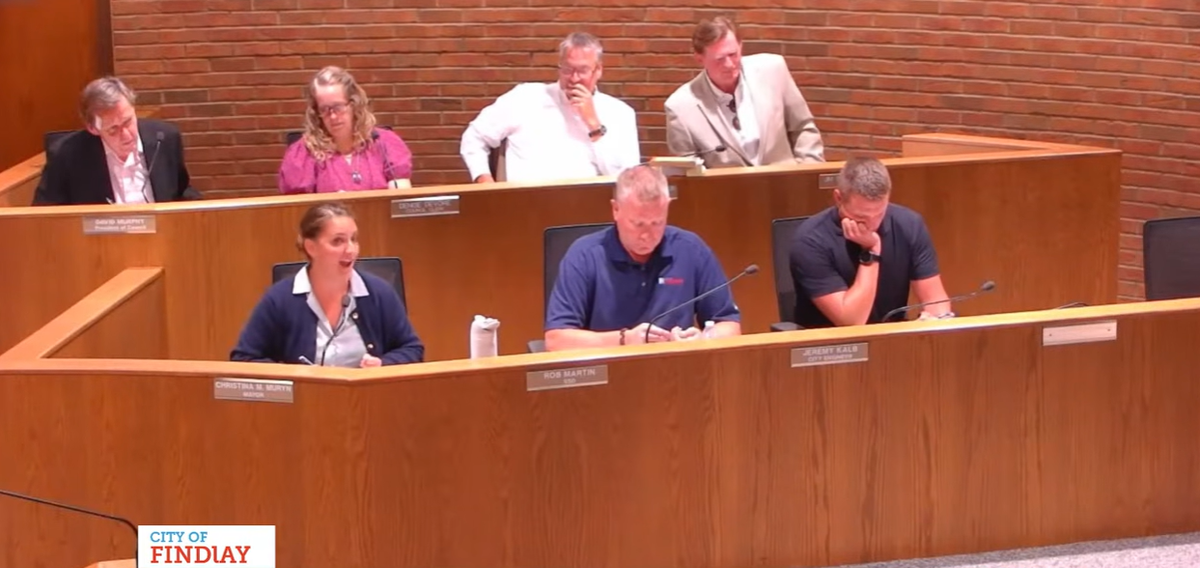
During a contentious city council session Tuesday night, local lawmakers moved to officially postpone formal legislative action on a pending data center ordinance, opting to extend a high-stakes zoning debate that has gripped this northwest Ohio community for months. During the updates, Mayor Muryn drew a sharp line between official city proceedings and the growing grassroots opposition sweeping across Hancock County, issuing a strict warning to the community about external meetings taking place outside municipal oversight.
"There's a lot of educational forums occurring, but I just think it's important to clarify that that is not related to the city and may not be accurate information," Muryn said.
The administration asserted that the they are working diligently behind the scenes to build a "very restrictive methodology" to evaluate incoming technology infrastructure. The city administration has told the council that the city is intentionally pacing itself to design a framework within the construct of what is known today, maintaining that local officials retain the long-term ability to amend the text as technology and localized infrastructure requirements evolve.
But internal communication logs and email archives surrendered by the City of Findlay under the Ohio Public Records Act reveal that the line between public legislation and private interest has been deeply blurred behind closed doors, directly undermining the administration's public pivot toward transparency.
Investigations by The Ohio Register reveal that Mayor Muryn shared Chapter 1144, the city's pending data center legislation, with private economic brokers from the Regional Growth Partnership (RGP) weeks before public release. Following a July 22, 2026, zoning committee session that tightened local restrictions—including a uniform 1,000-foot residential setback and a flat blanket ban on groundwater extraction—internal administrative staff aggressively lobbied against the rules, warning they would consume premium local agricultural resources.
Mayor Muryn subsequently sent the revised draft directly to RGP Executive Vice President Gary Thompson shortly after internal objections were raised, preceding public release by a week. Critics contend that utilizing shielded non-profit networks like RGP circumvents transparency and obscures policy origins, contrasting sharply with Findlay's stated commitment to openness.
Additionally, the mayor's public dismissal of the Put It On The Ballot Findlay Town Hall as misinformation stands in stark contrast to the highly curated and heavily managed information stream that the administration has willingly embraced behind the scenes. According to investigative reports by The Ohio Register, Mayor Muryn and multiple members of the city council previously coordinated with state-funded economic brokers to participate in a heavily staged, pre-scripted "New Albany Experience" tour.
Documents show that this broker-led excursion was specifically engineered to present a flawless, "Hallmark movie" facade of technology infrastructure development—deliberately masking the real-world utility strains and resource exhaustion associated with data centers. By branding authentic citizen-led organizing as "inaccurate" while simultaneously relying on artificial, corporate stage productions to form their own policy understandings, the administration has established a glaring double standard regarding what constitutes legitimate community education, while potentially being provided blank templates MOUs, CRAs and legal process documents to facilitate data center deals in the state.
The underlying friction over data center plans extends directly into Findlay’s long-term utility and financial planning. During the same council session, the Water and Sewer Committee recommended a complete utility rate freeze for the 2027 fiscal year, noting that existing funds are currently stable enough to cover near-term operational costs. Councilman Daniel DeArment highlighted an ongoing partnership with engineering firm Arcadis to develop a 10-to-20-year Water Master Plan.
However, officials explicitly clarified that this comprehensive roadmap is strictly designed to maintain regulatory compliance with the Environmental Protection Agency (EPA) and is intentionally "not for expansion". While the city's sewer fund maintains a strong $15 million balance ahead of a mandatory EPA filing in November, the administration warned that massive, capital-intensive "generational projects" looming in the next two to three years will eventually force major structural rate increases for local taxpayers.
The introduction of high-consumption data centers threatens to completely upend this delicate utility forecasting. Because the Planning and Zoning Committee’s draft framework mandates a strict, flat ban on groundwater extraction to protect local aquifers, any incoming data center would be 100 percent dependent on Findlay’s treated municipal water supply. This environmental protection creates a severe administrative paradox: the zoning text forces data center operators onto the municipal grid, yet the city's newly minted master plan is explicitly not engineered to handle heavy industrial expansion.
Critics warn that absorbing the millions of gallons of water required daily for data center cooling would accelerate the timeline for the city's multi-million-dollar infrastructure overhauls, effectively forcing local residents to absorb spiked utility bills years ahead of schedule to subsidize private tech development. Potentially another item the Mayor's administration may label 'misinformation'.