Bipartisan House Bill 314 Seeks to End Transparency At Taxpayer Expense
BY JEFF SKINNER
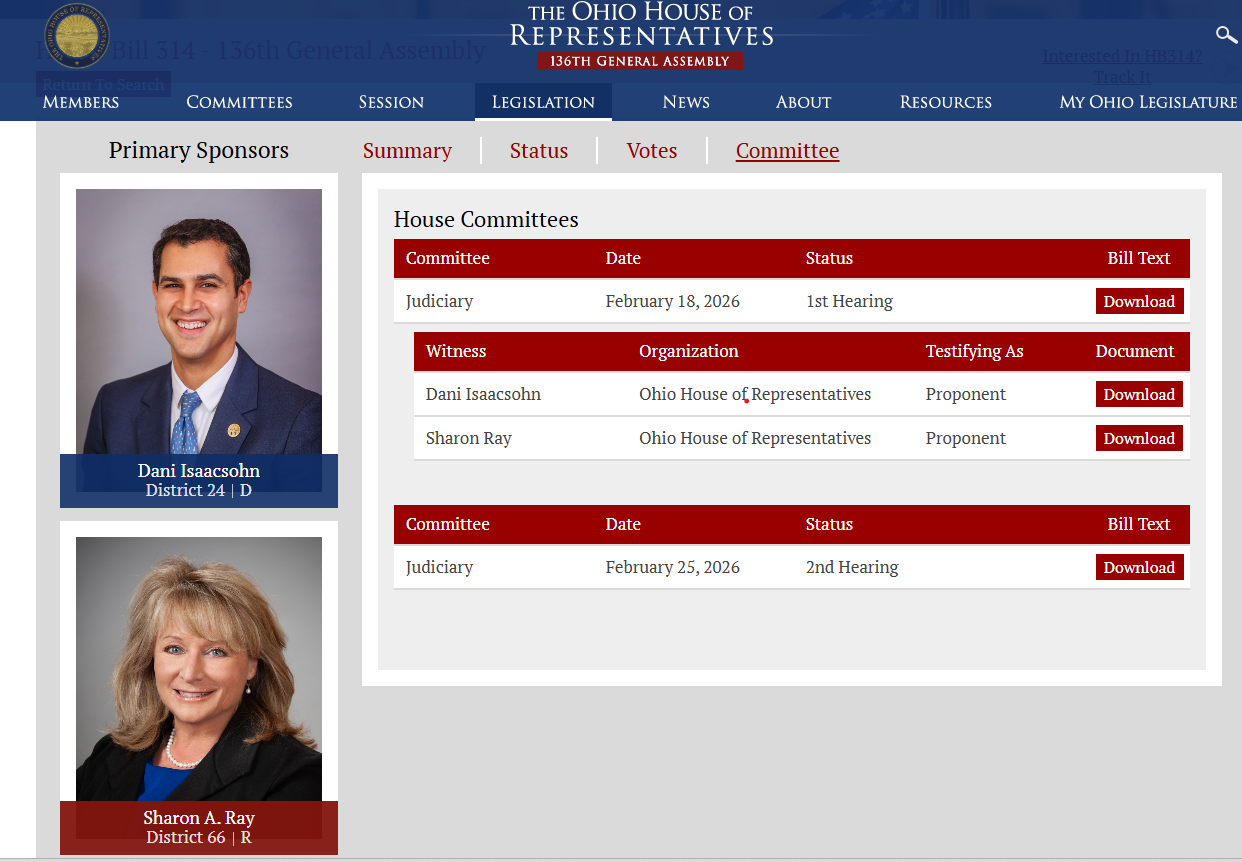
STATEWIDE - On February 18, Ohio House Bill 314 had its first hearing in the House Judiciary. The bill, proposed by Representative Dani Isaacsohn (D-Cincinnati) and Representative Sharon A. Ray (R-Wadsworth), would bring sweeping changes to citizens' ability to request transparency from their government and allow for massive retaliatory action from government actors seeking to shut down requests through the Freedom of Information Act.
The bill, which is currently in the House Judiciary Committee, would bring massive changes to the ability of citizens to submit ‘FOIA’ or Freedom of Information Act requests of their government. Primarily, the bill would allow Court-Ordered Restrictions on "Harassing" Requesters”. Under this legislation, Government offices could petition a court to limit or deny requests from individuals who submit a high volume of requests deemed "harassing" or "disruptive" to essential functions. Courts could also issue orders proactively denying future requests from such individuals. Under the new regulations, governments could effectively sue citizens submitting FOIA requests and according to the bill, while a court case regarding a "harassing" request is pending, the public office's legal obligation to respond is paused, allowing them to forgo any response.
Additionally, under Bill 314, Agencies would be authorized to hire private contractors to manage and respond to "voluminous" requests. Notably, the bill allows the costs of these services to be passed on to the requester as part of the 'copying fees’, which could act as a significant deterrence for citizens seeking transparency from their government under threat of litigation penalties and undisclosed and unregulated 'fees'.
Citizens concerned about the current level of government obfuscation towards transparency see the bill as a massive attack on citizens by an out of control government seeking secrecy and transparency. Of primary concern, is the bipartisan support the bill currently has due to its vague language defining ‘harassing’ requests and the ability for any government institution to block inconvenient requests from their citizenry and bog them down in lengthy court battles and penalizing, retaliatory fees. The bill could effectively turn government structure against citizens from a model where "records belong to the people" to one where the government can sue its own citizens to stop them from asking questions.