Geauga Commissioners Demands Rework of Treasurer Wage Plan to Protect Public Funds
BY JEFF SKINNER
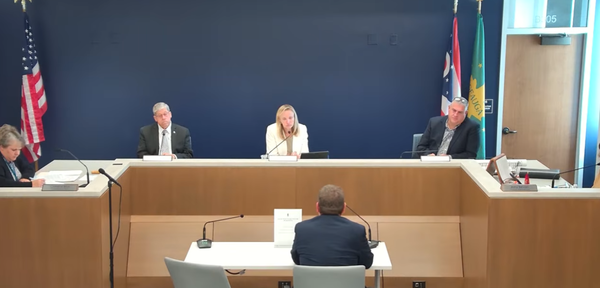
CHARDON - Fiscal restraint collided with the realities of retaining public employees at Tuesday’s Geauga County Commissioners meeting, as a proposed wage hike for the County Treasurer’s office sparked an intense debate over taxpayer optics and government spending.
The three-member Board of Commissioners ultimately balked at approving a flat 30 percent average pay increase for frontline staff, instead pushing the county’s chief financial officer back to the drawing board to craft a more balanced, gradual approach. The move underscored a growing commitment among the commissioners to safeguard public funds and prevent a cascading "ripple effect" of salary demands across other county departments.
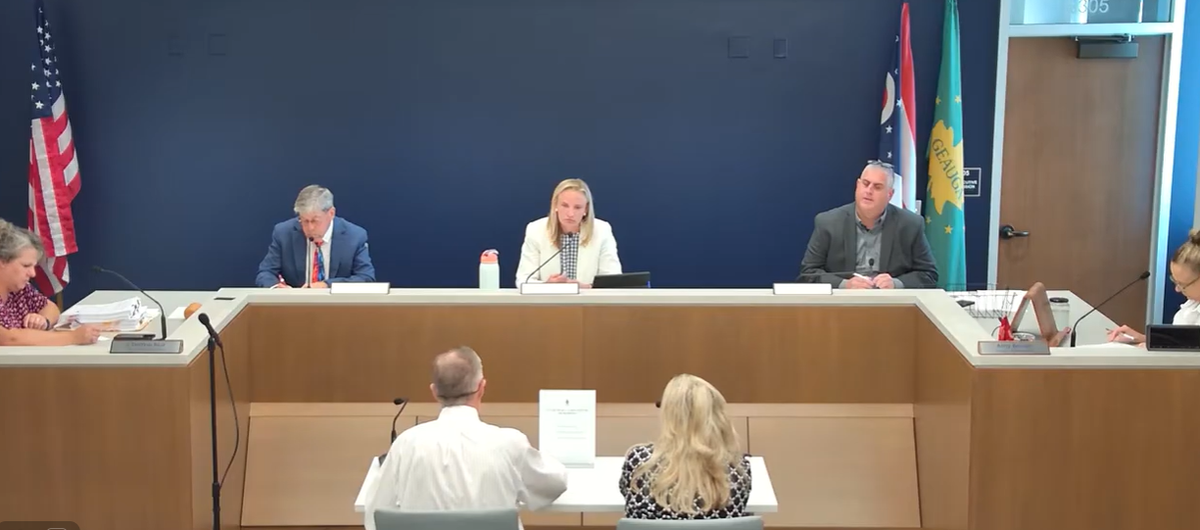
The tension began when Geauga County Treasurer Chris Hitchcock presented the findings of a newly commissioned wage study. Backed by human resources data, Hitchcock requested a supplemental appropriation of $60,625 out of the county’s general fund to immediately adjust the salaries of five deputy treasurers and cashiers.
According to Hitchcock, his office has become a victim of its own high performance. Historically, the salaries for these specific positions were subsidized by the county’s delinquent tax collection fund. However, because the Treasurer’s office has aggressively cleared the county's tax delinquency books, that specific cash reserve has systematically dried up.
"Tax delinquencies are down in our office because of the success of my office," Hitchcock told the board, noting that the positions rank at the bottom of the regional pay scale despite balancing millions of dollars in cash to the penny daily. "It's a two-edged sword... now it's time to pay the piper."
While acknowledging the loyalty and accuracy of the five-person staff, the commissioners quickly identified the immediate 22.9% to 32.5% salary spikes as a pill that local homeowners simply could not swallow.
While acknowledging the loyalty and accuracy of the five-person staff, the commissioners quickly identified the immediate 22.9% to 32.5% salary spikes as a pill that local homeowners simply could not swallow.
Commissioner Carolyn Brakey led the pushback, zeroing in on the message such a sudden windfall would send to working-class families in the community.
"Looking at these individual increases, we're looking at percent increases going from, according to my calculations, 22.9% to 32.5%," Brakey said. "Those are very large numbers I think for a taxpayer to stomach."
Brakey noted that while private-sector workers face grueling economic pressures, approving an immediate 30-plus percent jump using public money lacked baseline accountability. She suggested a conservative "ladder approach"—proposing a modest 10% adjustment for the current fiscal year followed by periodic performance reviews.
Commissioner Ralph Spidalieri struck an even firmer chord, rejecting the notion that a standard government department should receive massive budget boosts simply for executing its core mandate. He compared the scenario to a sheriff demanding financial bonuses for the volume of traffic citations written by deputies.
Spidalieri also pointed out that the high collection rate is a testament to the character of Geauga County’s residents, not just bureaucratic efficiency.
"The success is because we're fortunate with Geauga County t"The success is because we're fortunate with Geauga County that you have accountable residents, homeowners, and business owners that pay their taxes," Spidalieri argued. He warned that bypassing the standard annual budget cycle to hand out large raises would trigger an unsustainable administrative chain reaction. "Next week, Amy's going to have a black and blue year from being on the phone getting calls from everybody calling to say that they want to come in for pay raises."
Faced with a unified front from a board determined to uphold its fiduciary duty, Hitchcock conceded to a compromise. While Commissioner James Dvorak noted that some personnel had historically been underpaid for years, he joined his colleagues in urging a compromise to prevent the request from failing completely.
The commissioners voted unanimously to table the funding request. The decision forces the Treasurer’s office to return in the coming weeks with a transparent, structured "step program" that scales wages safely over a multi-year horizon rather than tearing off the financial band-aid all at once.
The board's practical decision making carried over into a critical discussion regarding the Department of Aging’s Assistance with Daily Living program.
Deputy County Administrator Mark Jimson approached the board seeking guidance on an ongoing insurance dispute that threatened to completely derail in-home care for the county's vulnerable seniors. The county prosecutor's office had recommended that all contracted home-health vendors be legally required to carry rigid "occurrence-based" liability insurance.
However, Department of Aging Director Jessica Boalt warned that standard healthcare vendors exclusively utilize "claims-made" policies. Forcing local small businesses to fundamentally alter their insurance structures just to service county contracts—which represent less than one percent of their total business volume—would cause every single vendor to pull out of the program entirely.
Recognizing that strict bureaucratic legalism would actively harm local seniors who rely on health aides for daily bathing and dressing, the commissioners chose a common-sense path. They directed the department to list occurrence-based coverage as a flexible "preference" rather than a disqualifying bidding requirement, keeping the critical senior network intact while shielding the county from an artificial service crisis.
In a lighter, albeit equally pragmatic moment, the board finalized a regional partnership with neighboring Lake County to house juvenile detainees. The amended agreement introduces the "Lake Effect" program, a specialized cognitive behavioral therapy and rewards curriculum designed to lower juvenile recidivism rates.
The board lauded the shared-services model as a triumph of fiscal responsibility. By utilizing Lake County’s existing facilities rather than sinking millions of local taxpayer dollars into constructing, staffing, and operating an independent Geauga juvenile detention center, the county is actively saving hundreds of thousands of dollars each year.
The meeting concluded with a passionate public comment session from local resident Howard of South Russell Village. Howard raised urgent alarms regarding pedestrian safety outside the upcoming Geauga County Fairgrounds, detailing near-misses involving crowds walking along unlit township roads from makeshift parking lots.
The board took the safety concerns under advisement, instructing administration staff to coordinate crosswalk signage and pedestrian enforcement with Burton Village and the County Engineer ahead of the fair's opening.