DIESEL CRISIS SPARKS RUMORS OF NATIONWIDE TRUCKER SHUTDOWN
BY JEFF SKINNER
STATEWIDE - A viral surge of online rumors warning of a massive nationwide trucker strike on Oct. 1 has ignited widespread consumer anxiety over potential grocery store shortages, highlighting the deep economic distress gripping the U.S. freight sector as diesel fuel costs hit an all-time record high.
While major industry groups stress there is little evidence of a formal, coordinated labor shutdown, individual accounts are claiming individual truckers are agreeing in mass to park their rigs beginning on October 1.
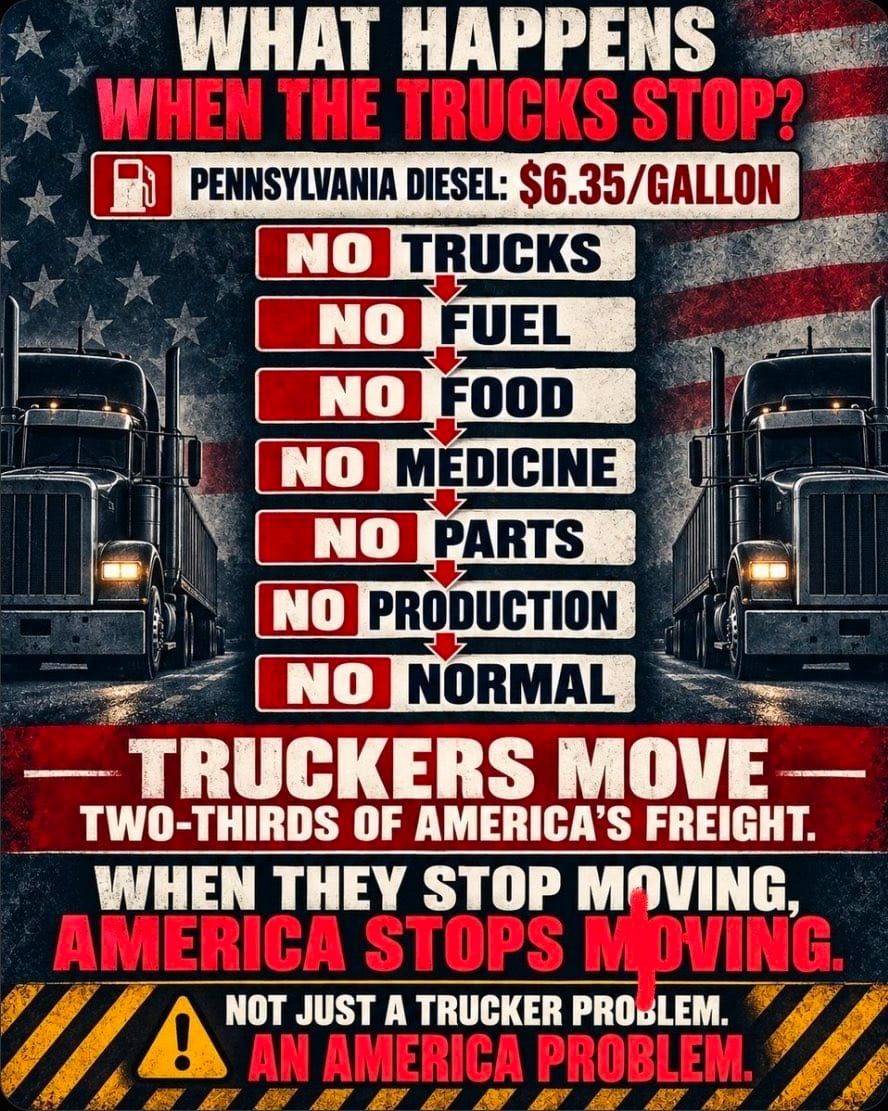
The immediate catalyst for the social media mobilization is a severe financial crisis at the pump. The national average price for diesel fuel stands at a record $6.51 per gallon, driven by global energy supply disruptions following the outbreak of the war with Iran. For independent owner-operators, who make up the vast majority of long-haul drivers, filling an 300-gallon commercial tank now costs nearly $2,000—eating up entire profit margins and forcing many to haul freight at a net financial loss.
The historic surge in diesel prices stems directly from the outbreak of military conflict in Iran in February, which has severely disrupted global energy infrastructure and paralyzed key oil shipping lanes in the Middle East. Because Iran sits along critical maritime chokepoints, the escalating warfare has effectively choked off a significant portion of the world's daily crude supply, triggering immediate panic buying on international energy exchanges and driving the cost of unrefined petroleum to unprecedented levels. For independent truck drivers and agricultural operators paying $6.51 per gallon at the pump, the financial hemorrhage is entirely unsustainable, making an immediate end to the war in Iran the single most logical and critical prerequisite for stabilizing global fuel production, restoring broken supply chains, and preventing a catastrophic domestic economic shutdown.
The localized online chatter, which originated on platforms like TikTok and Instagram, has claimed that as many as 50,000 drivers plan to park their rigs until fuel prices fall. The Owner-Operator Independent Drivers Association (OOIDA) confirmed the strike threats appear limited to unorganized social media chatter.
While no major logistics union has authorized a formal labor shutdown, the physical reality of the U.S. freight network means a localized or organic walkout by just 5% to 10% of the nation’s truck drivers would cause immediate, cascading failures across retail networks.
Trucks haul more than 70% of all domestic freight by weight in the United States. Because modern grocery stores rely on "just-in-time" inventory systems—maintaining only enough stock to satisfy normal consumer demand for two to three days—any drop in active delivery trucks breaks the supply chain instantly.
If even a fraction of long-haul drivers park their rigs, the economic fallout follows a swift and predictable timeline. Within the first 24 hours, high-turnover perishable foods, including milk, fresh bread, and produce, will vanish from store shelves in major metropolitan areas, while clean water supplies to hospitals and water treatment plants will begin to deplete as chemical deliveries face delays. By 48 hours, major retail pharmacies will experience severe shortages of essential prescription medications and infant formula, and gas stations will begin running dry of fuel due to a lack of petroleum tanker deliveries. Within 72 hours, food shortages will escalate to staple goods like canned items, rice, and frozen foods, while component shortages will halt assembly lines at automotive and electronics manufacturing plants, forcing widespread worker furloughs.
The timing of the current diesel crisis intensifies these risks because it coincides directly with the peak fall harvest season across the Midwest. Farmers require millions of gallons of diesel to run harvesting combines and transport freshly cut corn, soybeans, and autumn produce to processing plants.
If transport trucks refuse to pick up these loads because the fuel costs outweigh the freight payout, perishable crops will rot in storage facilities before ever reaching distribution hubs. Even if a widespread strike is avoided, the financial pressure of $6.51 diesel will permanently drive small carrier companies out of business, reducing overall shipping capacity and forcing retail prices higher at grocery checkouts through the winter.
The American Trucking Associations and retail analysts caution that even without a formal strike, sustained high diesel prices will inevitably heavily impact grocery shelves and household budgets. Because trucks haul over 70% of all domestic freight in the United States, any slowdown or financial insolvency among carriers directly delays food deliveries.
Ultimately, the looming threat of an October 1 trucker shutdown underscores a deeper, structural vulnerability within the American economy that extends far beyond online strike rumors. With diesel pinned at a record high, the survival of the nation's critical freight and agricultural networks remains tethered directly to the volatile geopolitical landscape in the Middle East. Until an end to the war in Iran stabilizes global oil markets, independent operators will continue to face an unsustainable financial choice between parking their rigs or driving at a loss. Without immediate relief at the pump, the compounding pressure on logistics capacity guarantees that everyday consumers will bear the final cost at grocery checkouts, leaving the U.S. supply chain in a state of high alert through the winter months.