Ohio Legislature Moves To Indemnify Data Centers While Trying to Dispel 'Myths'
BY JEFF SKINNER
STATEWIDE - The Ohio Legislature has pushed forward House Bill 126, a bill designed to restrict local officials from bringing lawsuits against data center companies that could cause unstated damage to local areas, such as draining aquifers or polluting water supplies with contaminants while claiming to ‘investigate’ validity of issues related to data centers in the state.
HR 126, is officially labeled the Prohibit Certain Public Nuisance Actions bill. According to the bill's supporters, the bill seeks to prohibit "public nuisance actions concerning product liability," specifically altering Section 2307.801 of the Revised Code to bar claims that a product or commercial activity "unreasonably interferes with a right common to the general public".
Critics argue that by restricting legal challenges to direct physical property damage under the Ohio Product Liability Act, the legislation limits the ability of local governments to sue data centers over community-wide impacts such as water usage or power grid strain or other community damage that might be unforeseen.
These ‘unintended’ consequences of data center development are already being felt across the state with rising energy costs for all residents but other states and municipalities across the nation are experiencing problems that Ohio may reasonably fall into as well.
In Lake Tahoe, Nevada, some 50,000 residents were notified that they would no longer have an energy company supplier after the company which previously provided energy to the town, NV Energy, decided to divert power away from the community to power a data center, effectively informing the public they would no longer have access to energy after May 2027.
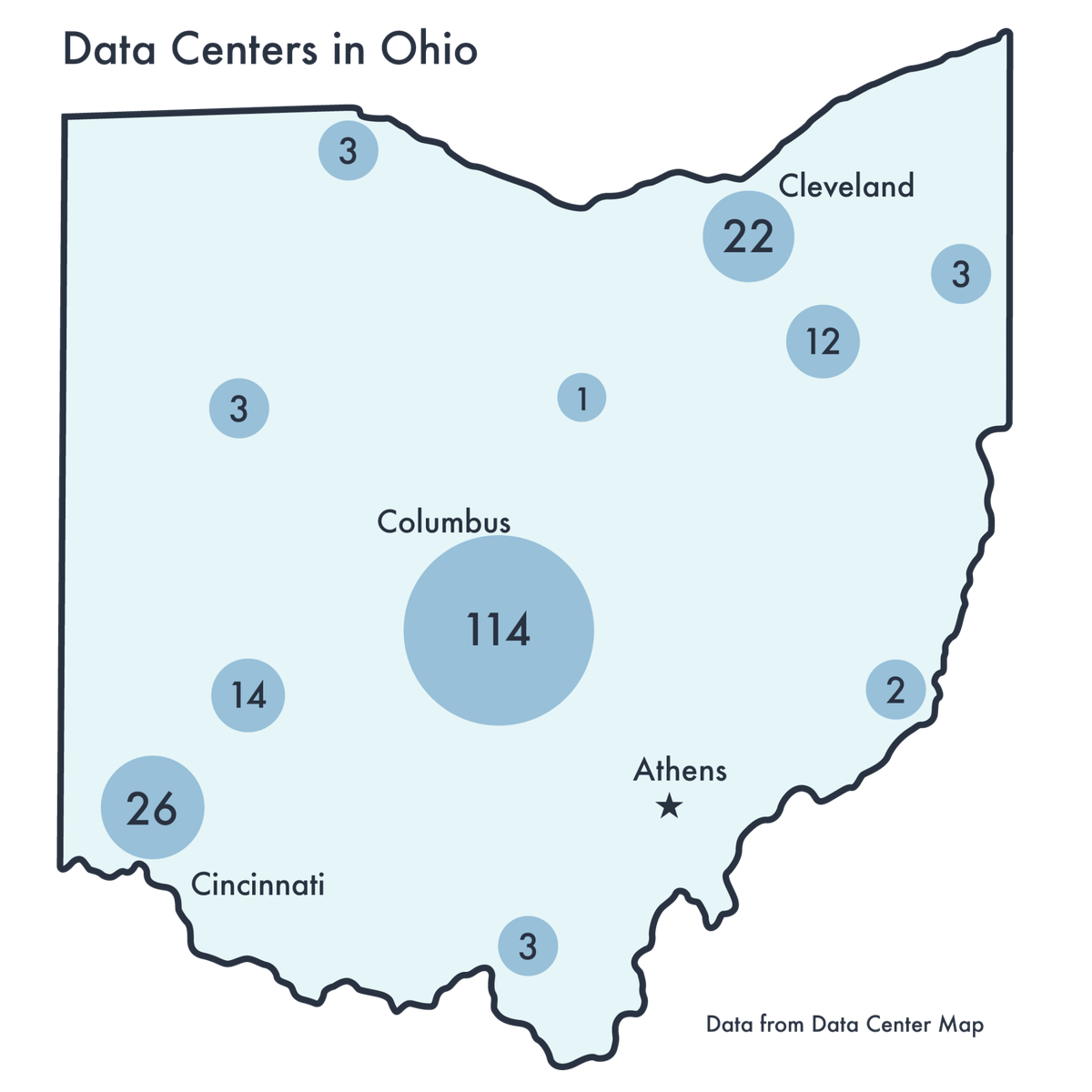
Separately, Throughout central Ohio, communities are already being forced to implement water restrictions on communities due to Data center development with experts citing widespread regional impact to the states water supply. The Mid-Ohio Regional Planning Commission warns that the sheer volume of water used across Central Ohio is contributing to long-term groundwater subsidence, meaning regional aquifers are recharging much slower than they used to.
The Ohio EPA is still currently considering a permit to allow data centers to dump contaminated wastewater into the great lakes region, potentially creating significant downstream ecological damage. HR 126 would prevent local municipalities from bringing lawsuits against developers who create issues like these in communities that could irrevocably harm communities, property values and citizen livelihoods.
Coincidentally, the Ohio Legislature is also moving forward with Ohio House Bill 646 to create a data center committee to explore and dispel data center rumors and myths and provide ‘accurate’ information to township trustees, village council members, mayors and more. Large tech companies tied to the issue are already set to provide information and testimony to the committee while bills such as House Bill 695 (The Anti-NDA Bill), House Bill 784 (Water Consumption Reporting) and House Bill 706 (Ratepayer Protection Act) sit and languish.
Critics of the move argue that answers to the question the commission may want most likely already exist if the legislature had the foresight to indemnify data centers preemptively to them through HR 126, making the commission just a mouthpiece to a predetermined tech structure.