Public Continues To Request Government Action on Flock, Immigration; 'Weiner-Gate' Government Continues To Ignore
BY JEFF SKINNER
SPRINGFIELD - In a tense, emotionally charged session that exposed deep fractures between local officials and the community they govern, the Springfield City Commission moved forward with expanding electronic surveillance on its residents while remaining tightly closed-mouthed regarding a state-level criminal investigation into its top administrative officer.
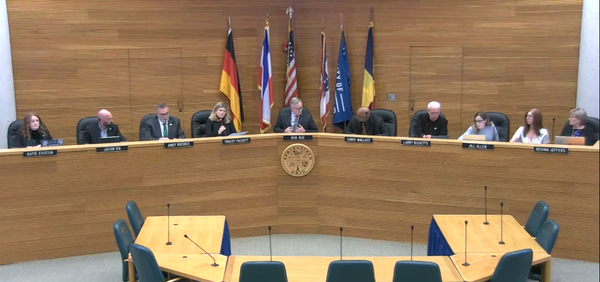
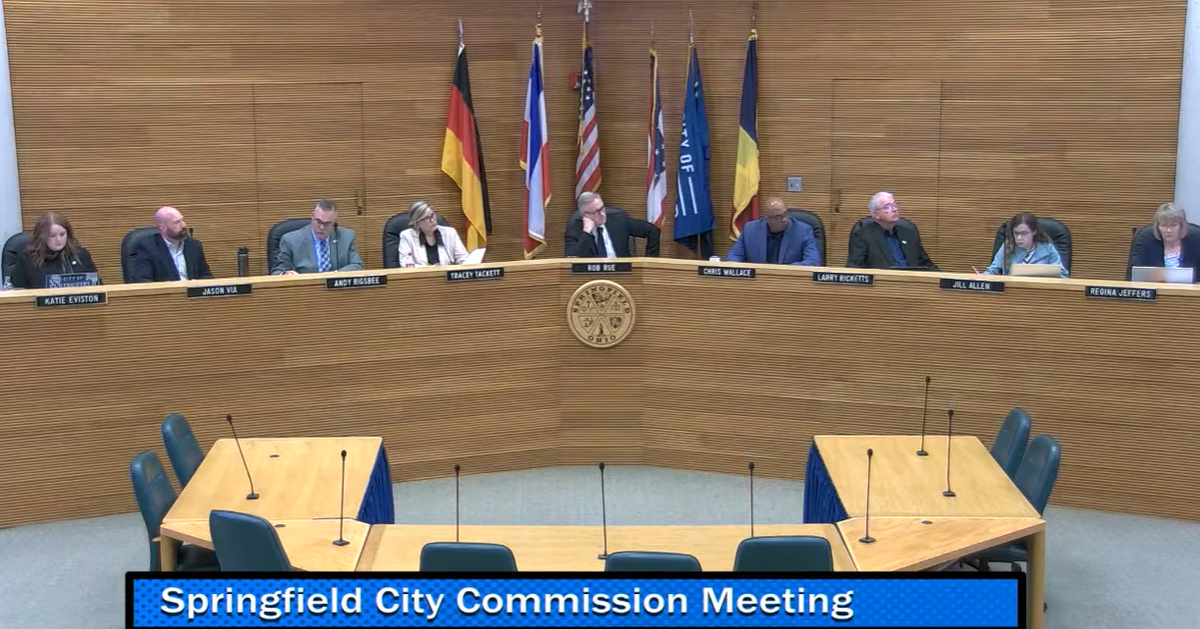
The August 11, 2026, Springfield City Commission meeting began under the shadow of a worsening transparency crisis. During the opening segments of the session, the city’s Law Director read an official statement confirming that City Manager Bryan Heck is the subject of an active investigation by the Ohio Bureau of Criminal Investigation (BCI). Citing the independent review, the Law Director instructed Mayor Rob Rue and the sitting city commissioners to refrain from making any public comments, effectively imposing a legal gag order on the dais.
The disclosure provoked immediate outrage from the audience, with local residents taking to the microphone to criticize what they described as a calculated culture of secrecy and a total collapse of moral integrity within city leadership.
"I have asked several meetings ago about how raises were determined and why Bryan Heck received such a high salary," Springfield resident Melissa Rexroth told the commission during a heated public comment period. Rexroth pointed out that despite massive increases in the city’s payroll and significant raises handed out to top executives, the town continues to suffer from systemic challenges. "For the state that the city is in, I don’t know how you’re not embarrassed."
According to unconfirmed reports circulating social media, City Manager Bryan Heck allegedly placed his genitals on another mans face who was sleeping. According to social media discussion, letters were received by the commission indicating photographs were taken of the event. The controversy has led to a number of social media memes and posts circulating to parody the government, leading to the term 'Weiner Gate' to refer to the event. Springfield Government has issued no official statement on the allegations as of yet.
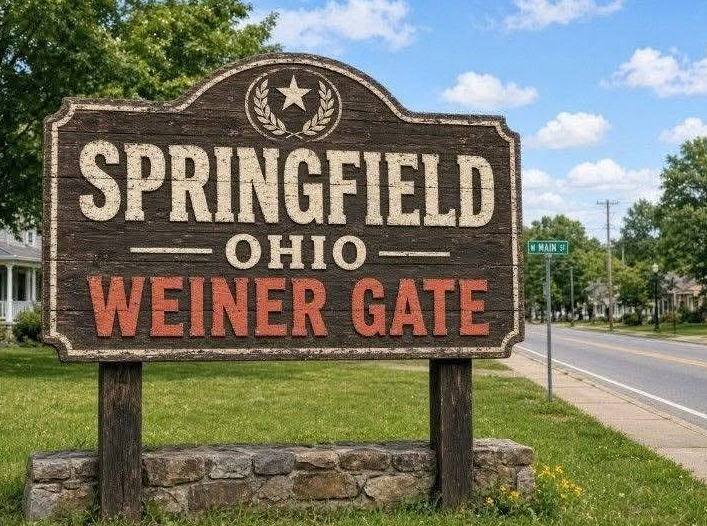
While the Springfield Govenrment is being tightlipped on the issue, news reports have indicated the current criminal investigation surround allegations of 'sexual battery'. If the allegations online and speculation is accurate, it would explain the referral for criminal investigation and the potential criminal charges associated, as referenced in the letter obtained by Springfield News-Sun.
Heck's attorney has denied any allegations and has stated they believe the investigation will clear Heck of any wrong doing.
The friction in the chambers escalated significantly when the commission turned its attention to second readings on legislative items, specifically a resolution authorizing a $114,000 payment to continue its relationship with Flock Group Inc. The expenditure funds the second year of a contract for an automated license plate reader (ALPR) camera network distributed across the municipality.
The contrast between the government’s demand for privacy regarding its own alleged misconduct and its parallel push for invasive monitoring of everyday citizens was not lost on the public. Activists and residents argued that a local government facing serious criminal scrutiny lacks the ethical standing to manage a surveillance network capable of tracking the vehicular movements of thousands of people.
Members of the public highlighted clauses within the vendor's terms of service granting Flock a limited, perpetual, and worldwide license to utilize customer data to support its proprietary products.
Other attendees, including resident Amanda Richardson, warned that data safeguards were fundamentally flawed, pointing to documented security lapses in other American municipalities where Flock technology has been deployed.
"The data is being shared with everybody even when you don’t approve it," Richardson said, expressing skepticism over internal oversight. "Every time Flock just says, 'Oopsie, we made an error.' They don't fix it."
Despite the wave of public opposition and requests to "bag the cameras" or put the surveillance program up for a public ballot vote, the commission voted unanimously to approve the $114,000 expenditure.
Springfield Police officials and commissioners strongly defended the electronic net. Law enforcement representatives claimed that the Flock ALPR system is completely segregated from the Law Enforcement Automated Data System (LEADS) and requires independent audit justifications for every search. According to figures shared by administrators, the internal system flagged 63 irregular or irregular-looking searches between January 1 and August 11, these have allegedly been referred to nvestigation by supervisors to ensure compliance.
Commissioners maintained that the technology remains a vital tool for responding to violent incidents, locating missing persons, and solving complex crimes, promising to re-evaluate the entire scope of the program before the formal two-year agreement expires next year. Commissioners have not commented on the multitude of safety issues surrounding flock, including foreign national access to equipment and though SPD Chief Allison Elliot has regularly maintained the system is tightly controlled, the department has failed habitually to address inconsistancies and arguments known to be inaccurate in the debate regarding length of time of information logged and what information can and is collected by the system.
Despite these concerns, and ironically opposite statements on their potential usage from the SPD Chief of Police, Mayor Rob Rue stated he believes the cameras that Chief Elliot stated are only photographing license plates, are also somehow solving murders, though he stipulated not in Springfield.
"I'll speak for myself personally, I do believe that these systems must be held accountable, Rue said. So, whether I do agree with many of your concerns, uh, but I will personally tell you that we are fighting crime with these. There are people there are murders being solved with these cameras. There are people that have been lost found with these cameras. Uh not in the city, but in and there's been other cases solved. Uh so maybe in the city, too. But I just want to say I wouldn't I personally would not sit here and vote yes on this without really contemplating some of these. And and this is going to sound silly, but but I do mean it. Bad guys are getting better. and and if we don't give our officers and our department the right equipment to keep us safe, we're not going to be safe. At the same time, I do want to be clear. Tech needs accountability. So, I agree with you 100% on that. With that, I know the chief's prepared some remarks and then other commissioners may have remarks."
The commission voted to approve the continued funding of Flock.
Outside of the continued outcry of the public for Springfield Commissioners to end Flock Camera contracts and Data Center development, the city has issued a statement regarding the ongoing speculation on the potential for ICE involvement in the city.
In response to the mounting community distress, Mayor Rob Rue read an official administrative statement regarding the local status of Temporary Protected Status (TPS) and federal immigration enforcement. Rue clarified that the Springfield City Commission has not received any formal notifications from federal agents regarding planned local operations, reiterating that immigration enforcement remains strictly a federal responsibility while the city’s mandate is limited to public safety and infrastructure. The Springfield Police Department did state they manually enabled an internal software filter to block immigration-related searches on their system. However, the police department openly acknowledged that this shield is merely an internal "matter of preference" rather than an established local ordinance or a binding legal policy.
Many residents have grown restless and frustrated with the perceived lack of action from Immigration Customs Enforcement, especially in light of the passing of the "One Big Beautiful Bill" Act (OBBBA) which allocated $75 billion for the purpose of facility construction and enforcement expansion. The pomp and circumstance of the bill's passing seemed to have culminated in televised action in Minnesota, resulting in minimal actual enforcement and action as much of the individual infrastructure that facilitated the mass migration and replacement labor pipelines there still exist.
As it stands, commentary from law enforcement in and around Clark County, as well as from city officials, indicates that despite the repeated political opportunism on display in invoking the name and turmoil of Springfield residents to achieve election victories and secure billions in funding nationally, the breadth of action after months of court battles has resulted in less than 12 ankle monitors placed on illegal Haitian migrants with tens of thousands still unaccounted for in and around the city.