Flock Cameras and Mass Immigration Form Springfield Recipe for Public Frustration
BY JEFF SKINNER
SPRINGFIELD — Following the abolition of Temporary Protection Status for many in the Haitian community of Springfield Ohio, local commissioners may be shifting their priorities on technocratic surveillance systems in the city.
A sweeping debate over the city’s network of automated license plate readers (ALPR) exposed deep civilian anxieties regarding government surveillance. The public dispute dominated the citizen comment portion of the meeting, drawing sharp testimony from local advocates, legacy residents, and municipal officials. The dialogue forced a public defense from local law enforcement regarding how police balance public safety against constitutional rights to privacy in an increasingly "Big Brother-esque" landscape.
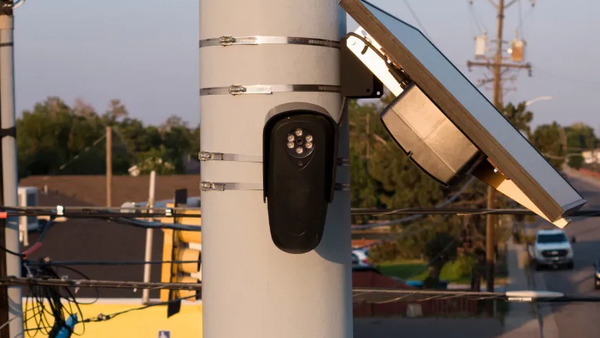
The primary policy clash centered on the Springfield Police Division's ongoing deployment of automated license plate readers manufactured by Atlanta-based tech firm Flock Safety, a company steeped in controversy due to the open access nature of the devices, allowing build-on accessories and programs to do far more than just read plates.
Resident Amanda Richardson led the pushback against the hardware, focusing her testimony on municipal data-sharing frameworks and structural flaws in external tech oversight. Richardson challenged the common corporate defense that Flock provides municipal clients with automated audit logs, arguing that small to mid-sized police forces lack dedicated, professional information technology personnel to actively inspect those records.
"The reality is most police departments don't have dedicated IT staff," Richardson said, adding that smaller regional networks frequently leave system oversight to an individual sergeant who happens to be proficient with smartphones, rather than an enterprise IT professional. Richardson cited recent investigative findings from independent cybersecurity outlets like 404 Media, which exposed instances where active Flock camera systems were left exposed to the open internet due to telecommunications vendor errors. Richardson warned that standard consumer gaming computers equipped with modern penetration tools can scan the entire internet in less than an hour, making unsecured camera endpoints highly vulnerable to bad actors, stalkers, and domestic abusers.
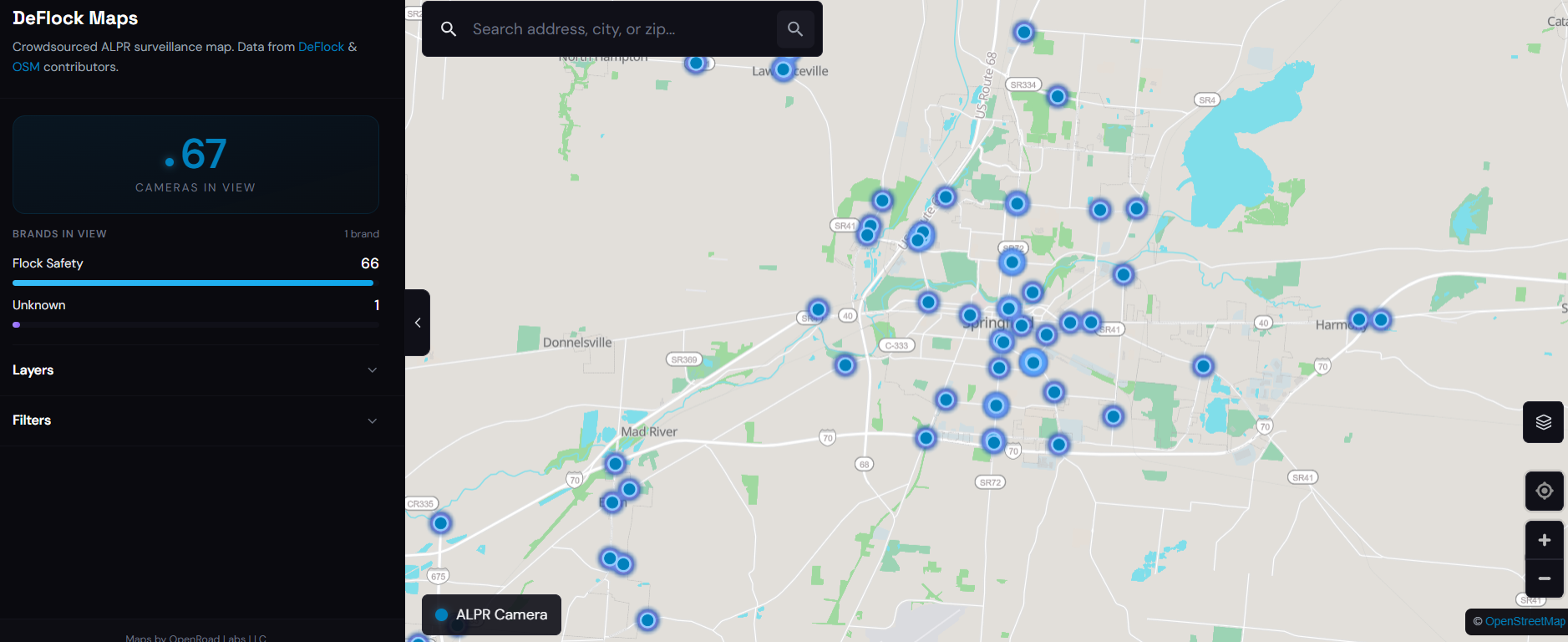
Local speakers Joe Potter and Laura George expanded upon the privacy and legal risks, contextualizing the cameras within Springfield's specific immigration landscape. Potter questioned why Springfield maintains an exceptionally high concentration of license plate readers relative to its population, asserting that the city has 38 to 48 active cameras deployed.
"Per capita, that's a lot more than Dayton," Potter testified, pointing out that neighboring Ohio municipalities like Dayton and Cleveland have recently taken steps to scale back, bag, or completely dismantle their Flock camera networks due to tracking concerns.
In response to the public pushback, Mayor Rue called Springfield Police Chief Allison Elliot to the podium to deliver a formal operational clarification regarding the division's technological boundaries. Chief Allison asserted that public safety and personal privacy are not mutually exclusive values, and sought to correct several public misperceptions regarding the hardware.
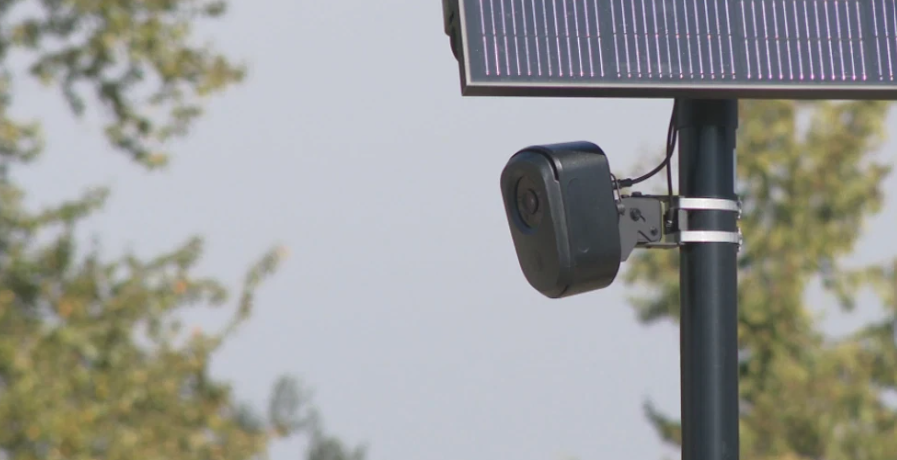
Chief Allison stated Springfield does not operate continuous, live-streaming video surveillance feeds, nor do the municipal cameras utilize panning, tilting, or zooming functions. According to Allison, the devices are entirely fixed license plate readers that take static snapshots triggered exclusively by a vehicle passing through a designated frame. According to Allison, the software reads the license plate characters and logs visible vehicle identifiers like color, make, and model, but does not contain or display any personal identifying information, names, addresses, or owner demographics within the Flock database itself. According to Allison, to connect a vehicle snapshot to a human identity, an officer must manually cross-reference the data within entirely separate state-regulated law enforcement databases.
Addressing the network's scale, Allison noted the city currently deploys 38 active cameras in fixed locations across the municipal footprint. The hardware was purchased in 2023 utilizing targeted grant funding via the federal American Rescue Plan (ARP), which legally restricted the cameras' deployment to areas heavily impacted by gun violence and serious violent crime. She confirmed the city does not utilize audio-detection systems like ShotSpotter, which are deployed in larger metro areas like Cincinnati and Columbus, and that the department has rejected multiple sales pitches to expand into audio recording.
Evaluation of the claims from Allison however reveal significant deficits in understanding of the contracts the city likely signed and the technology it utilizes. According to the American Civil Liberties Union, a police department's control over its data is sharply limited by the fine print of its contract and the architecture of the vendor’s network.
Chief Allison stated that the cameras operate strictly under standard 30-day hard-deletion rules. However, once Springfield police officers query a plate or manually add a license plate to a localized "Hot List," that data is exempted from the rolling 30-day purge. It is indefinitely archived as active investigative evidence in a cloud database governed by Amazon Web Services (AWS) lifecycle rules, where it remains searchable by external authorized entities.
A major shift occurred in Flock’s standard Terms & Conditions. While police departments are told they legally "own" the data, the revised terms grant Flock an exclusive, perpetual license to control and utilize customer data. Crucially, the company removed its historical protection clause stating “Flock does not own and shall not sell Customer Data.” This change gives the vendor wide latitude to use Springfield’s public street data to train commercial AI algorithms or monetize metadata aggregation.
This information is independent of the claims regarding citizen surveillance concerns. While the system does not pull from the BMV automatically, location data is personal identifying information (PII) under modern privacy frameworks. Mapping the sequential movement of a unique license plate allows algorithms to flag a vehicle's home base, workplace, and social habits. This metadata belongs entirely to Flock's cloud network and are not exclusively owned by SPD.
The surveillance debate served as an entry point for broader public friction regarding the city’s shifting demographics and economic structure. Local resident Diana Daniels delivered an intense, multi-minute critique of Springfield's current socioeconomic trajectory, focusing her opposition on a network of non-governmental organizations, civic groups, and corporate enterprises.
Daniels accused a broad coalition of local entities—specifically naming the Springfield Partnership, the Springfield Foundation, the Chamber of Commerce, St. Vincent de Paul, and the Nehemiah Foundation—of operating what she labeled an "NGO administrative-industrial complex". She argued that these institutions, alongside large-scale corporate employers including Topre, Dole, KTH, and Amazon, the company housing Flock collected data, have financially profited by facilitating rapid demographic changes to secure cheap labor, to the detriment of Springfield's long-term heritage citizens.
Daniels urged the commission to immediately rescind Resolution 5844, a municipal measure originally passed by the city council and mayor in 2014 that established immigrant integration frameworks. She alleged that local leaders had historically ignored citizens' alerts regarding substandard housing conditions, specifically citing instances where large numbers of immigrant laborers were allegedly forced to live in overcrowded corporate-leased environments, such as the historic St. Joseph rectory.
"We begged you for an opportunity to have a seat at the table," Daniels stated, asserting that concerns regarding community infrastructure, public safety, and human welfare had been unfairly dismissed by past administrations.
Mayor Rob Rue has instructed SPD Chief Elliot to look into the concerns vocalized by citizens and report back to the commissioners.