Springfield Advances $1B Aerospace Deal Amid Fierce Public Debate Over Immigration and Transparency
BY JEFF SKINNER
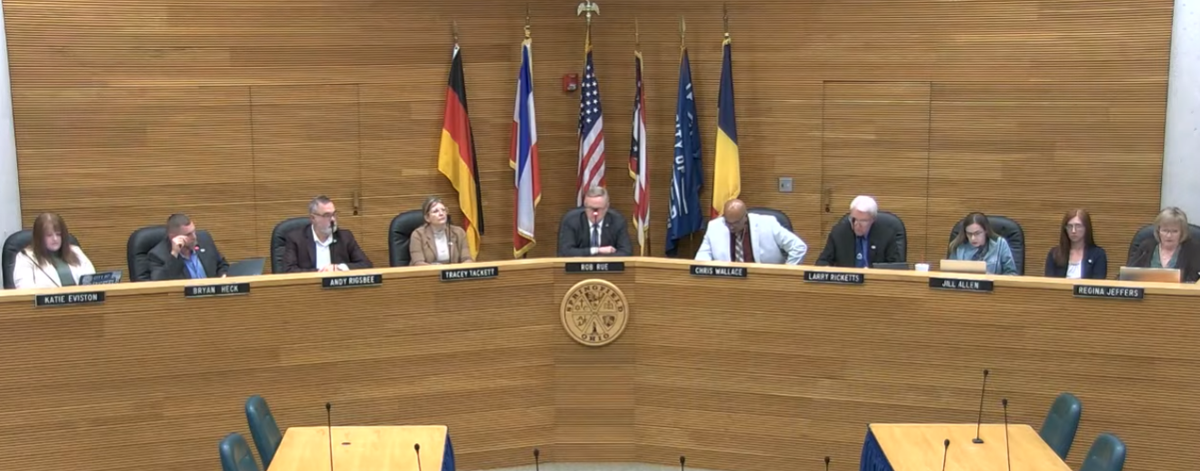
SPRINGFIELD - The Springfield City Commission advanced a series of major economic development and federal housing measures during a contentious public meeting Tuesday, as local officials worked to balance multi-million-dollar tech investments against an outpouring of intense resident frustration over immigration, transparency, and high-tech surveillance. The session laid bare a deepening friction between the city’s aggressive pivot toward advanced aerospace manufacturing and a working-class community grappling with rapid demographic shifts and a perceived loss of municipal accountability.
Headlining the legislative agenda was the first reading of a multi-tiered development package with Electra Aero Incorporated, an aerospace firm manufacturing hybrid-electric aircraft. Under the proposed terms, Electra will purchase 88.5 acres of Air Park property at the Springfield-Beckley Municipal Airport for $2.5 million.
Tom Franzen, Assistant City Manager and Director of Economic Development, informed the commission that the transaction covers the airport’s final remaining open acreage and that the funds will be legally restricted to financing critical on-site infrastructure upgrades, including an upcoming major runway repaving project.
State officials have formally designated the expansion a "mega project," projecting a $1 billion total capital investment. The factory is expected to gradually ramp up production to create 1,975 permanent jobs supported by an estimated $181 million annual payroll once fully operational, though critics are skeptical about who those jobs will go to.
To secure the facility, the city introduced a 7-year, 50% Employment Incentive Agreement Grant. Franzen emphasized that the tax-sharing agreement functions strictly as an "earned program," meaning municipal funds will only be paid out incrementally based on actual, audited payroll taxes collected from active workers. Dan Levy, Electra’s director of communications, testified that the company plans to officially break ground and begin moving dirt in the second or third quarter of next year.
In a parallel financial action, the commission approved more than $2.3 million in federal grants from the U.S. Department of Housing and Urban Development (HUD) for the upcoming fiscal year. The approved funding layout details $1,739,529 for the 2026 Community Development Block Grant (CDBG), $152,941 for the Emergency Solutions Grant, and $451,776 for the HOME program.
City leaders concurrently authorized the city manager to enter into a $269,870 Continuum of Care supportive housing contract with Homeful, a regional non-profit housing organization, to administer tenant-based rental assistance programs through March 2027.
The introduction of the HUD and Homeful contracts triggered sharp pushback from local residents during an extended public comment period, with multiple speakers accusing Mayor Rob Rue and the commission of maintaining a severe "lack of transparency" regarding taxpayer-funded housing initiatives.
Community members targeted previous city-backed hotel acquisitions, alleging that officials spent up to $4 million in public funds to acquire deteriorated properties—such as the former Villager Inn and Executive Inn—that residents claimed were valued at half that amount.
Springfield’s Finance Director, Katie Eviston, strongly defended the municipal records, asserting that all property appraisals strictly adhered to local, state, and federal legal mandates. Eviston stated that the former Villager Inn had to be demolished to protect public safety following severe fire damage and vandalism, and noted that Homeful was the sole respondent to an open, competitive request for proposals (RFP) to operate the remaining facility. The city contract, officials noted, only reimburses documented expenses rather than vacant rooms.
The housing debate quickly merged with broader anxieties regarding Springfield's structured shifting demographics. One resident, referenced recent national political presentations to highlight the structural strain caused by an estimated influx of thousands of Haitian and Hispanic immigrants over the last several years. Citizens alleged that the rapid demographic expansion had created an artificial "drain on heritage residents" who felt forced to vacate local housing blocks, while arguing that early migrant arrivals in 2020 and 2021 had been systematically exploited by local labor structures under unfulfilled promises.
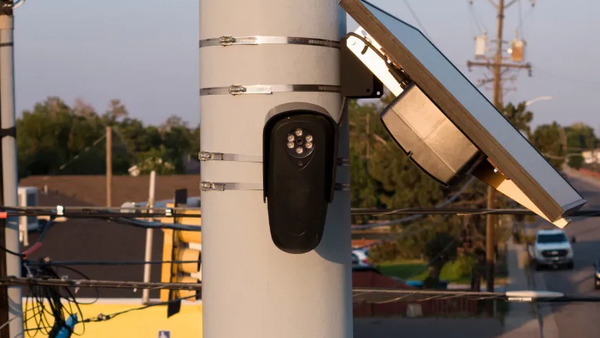
The commission also faced sustained public demands to terminate its active municipal contract with Flock Safety, a private vendor providing automated license plate reader (ALPR) surveillance cameras to the Springfield Police Department.
One citizen urged the city to cut ties with the network, citing a recent federal court ruling that determined similar mass-surveillance cameras violate citizens' Fourth Amendment protections against unreasonable searches. The citizen further criticized the city’s formal denial of his public records requests seeking internal database search audits, stating, "It is very difficult to know what specifically Flock is being used for".
The city’s legal department confirmed that while baseline records were provided, internal police search audits are legally exempt from public disclosure under the Ohio Revised Code.
Springfield’s Police Chief, Allison Elliott, and local law enforcement managers aggressively defended the surveillance grid, defining it as an indispensable investigative tool.