Springfield City Commission Tables Emergency Homeless Shelter Purchase Following Intense Southside Backlash
BY JEFF SKINNER
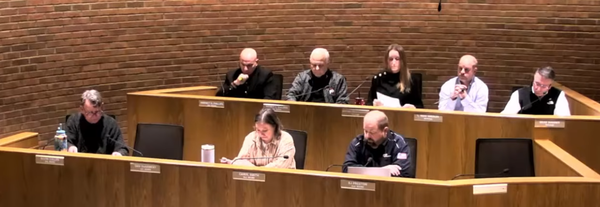
SPRINGFIELD — The Springfield City Commission tabled a trio of emergency ordinances Tuesday night that would have authorized accepting grant funding and purchasing a former county educational building for a new homeless shelter, following intense pushback from Southside residents, faith leaders and civil rights advocates who accused city officials of rushing the decision without community input.
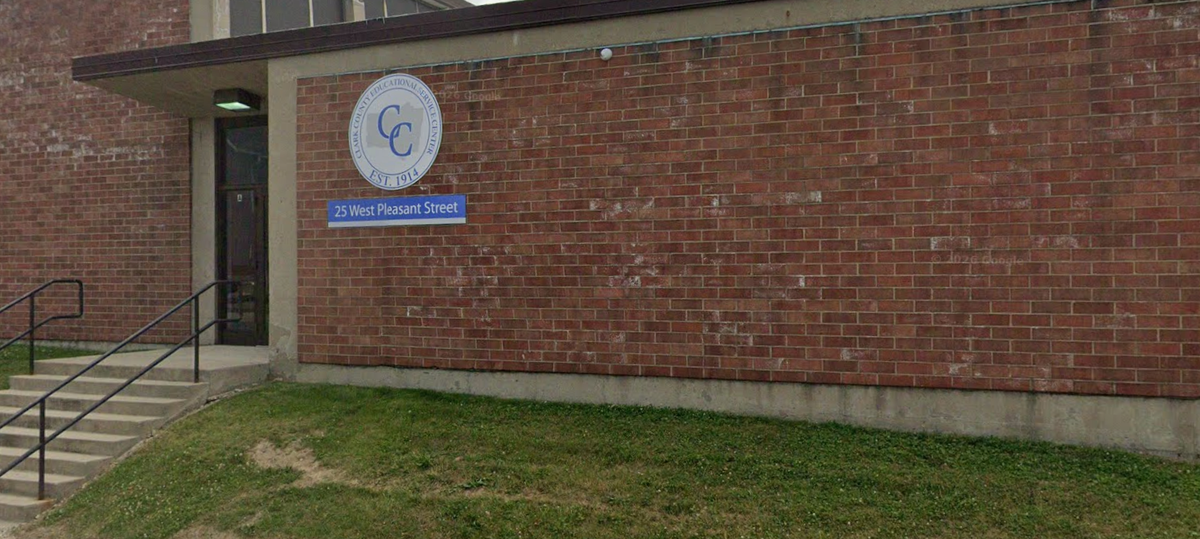
The proposed legislation centered on Ordinance 24326, which sought to purchase the former Clark County Educational Service Center at 25 West Pleasant St. for $350,000, alongside two companion ordinances accepting up to $250,000 from the Clark County Board of Commissioners and additional funding from the Crabill Family Foundation.
After more than an hour of pointed public opposition, Mayor Rob Rue acknowledged "great pause" regarding the project. Commissioners voted 4-1, with Commissioner Larry Ricketts dissenting, to withdraw an initial motion to accept the county grant money, before moving to table all three ordinances for at least two weeks to allow for public dialogue.
Community Development Director Logan Cobbs told commissioners the city has worked for the past year alongside Dayton-based nonprofit Homefull to identify a permanent facility following the closure of Sheltered, Inc. earlier this year. Cobbs stated the 25 West Pleasant St. site was envisioned as a comprehensive resource center offering emergency shelter, housing navigation, case management, employment stabilization and health care connections. She noted that the city's temporary shelter on Commerce Road can accommodate no more than 35 individuals, adding that approaching winter weather created urgency.
Dozens of residents and community leaders, however, criticized the commission for introducing the measure as an emergency with virtually no advance notice to the surrounding neighborhood.
Citizen Melissa Rexroth questioned why the ordinances were classified as emergencies and urged commissioners not to vote on any of the three measures. Challenging the city's past real estate record regarding homelessness, Rexroth reminded officials that they previously told residents the city was buying two hotels to house the unhoused, noting that neither the city nor the homeless population has those properties today. She told commissioners directly that she did not want them buying anything.
Earlier in the meeting, Rexroth also pressed city officials on transparency regarding a separate $60,000 Community Development Block Grant allocation to the Clark County Land Reutilization Corporation for an accessible parking lot at 504 West Euclid Ave. After questioning Land Bank Executive Director Ethan Harris about the project's exact location and neighboring properties, Rexroth asked Cobbs whether the $60,000 grant was publicly announced or competitively bid, prompting Cobbs to confirm the land bank did not competitively apply because the funding was a continuation of an existing, multi-phase park partnership.
Representatives from The Amos Project, including Catherine Peru and Adam Banks, alongside Springfield NAACP President Denise Williams and resident Marcita Jeffrey, urged the commission to postpone the shelter vote. Speakers argued that placing a shelter at the southeast corner of Pleasant and Center streets directly contradicts the city's 2020 Engaged Neighborhood Plan, which designated the gateway as an African-American cultural corridor and historic tourist destination centered around the Gammon House.
Resident Diane Means and Marcy Langford of the Church of Jesus questioned why the Southwest Quadrant was again being asked to shoulder a citywide social service burden while boarded-up former shelter properties and a vacant apartment complex on South Yellow Spring Street sit unused. Resident Dale Henry criticized officials for attempting to pass grant acceptance ordinances before consulting nearby institutions, including the Church of Jesus, St. John Missionary Baptist Church, Second Baptist Church and North Street AME Church. Another speaker, Sheila Henry, questioned the city's reliance on Dayton-based Homefull rather than utilizing local graduates from Wittenberg University and Clark State College to operate a Springfield-led facility.
Resident Diana Daniels offered a contrasting perspective on the urgent need for shelter facilities, sharing her personal experience with homelessness and noting that Springfield currently has no permanent shelter infrastructure. Daniels pointed out that with Springfield's average income around $49,000, many local residents are less than one paycheck away from losing their housing. While acknowledging the historical significance of the Center Street corridor and landmarks such as the Gammon House, Daniels argued that unhoused residents need a concrete address as a critical first step toward stability and recovery, stating that the community had to start somewhere.
"I would agree that that corridor probably has some significance. I'm probably familiar with the Gammon House and other historical buildings up and down that corridor. That building is basically old school and we're going to argue about it and be on different sides of the fence. We had to start somewhere and I think there's enough partners in there to get it started and at least give us a step up and then move on to other quarters later on. So I'm just one of those people that was homeless, know what it's like, and even when I was housed I wasn't making enough to feed myself—just enough to keep a roof over my head. So if that has not been you, then you don't have any skin in the game. Thank you"
During the opening public comment period, Daniels also raised two separate neighborhood maintenance concerns. She asked city officials how many code enforcement officers Springfield currently employs compared to four years ago in 2022, questioning who picks up the slack if staffing has declined. Daniels also demanded action on a heavily vandalized, unsecured former Dairy Queen building at 1520 South Yellow Spring St., which she described as having kicked-in doors and sitting in extreme disrepair along a key neighborhood corridor.
Beyond the shelter debate, several other public complaints and legislative items came before the commission Tuesday. District 4 resident Camille Hall criticized the city after road paving on East Main Street obstructed the primary entrance to her assigned polling location on Election Day without detour signs, forcing elderly, disabled and bused voters to navigate an active construction zone. City officials apologized, explaining that the paving contractor set its own daily work schedule and that a nearby shooting at a former bowling alley had simultaneously drawn police officers to the area. Hall also requested city intervention at a blighted, windowless duplex at 348–350 Forest Ave. that she said is deterring commercial investment across the street.
Resident Amanda Richardson warned the commission and audience about a leaked, unnumbered draft bill in the Ohio General Assembly. Richardson stated that state lawmakers are attempting to pass the measure during the lame-duck session while holding a veto-proof supermajority against Gov. Mike DeWine to expand the Ohio Power Siting Board's eminent domain authority for major power grid expansions. She urged residents to contact State Sen. Kyle Koehler and State Reps. Bernard Willis or Levi Dean to oppose the legislation.