
Springfield Commission Votes to Insulate Heck, Approves Additional Airport Construction Ahead of Electra Takeover
BY JEFF SKINNER
SPRINGFIELD - Tuesday’s Springfield City Commission meeting sent a clear message to local residents on how the commission views their own behavior as citizens delivered fierce pushback against elected officials over a newly finalized amendment to the city manager's employment terms, a heavily debated airfield expansion project, and a widening representative disconnect inside City Hall. The meeting highlighted a deep fracture between city planners aggressively pushing for federal aerospace investment and a vocal contingent of working-class residents who argue that the municipal government is operating independent of public consent.
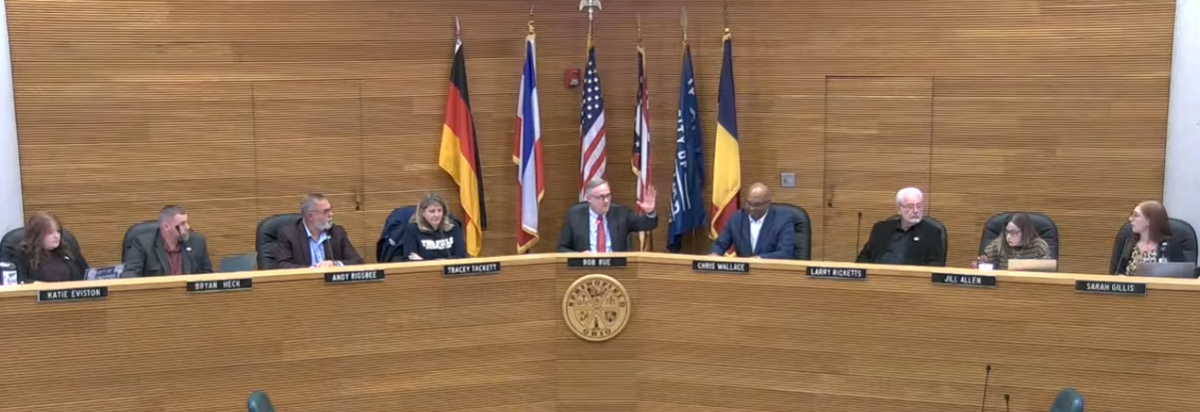
In a major legislative action that drew immediate condemnation from the floor, the commission advanced an amendment to the employment agreement of City Manager Bryan Heck. The measure preserves Heck’s current compensation but fundamentally restructures his job security, stipulating that he cannot be terminated without cause unless a substantial severance package is paid out.
The vote advanced on a 4–1 roll call, with Commissioner Larry Ricketts casting the lone dissenting vote.
The decision to insulate Heck from termination comes on the heels of a highly controversial administrative investigation into misconduct allegations, which city officials declared officially closed on Tuesday. Mayor Rob Rue read a statement revealing that an independent civil review found "insufficient evidence" to sustain claims against Heck. This administrative review followed a parallel criminal probe by the Ohio Bureau of Criminal Investigation (BCI) that local prosecutors similarly declined to pursue due to a lack of evidence that Heck's actions met the definition of a crime. Despite the official declarations, residents at the podium expressed fury over the commission's move to legally lock Heck into his position, viewing it as a structural effort to shield an embattled official from public accountability.
The commission also pushed forward on its ambitious, multi-million-dollar aviation expansion at the Springfield-Beckley Municipal Airport, moving to approve change orders totaling $42,679.74 for the reconstruction of Taxiway C. The project, which has faced delays due to leveling issues and unmapped electric lines, represents a broader push to prepare the airfield for advanced air mobility manufacturing. While city officials emphasized that 95% of the $1.64 million taxiway project is covered by Federal Aviation Administration (FAA) grants—requiring a modest local match of roughly $2,100—residents tied the project to a wider pattern of questionable fiscal management and corporate deals.
The airport expansion is heavily linked to a recently approved economic development package for aerospace manufacturer Electra, which includes the sale of 88.449 acres of municipal Air Park land and a 7-year employment incentive grant. Under that framework, Springfield will return 50% of its net retained income tax earnings back to the corporation, a move projected to cost the city $1.4 million in foregone revenue if corporate hiring targets are met. Local critics have fiercely opposed these agreements, noting the stark irony of a city managing tight operational budgets and facing strict funding constraints choosing to compromise its own local income streams.
As the standard layout of municipal business gave way to the public comment period, local citizens demonstrated a stubborn resilience, continuing to air grievances before an administration they argue has grown tone-deaf to the community's realities.
Citizen Melissa Rexroth delivered a blistering critique, explicitly targeting the commission's handling of the city manager. She questioned how the commission could consider the matter closed and satisfied, demanding to know if the administration was calling the individual who brought the allegations forward a liar. Rexroth criticized Heck's compensation, stating he receives far too much money and should be fired.
The underlying economic and demographic anxieties gripping the community were further amplified by resident Diana Daniels. Focusing heavily on the neighborhood resource strain caused by the city's trajectory to continue with federal demographic replacement, Daniels brought up local property code violations and lingering nuisance properties, complaining that code enforcement was failing to resolve severe community blight. She signaled a broader public weariness with local governance, warning the commission that she would return to the podium at every single meeting to hold them accountable for neglecting community decay.
The persistent pushback from residents underscores a deeper public anxiety regarding Springfield's rapid economic and demographic transformation. For years, regional planners have leveraged initiatives like "Welcome Springfield" to construct highly managed immigrant labor pipelines, systematically drawing down federal integration capital and Workforce Innovation and Opportunity Act (WIOA) funding to train transitional workforces.
To bypass strict federal ITAR (International Traffic in Arms Regulations) compliance parameters—which restrict advanced aerospace manufacturing to "U.S. Persons"—local networks have actively channeled thousands of incoming migrants through permanent asylum application tracks. Critics argue this overarching architecture effectively leaves long-standing working-class citizens behind, forcing heritage Americans to financially underwrite their own demographic and industrial replacement.
The fierce public resistance on Tuesday did nothing to alter the trajectory of the legislative agenda, leaving residents to exit City Hall with a familiar sense of frustration—yet showing an enduring willingness to return and confront the officials who hold the gavels.