‘Springfield is Broke’: Citizens Clash With Commission Over Tax-Sharing Deals for Airport Aviation Expansion
BY JEFF SKINNER
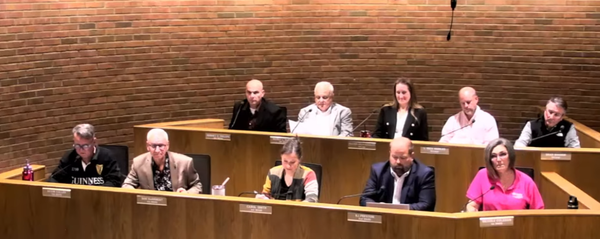
SPRINGFIELD - The public continues to object to governance at the Springfield City Commission meeting that occurred on Tuesday, as local residents locked horns with elected officials over a controversial corporate tax-sharing package, allegations of institutional sexual harassment, and the structural orchestration of local labor markets.
The standard layout of municipal business quickly gave way to fiery dissent during the public comment period, highlighting a deep disconnect between the commission's argued push for economic growth and citizens facing localized municipal budget constraints.
In a series of consecutive roll-call votes, the commission unanimously approved an extensive economic development package for Electra Arrow Incorporated, clearing the way for a massive aviation expansion at the Springfield Beckley Municipal Airport. The measures authorize the city manager to enter into a contract to sell 88.449 acres of municipal Air Park land for development.
The friction point centered on a secondary resolution authorizing a 7-year employment incentive agreement. Under this framework, Springfield will directly share 50% of its net retained income tax earnings back to the corporation in the form of a grant. If hiring projections are met, the grant will cost the city $1.4 million in foregone revenue over seven years. Tom Franzen, the city’s assistant city manager and director of economic development, stated the project aims to create 1,975 jobs with a total payroll of $181 million.
The decision drew fierce pushback from resident Melissa Rexroth. Pointing out the stark irony of a city facing strict municipal funding constraints, Rexroth questioned the decision to compromise local income streams.
"Why would we—Springfield is broke," Rexroth asserted. "They're already getting a tax abatement and now we're giving up more of our money. This doesn't make sense, guys".
Mayor Rob Rue countered that such mechanisms are competitive tools used across the United States. He noted that Springfield was chosen out of 140 competing cities and warned that failing to authorize the incentive would have meant "losing this company entirely", though Rue cited no evidence for the claim.
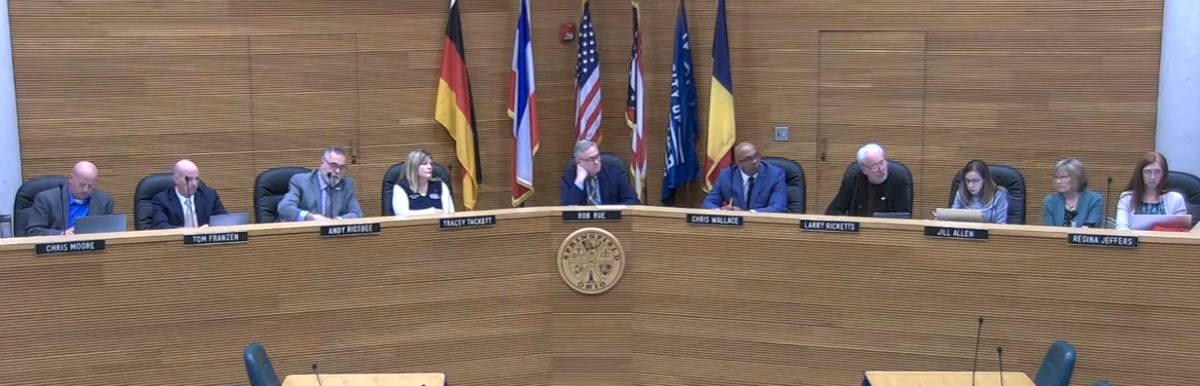
Despite the public resistance, the commission advanced the measures cleanly. Commissioners Tacket, Wallace, Riggsby, Ricketts, and Mayor Rue all voted "yes" on both the land sale and the tax-sharing deal.
The structural anxiety gripping the community was further amplified by resident Diana Daniels, who used her time at the podium to challenge the baseline integrity of local economic systems. Daniels referenced an online retrospective tracking the regional intersection of defense capital and managed immigrant labor pipelines.

"What happened to us was not organic. It was planned," Daniels stated, reading directly from the reported findings. Daniels referenced the article, stating that a coordinated integration network, operating under the umbrella of federal integration initiatives, has systematically utilized subsidized cheap migrant labor to bypass long-standing domestic workers.
Daniels specifically targeted federal funding paths, questioning if the Clark County Department of Job and Family Services (JFS) would utilize the Workforce Innovation and Opportunity Act (WIOA) or individual training accounts to prioritize advanced technical tuition for non-citizens at institutions like Sinclair Community College.
"What will American citizens receive in return for their training for free?" Daniels asked the commission.
Mayor Rue declined to comment directly on the specific tuition structures but responded that corporate human resources teams were moving forward with standard compliance parameters.
"Thanks for your question. Um, it's one that I I really can't respond to. I'm sure they'll follow everything I know to do," Rue stated, adding that Electra's team has actively engaged JobsOhio and regional university partners to execute a regional workforce strategy.
The administration faced additional scrutiny when Rexroth returned to the microphone to target municipal workplace culture, explicitly highlighting the structural failures surrounding an investigation into City Manager Brian Heck.
Rexroth read aloud from section 702 of the city's employee handbook regarding prohibited sexual conduct before citing an investigative media excerpt concerning allegations of sexual assault ("teabagging") brought forward by a city employee.
According to the details cited by Rexroth, the Ohio Bureau of Criminal Investigation (BCI) conducted interviews regarding an incident occurring roughly a decade ago, where an employee reported waking up in a City Hall relaxation room to find Heck standing directly over them inappropriately. The local prosecutor ultimately declined to file criminal charges.
Rexroth chastised the administration for a lack of internal transparency, emphasizing reports that the city failed to produce internal documentation.
"The alleged victim reported the incident to supervisors but knew of no written complaint. So, they didn't do their job. They didn't write up the complaint," Rexroth charged before being cut off as her speaking time expired.
In a city, marred by governmental structures that seemingly operate independent of citizen will or fiscal logic, the citizens of Springfield continue to show time and again that they will not go quietly.