Ohio’s HB 116 Disarms Townships for a Big Tech Power Grab

BY JEFF SKINNER
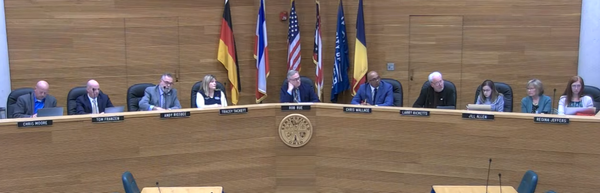
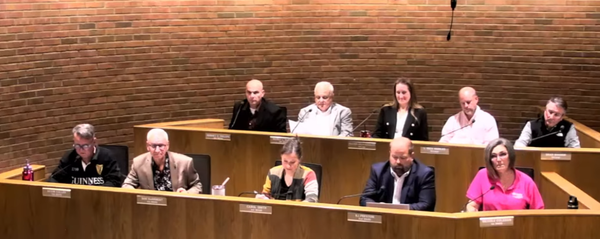
STATEWIDE - A sweeping legislative push to codify protections for digital asset generators in Ohio has ignited a fierce battle over local sovereignty, pitting rural township officials against cryptocurrency developers and exposing deep public resentment over the massive tax incentives used to attract tech infrastructure.
At the center of the political firefight is Ohio House Bill 116, officially known as the "Ohio Blockchain Basics Act." While framed by state lawmakers as a proactive measure to establish a clear regulatory framework for the burgeoning digital asset economy, a growing coalition of grassroots activists, local trustees, and environmental advocates argue the legislation contains a dangerous zoning loophole that could systematically strip local communities of their self-governing authority.
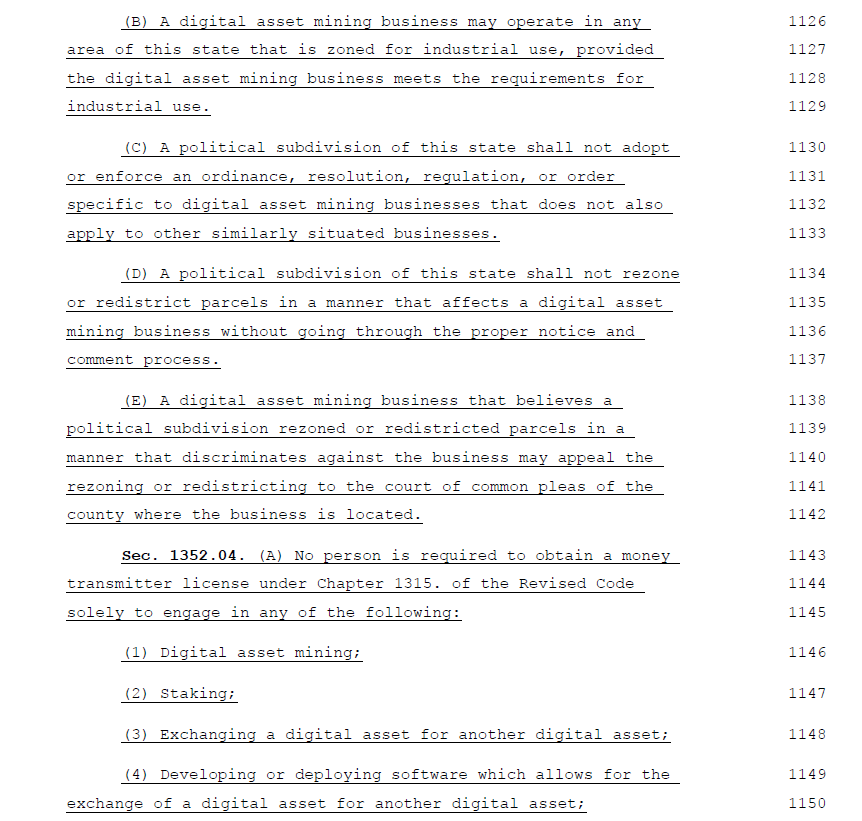
The legislative text, which was rammed through the Ohio House on a 70–26 vote, explicitly strips power from local hands by mandating that "digital asset mining businesses" must be permitted to operate in any area of the state zoned for industrial use. Crucially, the bill effectively gags local communities, prohibiting counties, cities, and townships from passing protective ordinances or noise restrictions specifically targeting crypto-mining operations unless those same rules apply to every other traditional factory. Furthermore, the statute gives tech developers the explicit right to drag small, cash-strapped municipalities into the county Court of Common Pleas if a local community dares to rezone land to protect its residents, shifting the ultimate decision-making power from elected local trustees to corporate attorneys and state judges.
To critics like conservative activist Eric Watson, who has sounded the alarm statewide, the bill’s statutory definitions represent a cynical legal trap. House Bill 116 defines a "digital asset mining business" as an operation consuming more than one megawatt of electricity on an average annual basis. Because one megawatt of continuous electrical capacity is enough to power roughly 400 to 900 homes, operations of this scale require specialized, high-density computing arrays. Activists and local officials argue that by creating a broad, protective legal shield for any data-processing facility exceeding this one-megawatt threshold, the state is effectively tying the hands of local zoning boards that may try to prevent a drain to the power grid of up to 900 homes.
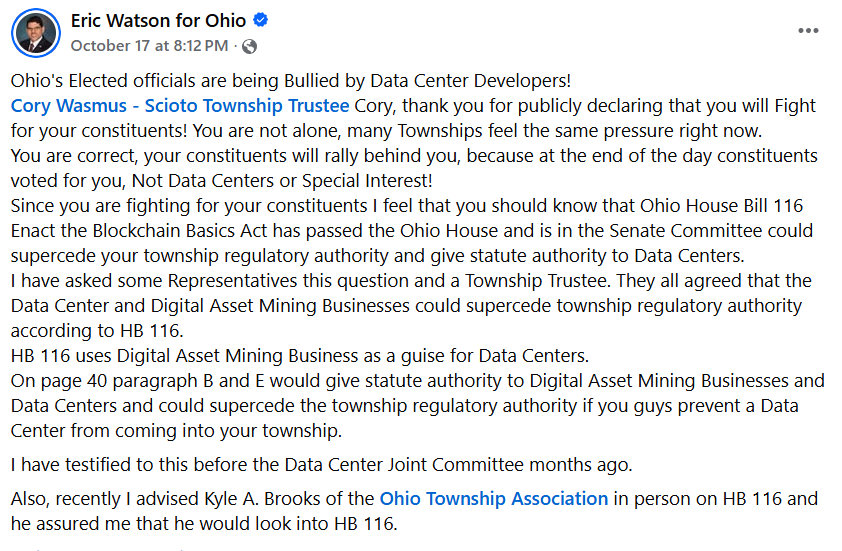
The primary fear is one of legal manipulation. Massive, multi-hundred-megawatt commercial data centers or artificial intelligence computing hubs could exploit the bill's language to claim the same zoning protections and tax exemptions intended for blockchain miners. If a township attempts to block a multi-acre tech campus due to resource constraints, the developer could use the state law to override local regulatory authority, shifting the ultimate decision-making power from elected township trustees to corporate attorneys and state judges.
For decades, state economic planners have utilized millions of dollars in tax abatements, sales tax exemptions, and utility subsidies to attract heavy computing infrastructure to Ohio, utilizing regional planning coordinators and public-private partnerships to provide template documents to facilitate sweetheart deals.
However, as cryptocurrency mining operations have increasingly capitalized on these tech-focused incentive programs, residents in rural townships are questioning the public utility of supporting an industry that produces no physical goods, cultivates no food, and provides no public services.
The reality on the ground for rural Ohio communities is often characterized by immediate, localized burdens. Industrial cryptocurrency mines operate thousands of specialized computers, known as ASIC rigs, which run at maximum capacity 24 hours a day, seven days a week. To prevent these dense processing units from overheating, facilities rely on massive, high-speed industrial cooling fans. Neighbors living near existing sites report a constant, low-frequency industrial drone that can be heard from miles away, permanently altering the quiet character of rural agricultural zones.
Beyond noise pollution, the strain on local infrastructure is immense. A single large-scale crypto data center can draw more power from the regional electrical grid than a medium-sized municipality, forcing utility providers to rapidly upgrade regional substations. Critics argue that the costs of these grid expansions are ultimately passed down to regular residential consumers in the form of higher monthly utility bills. Furthermore, traditional manufacturing plants that consume similar amounts of power typically employ hundreds or thousands of local residents. In stark contrast, a highly automated 50-megawatt crypto mine might only require five to ten full-time technicians to manage hardware, offering virtually no long-term job creation for the local workforce.
While the community absorbs these environmental and infrastructural costs, the benefits remain strictly private and global. The cryptocurrency mining company operates on a model of digital extraction; their specialized hardware exists solely to solve complex cryptographic puzzles to process blockchain transactions. In return for this automated labor, the network rewards the facility owners with freshly minted digital tokens, such as Bitcoin, alongside transaction fees. The financial rewards are instantly funneled into private, global digital asset portfolios, leaving the hosting township with little economic residual value beyond baseline, abated property taxes.
The stark asymmetry of this dynamic has triggered a major bipartisan political backlash ahead of the upcoming 2026 Ohio gubernatorial and legislative elections. Public polling indicates that a significant majority of Ohioans oppose extending public tax breaks to data center developments, forcing lawmakers from both parties to reexamine the state’s economic development strategies.
In response to the mounting grassroots pressure, new legislative proposals are beginning to circulate in Columbus. These include "Ratepayer Protection Acts," which would legally mandate that data center developers absorb 100 percent of the utility infrastructure costs required to connect to the grid, rather than allowing utility companies to distribute those expenses across residential ratepayer bases. Simultaneously, a growing number of townships are actively exploring the utilization of strict local noise, public nuisance, and environmental codes to legally restrict the operations of these high-density facilities without violating the state’s industrial zoning mandates.
As House Bill 116 awaits further review in the Ohio Senate, the debate has evolved far beyond a technical disagreement over blockchain technology or municipal zoning rules. It has become a foundational argument over the limits of corporate influence, the preservation of local sovereignty, and whether public resources should be used to subsidize private digital enterprises at the direct expense of the communities that host them.