SPRINGFIELD OFFICIALS CONFRONT CHRONIC SKEPTICISM OVER EXECUTIVE STATE INVESTIGATION AND CONTROVERSIAL LAND CONTRACT
BY JEFF SKINNER
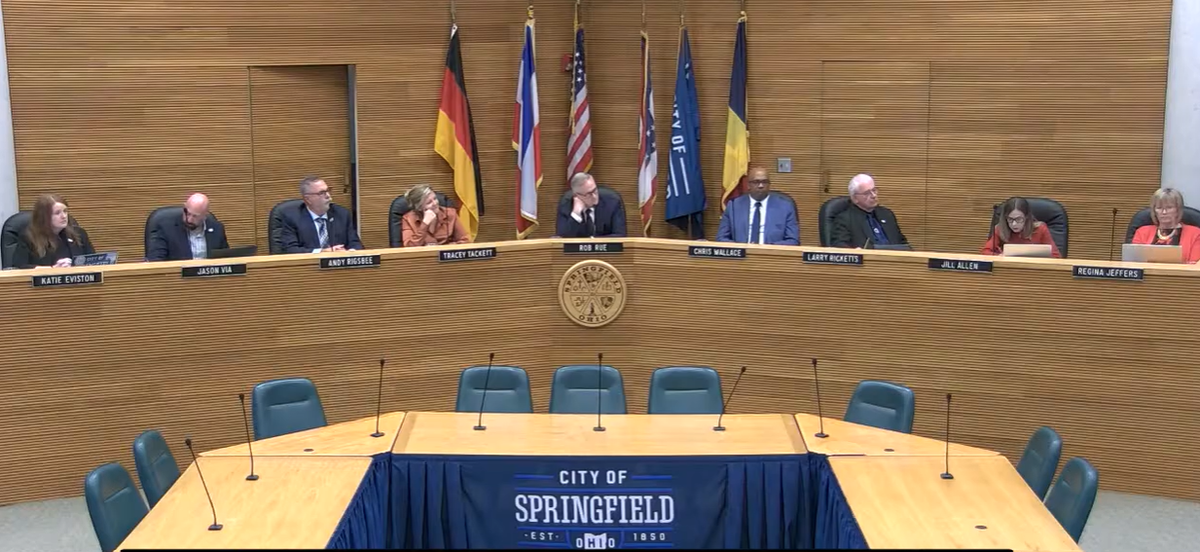
SPRINGFIELD - The Springfield City Commission faced intense public scrutiny during its legislative meeting as local officials fielded sharp criticism from residents regarding a state investigation into the city manager, a highly contentious county jail relocation plan, and the city's ongoing use of automated license plate surveillance.
The meeting opened with a statement from the city's law director addressing an active investigation involving City Manager Brian Heck.
"We understand that members of our community continue to have questions about the investigation involving city manager Brian Heck and want to know where things stand," the law director said. "At this time, we do not have any new information to provide. BCI [Bureau of Criminal Investigation] has begun its investigation."
Officials confirmed that commissioners have been advised to limit their public comments while the state-led probe is underway. The law director emphasized that the allegations remain unverified and that the city will not make assumptions regarding guilt or innocence.
The lack of new details regarding executive accountability set a tense tone for the evening, prompting accusations from attendees that city leadership avoids addressing systemic obstacles. Resident Melissa Rexroth accused officials of practicing "positive toxicity" by focusing solely on favorable city news while masking underlying issues. Rexroth criticized the commission for approving tax abatements for corporate data centers despite the city's fiscal challenges, suggesting that local administrators are out of touch with working-class realities. "When we as citizens face financial difficulty, we don't get to raise taxes so we get more money," Rexroth said. "We have to figure it out."
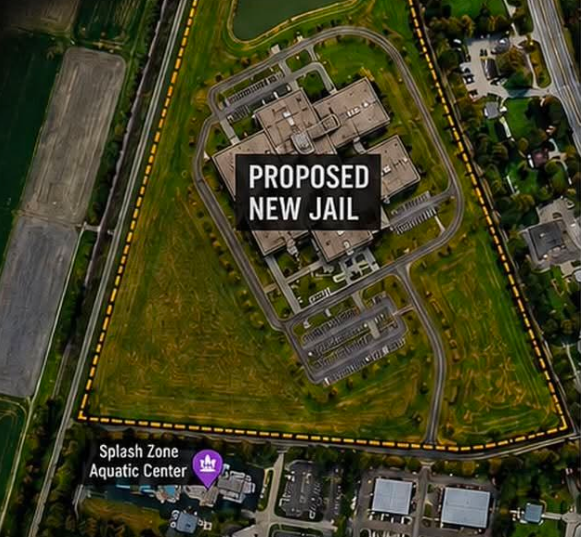
Public pushback quickly shifted to a proposed multi-million dollar Clark County jail project slated for the city's North End. Residents lambasted the suburban location choice, noting that a prior site proposal on the city's South Side was successfully blocked by community protests over safety and traffic concerns.
Opponents argued that relocating the correctional facility to an exterior neighborhood introduces unnecessary safety liabilities to adjacent recreation areas, including a community pool, a soccer complex, and a heavily wooded bike path.
"The court system, the jail, inmates, attorneys, visitors... they're all downtown," one resident told commissioners, urging the city to push for a centralized downtown facility. "When prisoners are convicted in court, they're escorted around the corner to jail. I believe no police or sheriff car is transporting them have to be moving from one end of town to the other."
Mayor Rob Rue deflected the neighborhood criticism, stating that the final site selection, funding, and construction logistics are strictly under county jurisdiction. Rue encouraged frustrated attendees to take their grievances directly to the upcoming Clark County Commission meeting.
Behind the scenes of the public feud over the facility's location is a complex intergovernmental land deal that city leaders have actively minimized in their response. Despite Mayor Rob Rue’s repeated public assertions that the facility is "completely a county decision" in which the city holds no influence, records show the city administrative staff previously entered into a unilateral purchase contract with Clark County to hand over the 50-acre municipally owned plot off State Route 72.
In early August 2026, Clark County Commissioner Charles Patterson publicly confirmed that the agricultural land is already under contract with the city. This initial agreement, which bound the property and allowed the county to move forward with a $125.7 million project design, was executed completely behind closed doors without public input or prior legislative debate. However, the initial contract does not equate to a final sale. Under Ohio municipal law, the City Commission still retains complete leverage and has not yet voted formally to surrender the land deed—a legislative action that requires a strict two-thirds majority vote to pass. Furthermore, the city holds an absolute legal veto over the entire project; the commission can formally opt out of the transaction or tank the deal entirely by refusing to approve the necessary zoning changes at upcoming public hearings. For all of Mayor Rue's attempts to distance himself from the transaction, the buck stops with the city.
Privacy advocates also mounted a coordinated attack against Springfield’s deployment of Flock Safety automated license plate readers, demanding the city terminate its contract. Critics alleged that the vehicle-tracking networks violate Fourth Amendment protections by systematically logging the movements of motorists without judicial warrants.
"Flock has bad security. It leaks its information. It allows abuses of power," resident Robert Anderson testified, pointing to a lack of local oversight to prevent the databases from being used for personal surveillance.
Public concern intensified following disclosures from the city's new online data portal, which revealed that the Springfield Police Department shares its automated camera data with over 900 outside counties and multiple private security firms. Activists cited a nearby precedent in Dayton, Ohio, which previously voted to remove its automated surveillance networks under pressure from privacy groups.
City officials did not signal any immediate plans to alter the vehicle-tracking surveillance system or intervene in the zoning process for the county jail facility.
In legislative business, the commission held a first reading for an ordinance that would increase city water, sewer, and septage discharge rates. While final action on the utility fees was deferred to a future session, city financial records indicate the rate hikes are driven by a more than $1 million annual spike in chemical treatment costs, necessary upgrades to aging infrastructure, and unfunded regulatory compliance mandates during a time of unprecedented fiscal strain for the city due to population influx, strain on emergency services and a flatlined income tax.
Following the utility presentation, commissioners voted to approve two separate funding measures: an emergency resolution authorizing administrators to apply for and accept up to $522,368 in infrastructure grant funds from the Ohio Public Works Commission, and a $149,694 grant from the Federal Aviation Administration—paired with a mandatory $7,879 local match—to fund improvements at Springfield-Beckley Municipal Airport.