HANCOCK CITIZENS MOBILIZE VOTER REFERENDUM TO BLOCK CONTROVERSIAL DATA CENTER

BY CAREY MORGAN
ALLEN TWP - Grassroots resistance against a massive data center development proposal in Hancock County reached a boiling point this week as residents launched an aggressive legal effort to freeze local zoning approvals, exposing corporate policy maneuvers, severe water infrastructure shortages, and an escalating board ethics controversy.
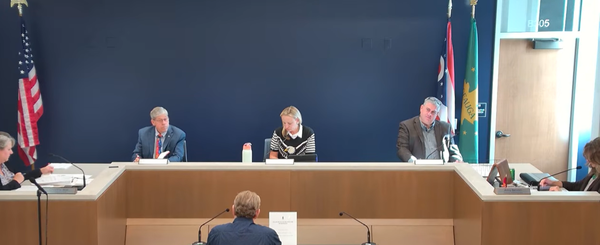
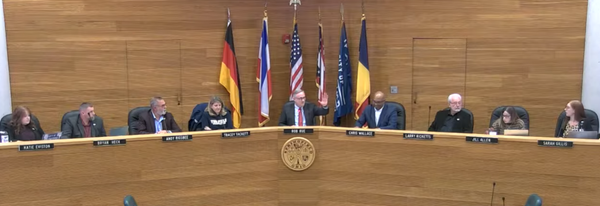
During a packed Allen Township Board of Trustees meeting on Tuesday evening, community organizers finalized preparations for a voter referendum targeting Onsite Partners, the developer that recently spent over $17 million to lock down rural agricultural land for an industrial data center hub. The conflict has transformed this quiet enclave near Findlay into a primary battleground over local sovereignty, environmental strain, and corporate power.
The central catalyst for the escalating political crisis centers on a quiet zoning modification enacted by township trustees on October 6. The board officially voted to approve data center regulations but specifically altered the zoning resolution to exempt any project submitted via a site-specific Planned Unit Development (PUD) framework from standard restrictive caps.
An outside legal expert who has counseled numerous Ohio townships facing data center expansions clarified the gravity of the shift. He warned attendees that a site-specific PUD essentially empowers a developer to draft their own custom development text, circumventing baseline township zoning rules.
However, the legal presentation also handed local activists a major mechanism for resistance. Under Ohio Revised Code Section 519.12, any rezoning approved by township trustees is subject to a citizen referendum. Because the proposed project's current buildable footprint nets roughly 129 acres due to required 250-foot setbacks, it is too small to qualify for the state’s un-votable "mega project" exemption, which typically requires single contiguous boundaries exceeding 600 acres.
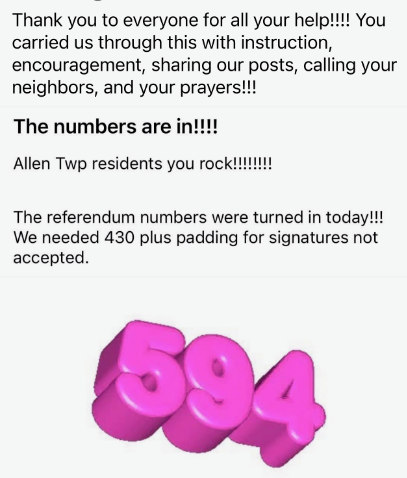
To completely freeze the PUD zoning approval and force the issue onto a public ballot, residents must gather signatures from 35 percent of the total number of township citizens who voted in the last presidential election. Organizers announced recently via social media they have already obtained the required signatures.
The public trust in the board’s neutrality evaporated during an intense confrontation between local residents and Trustee Kevin Flanagan. Under direct questioning, Flanagan confirmed that his family sold an 80-acre farm plot directly to Onsite Partners to pave the way for the development. Flanagan admitted he personally held a 10 percent financial interest in the multimillion-dollar transaction.
While Flanagan abstained from the critical October 6 zoning votes to comply with statutory baseline restrictions, residents expressed fierce outrage over his ongoing participation in board discussions, describing the arrangement as a flagrant conflict of interest that subverts the will of the public. Flanagan defended his presence by stating he was acting strictly under the guidance of legal counsel.
The revelation has created a highly toxic political landscape for the remaining trustees, Milford "Joe" Smith and Roger Clark, who face mounting public pressure to reject subsequent contract phases or face dynamic challenges at the ballot box.
The immediate logistical vulnerability facing the project is an absolute lack of utility access. Dan Smies, a project developer representing Onsite Partners, confirmed that formal water procurement negotiations with the City of Findlay have collapsed due to the city’s rigid "hard water policy" and a total lack of municipal cooperation.
Desperate to secure millions of gallons of water required for industrial cooling without tapping into the township’s fragile residential groundwater aquifers, Onsite Partners has been forced to hire an independent engineering firm to draft an alternative pipeline layout. Smies stated the team is conducting feasibility studies to pipe municipal water across the county from distant, much smaller villages, specifically naming North Baltimore and Arcadia as prospective suppliers.
The proposed workaround represents a massive financial and logistical gamble. Constructing miles of high-capacity utility lines across rural terrain would expose the developer to aggressive eminent domain battles, skyrocketing capital costs, and protracted multi-jurisdictional utility agreements, compounding the project's risk profile.
The abstract environmental anxieties surrounding data centers have been intensely localized by an ongoing acoustic disaster in the township. Abutting neighbors packed the meeting hall to testify against severe noise pollution and continuous ground vibrations emanating from a nearby bitcoin-mining facility operated by MARA.
Residents complained that the relentless low-frequency "hum" has decimated their property values and destroyed their ability to sleep for nearly two years. The visiting legal expert noted that older data processing cooling systems lack aerodynamic fan modifications, generating deep vibrational low-frequency hums that easily satisfy standard decibel-level ordinance tests while remaining entirely disruptive to human health.
Activists are successfully weaponizing the MARA crypto facility as a living warning, using the community's real-time suffering to generate overwhelming opposition against Onsite Partners’ larger industrial footprint.
Faced with a mounting public rebellion, Smies openly acknowledged that if the township successfully deploys a zoning referendum or refuses a forthcoming community benefits agreement, Onsite Partners will execute its "Plan B". That contingency entails launching an aggressive petition to annex the $17 million site out of the township's borders and directly into the corporate limits of the City of Findlay. Smies insisted the statement was a regulatory reality rather than a corporate threat, pointing out that state board protocols fully accommodate such cross-border measures.
The political threat of losing territorial sovereignty has steeled residents rather than cowing them. Local military veterans took the floor to voice direct defiance against what they labeled corporate bullying, warning officials they would regret pushing the silent majority past its limits.
Simultaneously, concurrent administrative actions show the township borders are already under severe erosion. Hancock County Engineer Doug Cade and Fire Chief Gary Hickman provided parallel reports regarding infrastructure strain, noting that the nearby Voorhees property annexation hearing has already been taken under advisement by county commissioners, escalating the urgency for the township to mount a unified legal defense.
In a defensive move to manage the crisis, the Board of Trustees executed motions to hire outside specialized legal counsel through Assistant Prosecutor Justin Kahle, while Fiscal Officer Mark Schimmoeller logged structural adjustments to expand their statutory meeting schedule to twice a month beginning in 2027 to confront the industrial onslaught.