Op-ed: Findlay-Poland Sister City Deal Masks Hidden Move into Military Drone Manufacturing?

BY LUKE STAHL
The Findlay City Council on Wednesday night voted unanimously to approve a non-binding sister city agreement with the Polish municipality of Nadarzyn. While framed by the administration as a standard cultural and business partnership, a deep dive into concurrent state legislation and local policy initiatives potentially reveals a far more complex, integrated strategy to once again attempt to transform this mid-sized Ohio city into a foreign-synchronized hub for military drone and defense manufacturing.
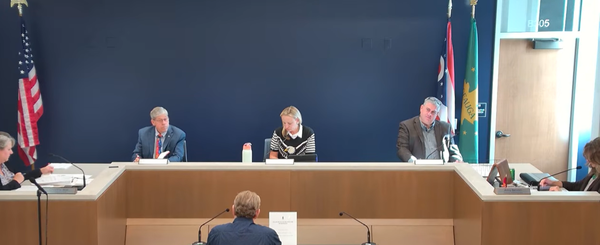
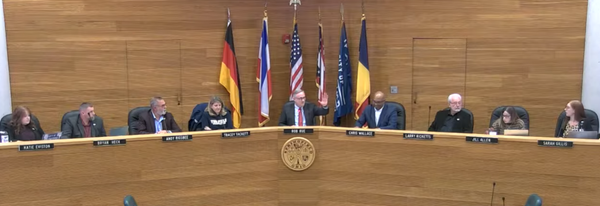
The 10-0 council vote authorizes Mayor Christina Muryn to finalize the agreement, which she acknowledged is the byproduct of a year-long confidential "economic development endeavor" coordinated alongside State Representative Ty Mathews and an unnamed private sector business owner. While official statements focus on standard supply chain stabilization, the structural alignment between the sister city contract, the regional "Welcoming City" framework, federal workforce funding, and state defense initiatives points to a potential top-down orchestration of local demographics to satisfy federal defense contracts.
The selection of Nadarzyn, Poland, is politically and logistically telling. A bustling industrial and logistics center located right outside Warsaw, Nadarzyn is the home of the Ptak Warsaw Expo, which hosts Central Europe's premier military technology summits, including the international Drone World Expo and the Defence Manufacturing & Materials Expo. Amid the ongoing regional conflict in Ukraine, Poland has emerged as the Western world's frontline testing ground for unmanned aerial systems (UAS) and automated defense tech.


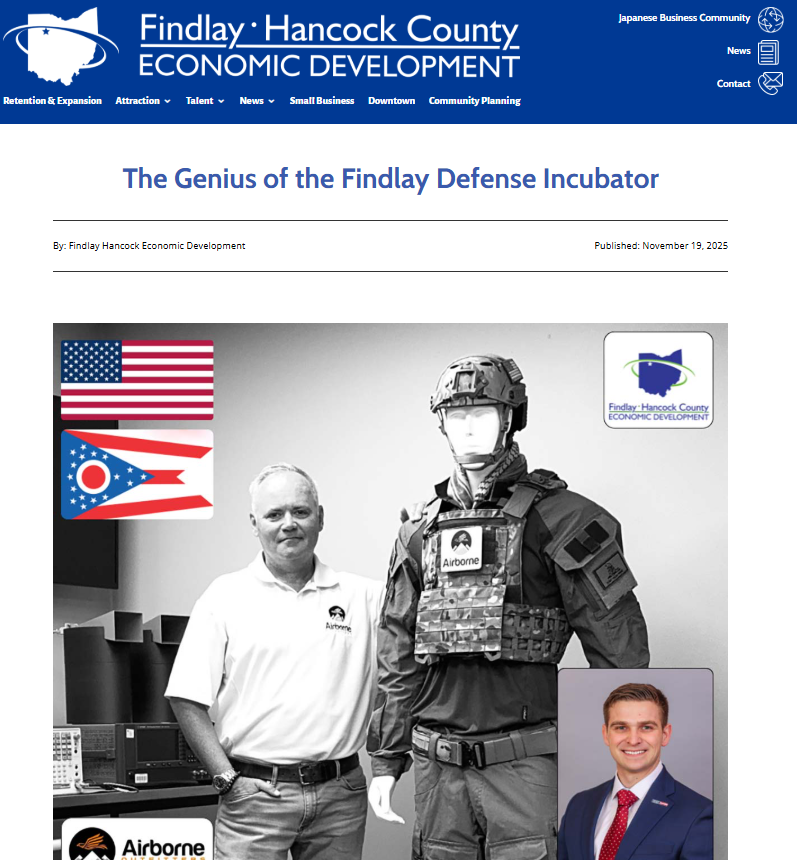
The sister city agreement may serve as the formal diplomatic umbrella needed to legalize the bidirectional flow of aerospace research and manufacturing blueprints between Polish military technology firms and Findlay. State Representative Ty Mathews—an Ohio National Guard armor commander who has spearheaded the creation of the Findlay Defense Incubator—previously traveled to Poland as a featured speaker at the NexTech Warsaw conference to position Northwest Ohio as a strategic destination for global aerospace firms looking to set up American production subsidiaries.
Because federal defense procurement regulations require strict domestic manufacturing and "workforce resilience" quotas to secure lucrative Pentagon contracts, the local administration must guarantee a continuous, high-volume labor pipeline. To meet these human capital demands, local planners are potentially utilizing a distinct, multi-layered economic blueprint that intersects with controversial municipal initiatives.
Under the sister city framework, the University of Findlay and regional vocational institutions may be tasked with co-developing drone engineering and automated manufacturing curricula alongside technical schools in Nadarzyn. Once these programs are officially listed on Ohio's Eligible Training Provider List (ETPL), federal Workforce Innovation and Opportunity Act (WIOA) funds will act as the financial engine. These federal tax dollars will issue Individual Training Accounts to cover full tuition for local certification programs.

TOR investigative reports have increasingly outlined how this labor pipeline could function alongside Mayor Muryn’s administrations push for a "Welcoming City" designation. Critics argue that the "Welcoming City" framework is being deployed systematically to logistically ease the integration of migrant and refugee populations into Hancock County, creating an artificial, low-cost immigrant labor pool to step into WIOA-funded defense training tracks—bypassing traditional local labor constraints to satisfy international corporate expansion.
The Workforce Innovation and Opportunity Act (WIOA) functions as the primary federal framework for public workforce development, directing billions of dollars annually through state and local workforce development boards. Enacted to streamline federal job training programs, WIOA segments its core funding into separate streams, including Adult, Dislocated Worker, and Youth programs. Under the statutory guidelines of the act, eligibility criteria for these programs heavily emphasize serving individuals with "barriers to employment." In both the Adult and Youth funding streams, specific demographic benchmarks are codified into law, explicitly identifying "English language learners," individuals with low levels of literacy, and those facing substantial cultural barriers as priority populations for enrollment and service delivery. Critics of the current framework argue that by embedding language proficiency and immigrant-aligned hardship metrics directly into the core eligibility criteria, the federal allocation model structurally favors the funding of non-native populations and recent migrants over long-term heritage citizens who may face economic stagnation but do not meet specialized linguistic or cultural barrier definitions.
However, one potential shift that could be made to maintain the foundational desire to bring high paying jobs through the industry and divorce any potential connection to the 2015 Obama Whitehouse outline for labor replacement, would be to alter the Congressional WIOA act itself to amend the language in it allowing funding to non-heritage citizens.
To shift the strategic focus of WIOA toward exclusively funding heritage American citizens and native-born workers, substantial statutory and regulatory modifications would be required at the federal level. Legislative reform would necessitate amending the text of the Workforce Innovation and Opportunity Act to introduce strict citizenship requirements, removing funding allowances for credentialed training for working immigrants for all participant pathways, effectively barring non-citizens, temporary visa holders, and newly arrived migrant populations from accessing federally funded Individual Training Accounts. Furthermore, such restructuring would require the systematic removal of "English language learner" and related cultural integration metrics from the statutory definitions of "individuals with barriers to employment." Proponents of this legislative pivot argue that eliminating these targeted immigrant-funding criteria and replacing them with benchmarks solely focused on native-born economic dislocation, structural rural poverty, and generational domestic unemployment would ensure that federal tax dollars are preserved exclusively to rebuild the skill sets and economic mobility of the existing heritage American workforce.