Westerville Smart Meter Choice Amendment: An Interview with Tim Davey
BY NICK ROGERS
Almost one year ago, a charter amendment was submitted to the Westerville, Ohio city council. The amendment – spearheaded by former councilman Tim Davey – sought to require the city to continue offering analogue electric and water meters amidst Westerville’s “decade-long” transition to Smart meters. The amendment, which received over 3,200 valid signatures, made its way onto the ballot in November last year, but it was voted down 60%/40% according to the Franklin and Delaware counties boards of election.
Joining TOR is former councilman Davey to give his thoughts on the amendment, the vote, and where this puts Westerville citizens concerned about Smart meters moving forward.
TOR: Mr. Davey, thank you for your time and your concern for the health and security of Ohio citizens.
Davey: Likewise, Nick. Appreciate your work and TOR covering the issue.
TOR: So, this amendment venture…I’m sure you’re concerned with Westerville citizens as a whole, but did this attempt at utility meter choice legislation spawn from a direct attempt to have a Smart meter installed on your home? If so, did they succeed?
Davey: Yes to both questions. In a certified letter dated June 3, 2024, I received a final notice that if I did not allow the utilities to install Smart meters before June 25, 2024, my essential electric and water services would be disconnected.
In responding to the city, I made clear that my family was being coerced into unwanted microwave radiation exposure which was against the Nuremberg Code. By the time the final notice was received, our group was already collecting signatures for the proposed city charter amendment. However, that did not deter the city from coercing the last holdouts, like myself.
TOR: Westerville is a municipal-run utility, correct? My understanding is that gives the city the right to not offer an opt-out like investor-owned utilities such as FirstEnergy and Duke.
Davey: Correct. Westerville has municipal water and electric utilities. It is my understanding that municipal utilities are not subject to the authority of Ohio Administrative Code (OAC) 4901:1-10-05 that requires investor-owned electric utilities to offer an opt-out from advanced meters (aka Smart meters). According to Energy Information Administration (EIA) data, over 86% of the residential electric meters in Ohio are with investor-owned utilities that have the option to opt-out of Smart meters. However, municipal utilities and other types of investor-owned utilities (e.g. water and natural gas) do not have that same protection.
TOR: The media reports your effort as being supported by “about a dozen” residents, and that “less than 1% of Westerville homes” – approximately 100 – were still using manual/analogue meters in 2024 when the city ended its opt-out program. Are these figures correct to your knowledge?
Davey: The “about a dozen” figure (exactly thirteen) is correct for active volunteers that canvassed (collected signatures and distributed door hangers), quality checked signatures, managed the regulatory filings for contributions/expenditures, and built the website. Most of the volunteers took on multiple tasks.
According to figures reported to the EIA, in 2022, Westerville had 92 residential meters that were non-Smart meters (non-AMI/AMR). That was the last number available before residents were notified by postcard (the week before Christmas 2023) that Smart meters would be mandatory.
That may seem like a small number of opt-out households, but there was a threat of unspecified amount of future fees (2015-2020) or actual fees (2021-2023) to deter choosing to opt-out as the Smart meters were phased-in and before they were mandatory. Less than 10% of the households actually opted-in to Smart meters (2013-2014), reflective of the lack of resident demand for Smart meters. To demonstrate how price-sensitive customers are to fees, in 2020, the year a $5 opt-out fee was announced to take effect for 2021, more than half of the opt-out customers allowed the utilities to install Smart meters (likely to avoid the fee).
TOR: On Westerville’s website, they stated their concerns with your amendment; namely the “costs associated with operating two distinct utility metering systems, both automated and manual,” in addition to potential opt-out customers being exempt from services, programs, and automatic electric shut-off in the event of a home fire. What are your thoughts about their misgivings?
Davey: The ‘costs’ section of our website rebuts their argument with details on several points. In brief, if responsibly implemented (two actual readings - one at the end of the summer rate, one at the end of the winter rate, with estimated readings for the remaining months), combined with the other savings from traditional meters (compared to Smart meters) would likely offset the labor and other system costs and potentially slightly lower overall costs. Savings include much lower costs for the meters themselves, longer lifespan, reduced line losses (in aggregate the Smart meters use a significant amount of electricity), and less data collection avoids significant data management costs.
However, more importantly, but more difficult to quantify, what are the health effects from hundreds of thousands of bursts of microwave radiation each year from the smart meters on everyone (including pets) in your home and their costs?
Regarding services - from talking to thousands of residents, most do not want their thermostats (or, down the line, hot water heaters) controlled by the city government or to be subject to time of use pricing (charged more during high demand times). While seeing electric usage did appeal to more residents, the information at the household level is not very useful when determining if a particular device is consuming an outsized amount of electricity.
Since 2011 (at my suggestion – as an alternative to smart meters), the local library has lent $50 devices (Kill A Watt) that can be connected to the wall outlet and an appliance to see the electricity consumed by that appliance...A much better option to the privacy invasion of 2nd generation Smart meters/software capable of disaggregating each home’s electric usage. Since each device uses electricity in a unique way, providing a fingerprint, the 2nd generation models sample electricity so often and in such detail, they can tell what time your garage door opens, when you cook your meals, when you do your laundry...More than just a pattern-of-life...Almost real-time and near complete surveillance of your home without a camera.
It is my understanding that the electric shut-off is ‘remote’ (the fire department calls the utility to have it disconnected remotely) versus ‘automatic’ (as stated on the city’s website) as the Itron Openway Centron Smart meters do not have fire detection capability. Whether or not the rare circumstance where the breaker could not be safely turned off or the traditional meter pulled out of the socket (with proper safety gear...to disconnect electricity to the home) results in an overall safety benefit as netted against the potential health hazard of 24/7/365 exposure for everyone in every household (including pets) to hundreds of thousands of bursts of microwave radiation each year is an open question.
TOR: You share my concerns about Smart meter health effects from electromagnetic radio frequency pulses (as well as security concerns). The city apparently refuted your claims about Smart meters’ damaging health effects (so did FirstEnergy in a recent mailer I received in Chardon), but we know full well these assurances are bogus. Do you feel like Westerville, in particular, is lying, or are they simply fueled by misinformation and/or disinformation?
Davey: Unlike investor-owned utilities (IOUs) who have a financial incentive to prioritize capital investment (Smart meters) over labor costs (meter readers), municipal utilities do not have a similar incentive. IOUs are allowed an approved rate of return (profit) for capital investment while only able to recover labor costs. Since municipal utilities are not similarly incentivized, my best guess is it is a combination of the city taking cues from investor-owned utilities that have conflicts of interest and exercising willful blindness to anything that interferes with their assertion of power and is undeterred because of a lack of accountability by the local press.
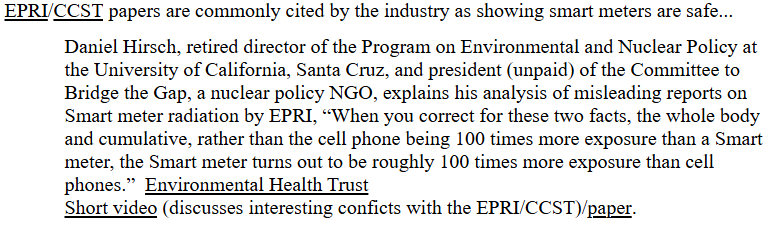
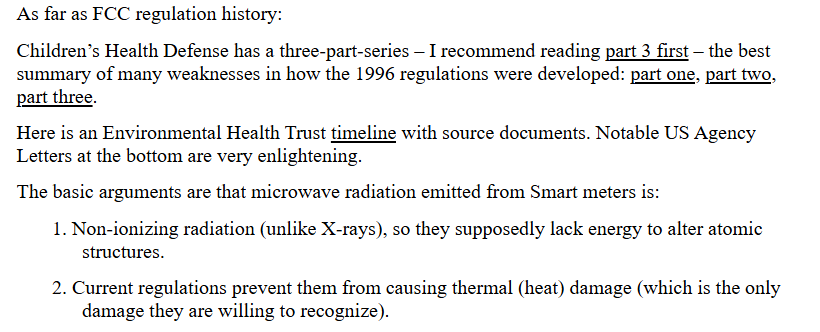
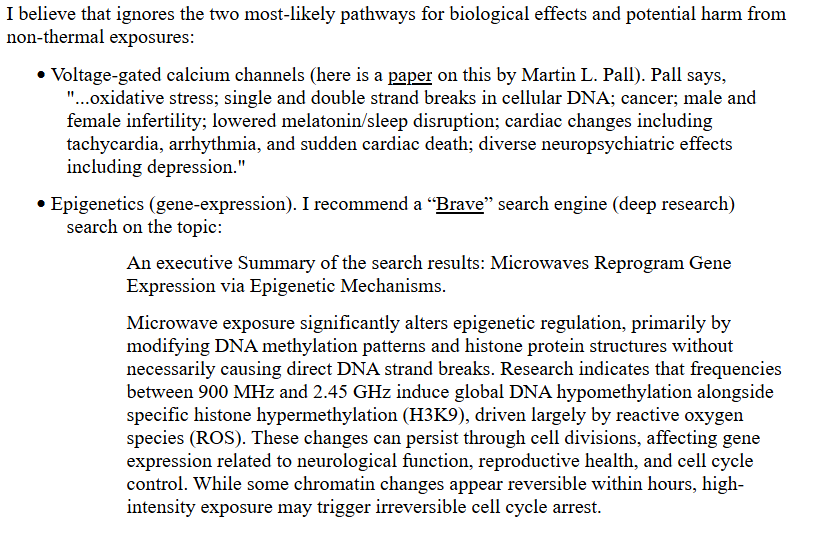
The sources (American Cancer Society [ACS] and World Health Organization [WHO] are two) cited by the city supposedly refute that microwave radiation from Smart meters is a health hazard. ACS says, "Smart meters have not been studied to see if they cause health problems," and "It would be nearly impossible to conduct a study to prove or disprove a link between living in a house with smart meters and cancer..." The International Agency for Research on Cancer (IARC – part of the WHO) classifies the radiation as "possibly carcinogenic to humans." There are qualifications to the above quotes and contradictory statements made by both organizations, but the above quotes get to the bottom line...They don’t know and haven’t proven if smart meters are safe.
TOR: That’s a pretty poor job of justifying Smart meter safety.
Davey: Agree.
TOR: I have read about Faraday cages having a positive effect. Do you have any mitigation strategies that you suggest?
Davey: For the more than 86% of Ohio’s residential meters with investor-owned electric utilities, would highly recommend opting-out and paying the necessary fees until the state regulation can be improved to eliminate the fees. It is my understanding that Faraday cages, like Smart Meter Guard (made in USA), do reduce exposure, but are not a perfect solution. First, Faraday cages don’t address the privacy issue at all. Second, Faraday cages still allow some radiation to leak through (otherwise, the utility would not be able to get the readings).
For the 14% that may be forced to have a smart meter, would focus on reducing/eliminating exposure from your own devices (for example, use ethernet cords instead of wifi, don’t use a microwave oven, etc.) first. To help determine your exposure, one might consider purchasing an EMF meter. At that point, you can determine if a Faraday cage for the smart meter is worthwhile, understanding that it will not reduce exposure to zero (as you would, if you could opt-out) from the smart meter.
TOR: While your amendment sought to continue Westerville citizens’ right to have analogue meters on their homes, it also sought to end the punitive opt-out fees they endured (like so many Ohioans continue to endure in order to keep their families safe). Do you have hope that utility meter choice legislation could ever make its way through the statehouse?
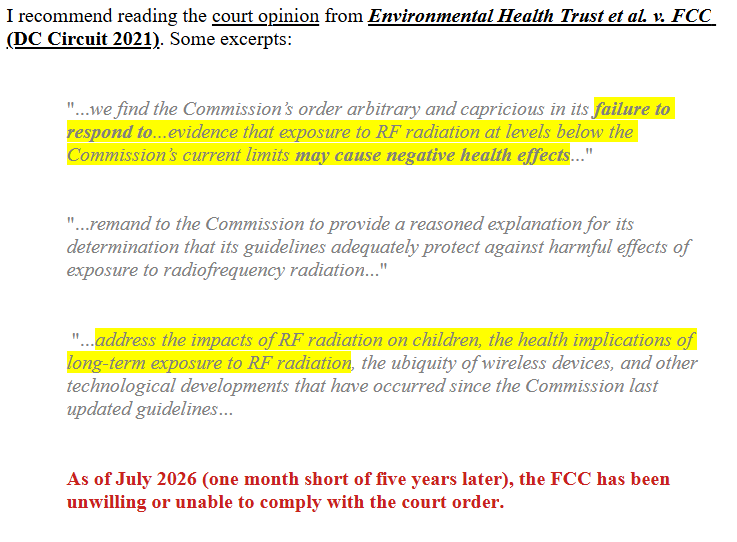
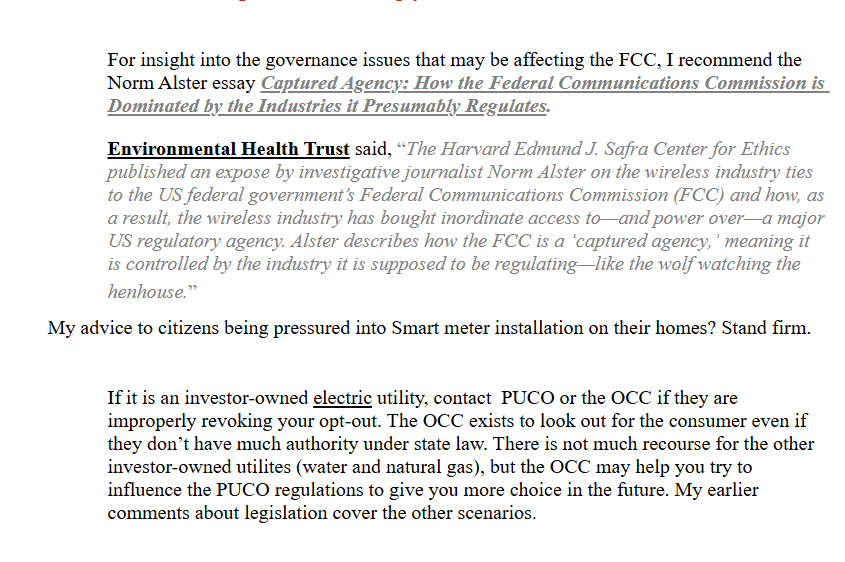
Davey: During the 2013-2014 Ohio General Assembly (130th), there were two bills - HB 368 (opt-out at no cost for Smart electric, water, and natural gas meters) and SB 181 (opt-out Smart electric meters). Neither bill made much progress and, instead, the state regulation (OAC 4901:1-10-05 which I mentioned earlier) requiring an opt-out option for investor-owned electric utilities was put into effect. I believe the decision to go the state regulation route versus the state law route was likely political. The utility industry has significant influence in the state legislature, and putting their names on votes that may have crimped the profits of the utilities was probably viewed as unnecessary when state regulation could accomplish the same outcome without risking the wrath from the industry for their individual vote. Given that history, I think a state law is unlikely. However, if customers of the various investor-owned utilities worked with the Office of Ohio Consumers’ Counsel (OCC) to challenge the rate cases at the Public Utilities Commission of Ohio (PUCO) with cost data previously ignored (electricity burden of Smart meters, shorter lifespan, data management costs, etc.), privacy issues, and health data (including the fact that the federal regulator, the FCC, is unwilling or unable to comply with the 2021 court order to provide a reasoned explanation for why their 1996 standards are protective), think that is the more likely path for reform. At the municipal level, charter amendments and electing representatives that care about the public’s health and privacy are probably the best options. There is probably a similar path with the electric cooperatives, but I have not researched how to change their policies. Not optimistic on the courts given the money behind protecting the status quo (Big Tech and the utility industry).
TOR: Are you associated or working with any anti-Smart meter activists in the state?
Davey: We have been fortunate to receive and share information with Southwest Ohio for Responsible Technology (SWORT) and Ohio Stands Up.
TOR: I have read and watched stories of folks having Smart meters installed while they’re at work. In a subsequent FirsEnergy mailer to the one I mentioned, the letter states, “In fact, if your meter is readily accessible, you may not even need to be there when it occurs.” When speaking to an associate of mine who, like me, has an analogue meter with a “Do not replace” sticker, I was told that he contacted FirstEnergy after receiving his mailer and it quickly became clear that the “do not change” directive was not in their system. Do you have any advice for citizens who have been granted opt-outs but are being pressured with impending plans to switch over to Smart meters?
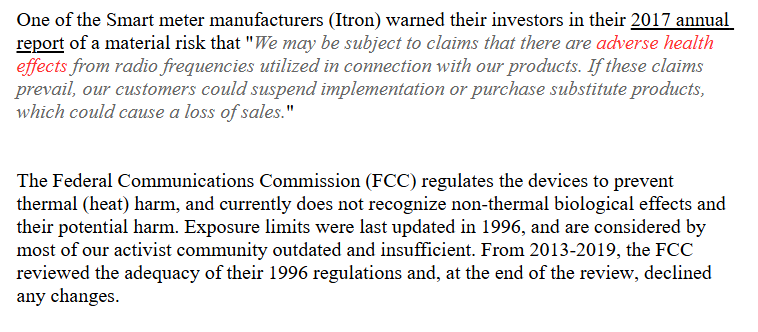
Davey: Do not trust assurances of safety...
TOR: Were you surprised by the Westerville vote? I mean, essentially citizens voted against their own right to choose. Clearly, a majority of the citizenry is uninformed about Smart meter harms, and they’ve been swayed by the “convenience” and “financial hardship” narratives.
Davey: Financial coercion works. After the city government sent out postcards threatening to raise everyone’s utility bills by an unspecified amount, I was not shocked that they were able to scare enough voters away from protecting their family’s health and privacy.
TOR: What’s next for you in this fight?
Davey: A court (7th Circuit) has already declared that the data collected by the Smart meters every fifteen minutes is a warrantless search and we have already talked about the health risks. If we allow the current situation to stand – the city requires households to compromise their health and privacy in order to receive essential water and electric services – then what’s next? So, we are working on an improved charter amendment. The original amendment addressed informed consent, privacy, and of course the option to choose traditional analog meters at no additional cost. While we mentioned the significant discretionary spending by the electric utility that normally would have occurred in the city’s General Fund if they did not have an electric utility, the original charter amendment did not touch that questionable spending. That will not be the case the second time around. The improved charter amendment will prohibit enough of the discretionary spending (and require disclosure of other questionable spending to deter it) that the city will not be able to claim a need to raise utility rates to accomodate meter choice. In addition, to further improve affordability for the residents, the improved amendment will likely tackle reducing property taxes. There may be other reforms of other issues the public cares about as well. If we do this again, we are going to make it worth our time and broaden the appeal to more of the public.
TOR: Mr. Davey, thank you for your time, and thank you for fighting the good fight for utility meter choice legislation.