
AI DRAGNET IN AMERICAN COMMUNITIES AND SCHOOLS OUTPACES LEGISLATIVE GUARDRAILS
BY JEFF SKINNER
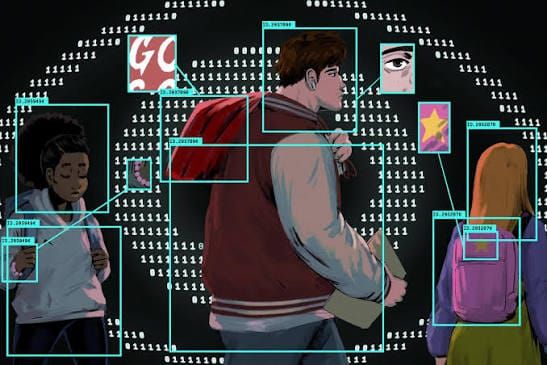
STATEWIDE -As Ohio solidifies its position as a primary Midwestern hub for hyper-scale data centers and corporate cloud processing against citizen wishes, a quiet but rapid expansion of artificial intelligence surveillance infrastructure is drawing fierce resistance from civil liberties advocates. Critics warn that the intersection of military-grade tracking systems, school monitoring software, and consumer smart-home utilities is creating a pervasive, real-time behavioral prediction net.
Advocacy groups warn that the mass compilation of biometric data inside expanding, heavily-funded corporate repositories provides the exact high-density computational capacity required to anchor a centralized, real-time "precrime" apparatus or connect to a social credit system of sorts. According to this warning, the systemic monitoring of keystrokes, facial cues, and movement logs is engineered to bypass constitutional boundaries under the guise of public safety, shifting the nation toward a society where non-conformity is flagged before it even occurs.
The digital trail begins early for millions of minors today. As reported by BuzzFeed News, the safety management service Gaggle monitors the communications and schoolwork of approximately 5 million students in the United States, tracking required software environments including Google’s G Suite and Microsoft 365. Using internal artificial intelligence, the software automatically scans student emails, essays, chat logs, and calendars against a "blocked word list" and runs images through an "Anti-Pornography Scanner".
Hundreds of pages of internal corporate documents and content moderation rules reveal that approximately 80 percent of posts flagged by Gaggle are for profanity, operating on a "three-strike rule" that limits a student's account privileges. However, the automated system frequently catches benign, expository creative writing—flagging titles like "poem portfolio" or "Narrative Essay" for referencing prohibited words.
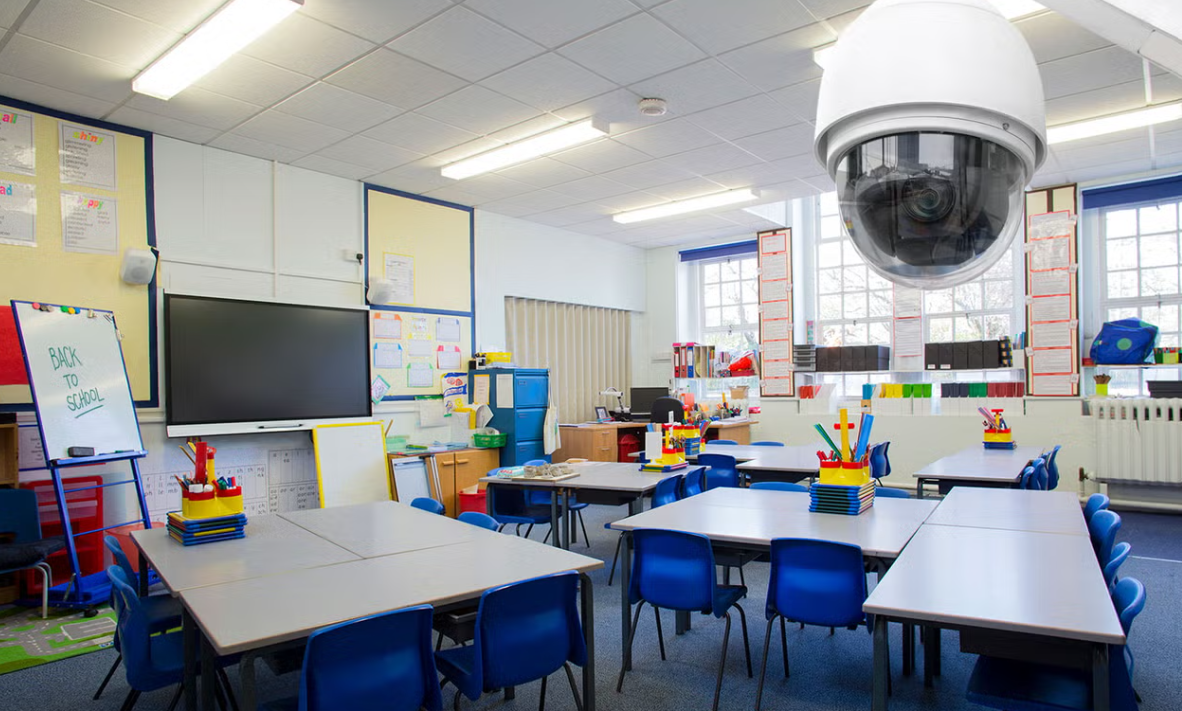
Civil rights advocates contend that early exposure to campus surveillance teaches children a dangerous lesson, desensitizing a generation to continuous corporate data collection and preparing them for compliance in adulthood.
The expansion of youth monitoring mirrors a longer international trend toward normalizing biometric data collection as everyday currency. For more than two decades, institutional trial programs have slowly habituated the public to biological tracking under the guise of logistical convenience. As early as 2003, institutions like the Venerable Bede Church of England Aided School in Sunderland, United Kingdom, experimented with iris scanners to identify children at lunch counters and libraries. Marketed as a benevolent tool to prevent playground bullying by concealing which students received free meal assistance, the system required children to look into a camera lens to match their unique iris patterns against a school database.
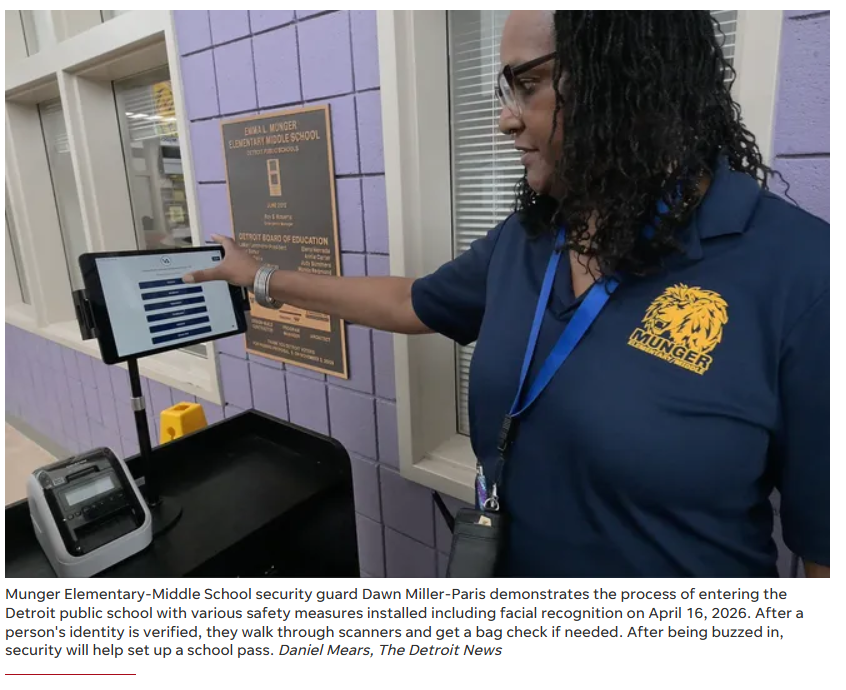
Decades later, private enterprise has scaled these capabilities into a standard corporate model. Tech vendors like CRB Cunninghams have aggressively expanded automated campus identity networks, deploying point-of-sale (PoS) facial recognition cameras across public and private education sectors. This infrastructure is actively deployed by institutions such as The Castle School in South Gloucestershire, Harper Green School in Bolton, and Driffield School and Sixth Form in East Yorkshire.
The technical mechanics of the CRB Cunninghams system rely on manual operator activation at the till. When a student approaches the lunch line, the operator taps or clicks on the pupil’s face within a live video feed captured by a USB web camera mounted under one meter away. The software captures a still image, crops out the background, and transforms the analogue geometry of the student's facial features—such as nose width, cheekbone shape, and distance between the eyes—into an encrypted mathematical algorithm known as a faceprint template.
This string of characters is encrypted using AES 256 and matched against the school’s database held within its internal Management Information System (MIS). To counter the natural physical development of school-aged children, the system utilizes adaptive, rolling data capture. The software stores up to five templates per user; if a successful identification occurs and the primary template is older than three weeks, the system automatically overwrites the oldest file with a fresh face scan to ensure the digital tracking profile evolves seamlessly as the child ages.
While administrators heavily promote these contactless systems as benign utilities to increase transaction speeds and check for food allergies under regulations like Natasha’s Law, documentation reveals that schools leverage institutional friction to compel absolute submission. At Driffield School, while facial recognition is technically labeled "optional," families who object to the biometric architecture are subject to severe administrative penalties. Non-consenting students are barred from using traditional, phased-out dinner cards; instead, they must manually walk to the finance office to collect a physical paper payment slip every single day before entering the canteen line—a process school officials openly acknowledge "significantly slows down" access to food. Through intentional logistical delays and social exclusion, non-compliance is systematically phased out.
Furthermore, the data boundaries of these systems routinely exceed initial privacy disclosures. While vendors frequently assure parents that the architecture merely stores unreadable mathematical code, operational policies at Harper Green School reveal that the system explicitly archives full physical photographs of students alongside their algorithmic templates. These image files are permanently displayed on catering till screens, establishing a highly comprehensive data log that binds a child’s physical anatomy directly to their financial transaction history.
While domestic public safety and public logistics are frequently used to justify these programs, the core software powering the broader surveillance dragnet has deep foreign military and intelligence roots. Private defense technology firms like Toka—founded by foreign national security and cybersecurity leaders—are experiencing massive commercial expansion, recording over 60 percent year-over-year revenue spikes as they scale software platforms explicitly designed to help law enforcement agencies synthesize raw commercial data feeds into actionable intelligence.
The systemic aggregation of citizen profiles relies heavily on building backend networks that quietly link local law enforcement to expansive national databases. As detailed in an analysis published by Truthout, the Electronic Frontier Foundation (EFF) has tracked the swift proliferation of mobile biometric scanners—such as the MORIS (Mobile Offender Recognition and Information System) device—which clip directly onto a standard smartphone. These mobile tools empower local police officers to capture iris scans, fingerprints, and high-resolution photographs during routine traffic stops or simple street-level encounters.
Crucially, this architecture bypasses standard legal barriers by making disparate data systems fully interoperable. Under this mechanism, data collected at a local DMV or during a minor neighborhood dispute is automatically uploaded and made searchable across multiple federal networks, including Department of Justice and FBI facial recognition grids. Civil liberties attorneys warn that this backend integration strips away traditional checks and balances. By blending localized commercial data with sweeping federal intelligence archives, the network lowers the legal standard of suspicion, allowing the continuous tracking of ordinary citizens as they move through public spaces.
Simultaneously, domestic agencies have aggressively scaled intercept capabilities by acquiring Graphite, a sophisticated mobile cyberweapon manufactured by the foreign spyware developer Paragon Solutions. When successfully deployed against a target device, Graphite functions as an absolute stealth intercept tool. By exploiting zero-click vulnerabilities to take complete control of a mobile phone, operators can bypass end-to-end encryption on secure messaging applications like WhatsApp and Signal. Once inside, the spyware allows agencies to harvest private photographs, read encrypted text logs, trace real-time geographical coordinates, and remotely manipulate the device's built-in microphone to act as a hidden audio recorder.
Constitutional advocates emphasize that targeting specific subsets of the population is simply an operational smokescreen used to build legal precedents and lower public resistance, allowing military-grade tracking systems originally engineered for foreign intelligence targets to steadily bleed into domestic domestic agencies, as it currently is being utilized in schools today.
The physical boundaries intended to shield private life from this data dragnet are also under strain, as consumer safety utilities are increasingly co-opted as local checkpoints. A recent internal affairs investigation in Greenville, North Carolina, highlighted the vulnerability of consumer-level smart networks. Local police officers forced entry into a civilian's apartment, placed her under administrative detention, and physically coerced her by holding her smartphone up to her face to force a biometric facial recognition unlock to search for her private Ring doorbell camera footage without a warrant, raising sharp Fourth Amendment concerns.
The technical reality of this predictive infrastructure relies directly on the server farms multiplying across the Buckeye State. Driven by aggressive state tax incentives and proximity to major power grids, tech conglomerates have turned central Ohio communities like New Albany, Dublin, and dynamic technology corridors near Columbus into massive repositories for the nation's cloud infrastructure.
Civil liberties groups point out a dark irony: while these facilities are publicly celebrated for boosting local economies and processing mundane enterprise data, they provide the exact high-density computational capacity required to anchor a centralized, real-time tracking network. The physical data repositories utilized by platforms like Gaggle leverage infrastructure hosted by Amazon Web Services (AWS), while biometric systems operated by CRB Cunninghams funnel student faceprints into Microsoft Azure data centers.
Without the vast, water-cooled processing grids expanding across Ohio fields, the algorithmic power to store, sort, and map billions of daily keystrokes, facial cues, and movement logs simultaneously would remain computationally impossible. The massive data clusters serve as the physical engine of a predictive network, silently parsing the behavior of millions of citizens to categorize public risk with zero local democratic input.
A few states are attempting to push back. New York state enacted a comprehensive ban on facial recognition technology in public schools after a critical analysis by the state's Office of Information Technology Services concluded that the risks to student privacy and civil rights significantly outweighed the potential security benefits. The New York report explicitly cited research indicating that facial recognition cameras offer only the "appearance of safer schools."
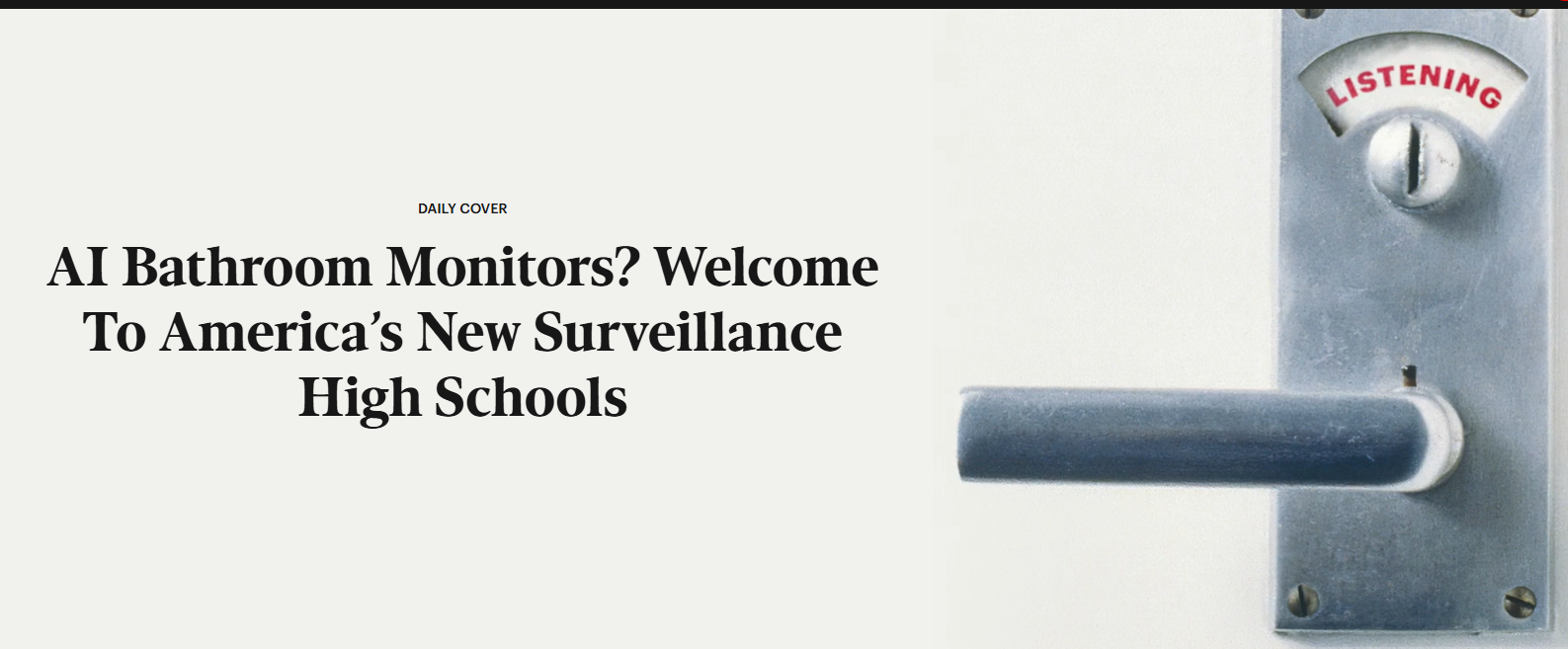
The normalization of absolute oversight relies on pushing biometric tracking into the most private physical redoubts of daily life. As documented in an investigative report by Forbes, school systems are actively extending AI surveillance arrays past classrooms and hallways and directly behind the closed doors of school bathrooms. This highly invasive hardware architecture relies on smoke detector-shaped audio capture devices designed to monitor acoustic signatures and listen for sounds of student distress.
This bathroom-level audio recording works in lockstep with a dense network of surrounding surveillance assets. According to school deployment data, campus perimeters are routinely layered with automated license plate readers from multi-billion dollar surveillance conglomerates like Flock Safety to catalog vehicles, alongside behavioral analysis AI video feeds engineered to actively scan the facial expressions of passersby for real-time indicators of violent intent. Overhead, autonomous aerial drones stand ready on automated launchpads to provide continuous intelligence from above.
While school administrators publicize these multi-million dollar tech deployments as standard safety necessities to curb public violence, civil liberties lawyers and research data emphasize that this saturation fails to prevent critical incidents. Instead, the real-world impact is the technical execution of total behavioral policing. This ecosystem forces students to internalize the reality of continuous, multi-angled observation, transforming an environment of education into a tightly managed corporate data pipeline.
Legislative oversight remains largely fragmented, and Ohio's regulatory framework continues to lean heavily toward data center expansion rather than strict biometric guardrails. For the vast majority of Ohioans, the automated data systems tracking their voices, movements, and keystrokes continue to compile behavioral profiles without explicit democratic consent.