Findlay City Council Purges AI Transparency Ordinance
BY CAREY MORGAN
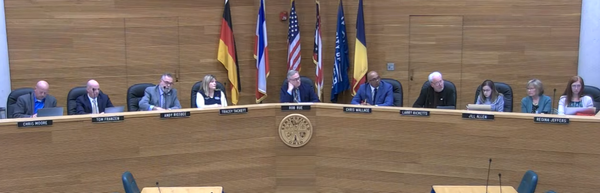
FINDLAY - In a striking blow to public transparency and municipal accountability, Findlay City Council voted 9-1 on Tuesday evening to completely purge a proposed artificial intelligence regulation ordinance from its legislative agenda, refusing to engage in any open debate on the escalating use of automated software across city departments. The swift, procedural execution of Ordinance 2026-119—officially titled the Municipal Artificial Intelligence Civic Transparency and Accountability Ordinance—effectively silenced a critical governance framework before its first official reading could even occur. By voting to erase the item from public evaluation, the council chose to avoid accountability on an issue that experts warn is quietly eroding democratic oversight: the outsourcing of municipal functions to algorithmic systems without standard public vetting.
The legislation, drafted and championed by City Auditor Jim Staschiak II, was built on core principles of administrative tracking, traceability, and verification. Rather than evaluating a framework designed to protect citizen data and retain public control over municipal services, a unified front of council representatives and administrators leaned heavily on procedural mechanisms to derail the measure.
The silencing of the ordinance was initiated by Council President David Murphy, who launched a pre-emptive strike by declaring that a fully drafted ordinance did not belong in tonight's agenda due to timeline constraints and a lack of early administrative consultation. Murphy told the council chambers that ordinances such as this normally would not only be discussed and vetted by administration and the law director, but they would normally run them through a committee to review. Staschiak immediately raised a point of order, forcefully pushing back against Murphy’s narrative and arguing that the legislative framework was vital to address immediate municipal realities. Had the council allowed the bill to move forward, it would have institutionalized The Seven Protections outlined in the ordinance, a risk-based matrix designed to shield Findlay residents from automated government malpractice.
Under the know and disclose protections, the ordinance required the city to maintain a public inventory of material AI systems and provide clear disclosure whenever automated utilities substantially contributed to public-facing communication or analysis, which would have stopped city departments from quietly deploying black-box algorithms behind closed doors. Under the preserve and protect guidelines, the framework strictly prohibited AI summaries from replacing underlying records under Ohio public records law, while mandating rigorous privacy and security safeguards for all resident data processed by algorithms. Under the review, account, and report provisions, higher-risk systems would face ongoing evaluation, an authorized human official would remain legally responsible for final actions, and the city would publish an annual report highlighting system failures or data breaches.
The true tragedy of the council's refusal to debate Ordinance 2026-119 lies in the tangible protections it stripped from the community. Staschiak's framework directly targeted modern automated hazards, specifically introducing protections under Section 9 (Protection Against Individualized Information Filtering) and Section 10 (Prohibition on Individualized Political Persuasion). These pillars would have legally blocked city departments or vendors from configuring public-facing AI systems to selectively withhold information or target residents with tailored political persuasion based on their inferred demographic profiles, personal preferences, or prior civic activities. Additionally, under Section 14 (Right to Human Review), the bill established a crucial democratic safety valve: ensuring that no resident could be denied a significant governmental service or benefit solely by an automated recommendation without access to meaningful human review. If an unverified city algorithm erroneously flagged a resident's utility account, licensing status, or public safety record, the citizen would possess a legally protected right to challenge the machine's output before an accountable human officer.
Despite these clear citizen safeguards, council members rapidly fell into formation to suppress the transparency effort. Fourth Ward Representative Dan DeArment moved to wipe the ordinance from the night's proceedings, explicitly arguing that city council has no business dictating technology rules to the executive branch, which holds significant financial investments in energy and tech infrastructure. DeArment stated that he does not think it's appropriate for the auditor to tell the mayor how to run her administration, adding that this issue should be handled at the policy level by the administration and that he does not think council needs to be involved in this at a legislative level. This sentiment was reinforced by At-Large Representative Brad Wagner, who seconded DeArment's motion. Wagner stated that the concept did not fit within any current council committees and that he was entirely unprepared to vote on the matter, signaling a reluctance among city leadership to confront technical modernization regulation despite massive pushes to facilitate its construction. First Ward Representative Nichole Coleman took a personal tone, publicly chastising Staschiak over the coordination of the bill's early legal strategy.
While the council successfully framed the debate as a minor procedural conflict, Staschiak dropped a bureaucratic bombshell that underscored the recklessness of delaying oversight. Prior to introducing the legislation, the auditor’s office conducted an internal poll of twelve city employees outside the audit department. Out of those twelve individuals, eleven admitted they are already actively using artificial intelligence utilities to execute their day-to-day municipal tasks. Staschiak warned the council that this is here, it is being used, and it is important, emphasizing that the primary objective was to erect core internal safeguards to mitigate severe liabilities before an operational catastrophe occurs. Mayor Christina Muryn defended the current lack of legislative guardrails, comparing generative AI software to standard document spelling checks. However, Muryn inadvertently confirmed Staschiak's point regarding the immediate need for the ordinance's High-Impact AI System protocols. She noted that automated dictation mechanisms are currently utilized by police officers for generating reports, while other city staff rely on unvetted AI translation services—all managed on a loosely defined, fractured individual basis without cohesive legislative guardrails.
The council’s sudden procedural paralysis over a few pages of AI safeguards looks deeply hypocritical when compared to their aggressive, simultaneous mobilization around massive technological infrastructure. Previous reporting showed a stark ideological double standard driving Findlay's leadership. This resistance to independent, legislative oversight closely mirrors a local battle regarding the Heartland Forward Initiative. Promoted heavily by Mayor Muryn, that initiative sought to link Findlay with a corporate economic partnership driven by digital tracking dashboards and external tech alignments. The administration attempted to fast-track the partnership with questionable strings attached and zero direct citizen input. Public pushback grew so intense that council was forced to delay a vote in February 2026, prompting Heartland Forward to withdraw its invitation in March due to what the mayor termed unfounded negativity. The overlap in strategy is unmistakable; during the Heartland Forward fallout, the administration fought to keep digital planning centralized within executive-appointed committees. By voting to kill the AI ordinance on October 20, council members like Nichole Coleman, Dan DeArment, and Brad Wagner successfully executed the exact same playbook: blocking portions of the legislative branch from establishing autonomous guardrails, thereby ensuring tech policy remains a closed-door executive monopoly.
This clear double standard is further laid bare by the council’s aggressive push for Data Center Development. Findlay is currently under a 12-month data center construction moratorium that runs until April 2027. During this period, the mayor has released drafts of the city's zoning amendments regulating the industry to regional development brokers tightly intertwined with the financial interest of officials before the public was been able to view them.
An analysis of committee rosters highlights that the very individuals claiming they were unprepared to vote on basic AI guardrails are the primary architects paving the way for AI infrastructure. At-Large Representative Heather Kensinger, who serves as Committee Chair, led the Planning and Zoning Committee's rapid refinement of the data center rules through 12 separate iterations, yet voted to block the AI transparency ordinance from receiving even a first reading. Nichole Coleman and Brad Wagner both serve as key members of the Planning and Zoning Committee executing the corporate data center zoning framework. On October 20, both pivoted to a stance of administrative deference, voting to kill the transparency ordinance because it supposedly meddled in executive workflows. This coordination aligns seamlessly with commercial realities in the area. TOR previously highlighted a massive $5.9 million land deal in North Findlay, signaling that private energy interests backed by infrastructure funds were already assembling hundreds of acres for behind-the-meter data center campuses along I-75. The council block is highly motivated to process complex zoning parameters and technical parameters when it accommodates industrial capital and regional corporate attraction packages. Yet, when presented with a proactive framework designed to protect the public from those exact same algorithmic systems, they shelter behind timeline technicalities.
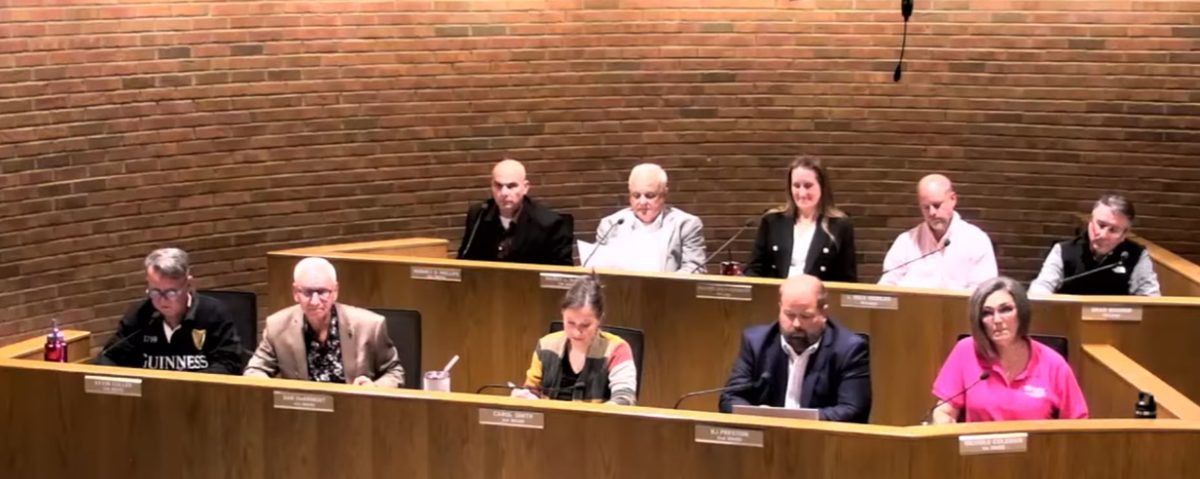
When the roll call vote was taken on the motion to strip the ordinance from the agenda, a wall of compliance met the public. Nine council members voted to suppress the bill, including Nichole Coleman (First Ward), BJ Preston (Second Ward), Carol Smith (Third Ward), Dan DeArment (Fourth Ward), Kevin Cullen (Fifth Ward), Heather Kensinger (At-Large), L. Reed Needles (At-Large), Rodney Phillips (Sixth Ward), and Brad Wagner (At-Large). The lone dissenting voice belonged to Seventh Ward Representative Danny DeLong, who rejected the procedural maneuver and demanded that the ordinance remain open to public view. DeLong declared that he would vote no on that and let it ride, noting that standard legislative rules allow for three full readings to facilitate robust committee reviews, public debate, and modifications. He stated that council would have discussions during that time and that if they did not want to do it at that time on the third reading, then they could vote no. DeLong’s pleas for standard legislative process were ignored. With a 9-1 margin, the motion carried, and the accountability ordinance was wiped from existence. By completely abandoning Ordinance 2026-119, the Findlay City Council has set a dangerous precedent. In an era where algorithmic transparency is paramount to preserving civil liberties and ensuring data security, Findlay’s elected officials chose bureaucratic convenience, corporate infrastructure facilitation, and executive protection over their constituents' right to clear, human-centered legislative guardrails.
The resolution is available below for download and review for the public.