
Findlay Residents Voice Strong Opposition to Shady Grove Annexation and High-Density M2 Zoning
BY CAREY MORGAN
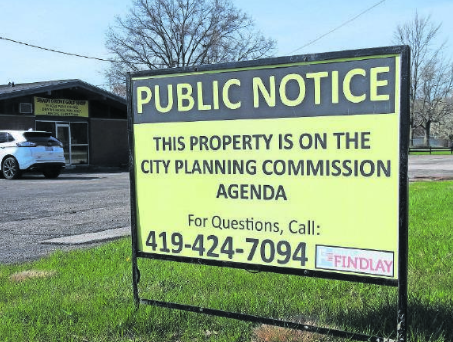
FINDLAY - Annexation and rezoning of the Shady Grove property in Marion Township remained a primary focus at the May 6 Findlay city council meeting. The project involves annexing approximately 45.9 acres and rezoning it to M2 (multifamily high-density) zoning to facilitate large-scale apartment development.
While the items received only first readings, public comments revealed deep concerns among nearby residents about traffic, flooding, infrastructure strain, and impacts on the existing single-family neighborhood along the two-lane Township Road 237.
Despite public push back, it does appear council will be proceeding with the annexation (Ordinance 2026-59) and associated M2 zoning (Ordinance 2026-60) amid passionate resident testimony. Four residents—Don Hutton, Heather Hunt, Wallace Figer, and Teresa Douglas—addressed council regarding the project. Their remarks highlighted practical safety and quality-of-life issues for the established residential area characterized by older single-family homes.
Resident Don Hutton questioned the logic of community zoning votes if rezonings frequently override them and raised alarms about flooding in subdivisions like Forest Lake and Lake View. Hutton warned that approving high-density development in a known flood-prone area could exacerbate runoff problems for existing homeowners. He also touched on broader infrastructure concerns, referencing aging water pipelines and the need for foresight in city growth.
Resident Heather Hunt urged council to reject M2 zoning in favor of R1 single-family residential. Hunt emphasized that high-density apartments would increase impervious surfaces, accelerating runoff into neighborhoods already facing stormwater challenges.
“The township already is facing storm water challenges. Adding a large multifamily complex would accelerate that direct runoff directly into our neighborhoods,” she stated.
Traffic concerns dominated much of the testimony. Hunt noted that roads designed for single-family use would see hundreds of additional daily vehicle trips, creating gridlock during school and rush hours. She highlighted the dangerous daily routine of accessing mailboxes located across the street from driveways, predicting hazards for residents with increased traffic volumes. Additional worries included reduced water pressure for existing homes, potential impacts on fire suppression, and declining property values in the desirable Van Buren school district area.
Other comments centered on traffic hazards. The proposed development could add 200-300 more cars daily, plus hundreds more with full buildout. another commentor, Wallace Figer, challenged council members to imagine allowing young children to bike to proposed walking trails amid such traffic. He questioned public access to the touted seven-acre walking trails, noting apparent lack of parking and convenient entry points for existing residents versus new apartment tenants. Maintenance costs for trails and potential city burdens were also raised.
Figer and others expressed skepticism that $1,600–$2,000 monthly apartments would address local housing needs, given Hancock County’s median income around $61,000. He called on council to better represent average residents rather than high-end development.
A Westwood resident impacted by the broader neighborhood, reinforced flooding, traffic, and infrastructure themes, described Township Road 237 as already hazardous for pedestrians and cyclists, requiring her to move far over when vehicles pass. the resident argued that a project of this scale would necessitate widening 237, improved drainage, and major upgrades to State Route 224, all of which would affect neighboring properties and potentially raise taxes while lowering home values. She questioned proceeding with M2 zoning before detailed studies:
“It doesn’t make sense to me to zone it M2 if you don’t have all these questions [answered]," she said.
Council responses revealed a mix of acknowledgment and procedural defensiveness. Several members, including Rodney Phillips, noted the validity of concerns and advocated for future third-party validation of developer claims beyond city engineering reviews. Director Rob Martin and others explained that annexation and initial zoning do not constitute final approval to build; detailed site plans, traffic studies, drainage calculations, and engineering reviews by licensed professionals would follow through planning commission processes. Updated preliminary traffic and runoff data had reportedly been shared with council.
However, some exchanges conveyed a sense that the project was on a predetermined path. Residents perceived certain comments as treating the annexation and M2 designation as largely inevitable, with details to be worked out later. Council emphasized that the developer indicated M2 zoning was necessary for project economics, though Auditor Jim Staschiak and others flagged questions about valuation assumptions and the need for independent verification. One resident petition via Change.org had gathered over 449 signatures opposing the M2 zoning in a short period, underscoring community sentiment.
Council members like Kevin Cullen defended the deliberative process, rejecting “rubber stamp” characterizations and noting personal familiarity with the roads. Yet public frustration was evident regarding the timing—many details on stormwater, traffic impacts, mailbox safety, and park access remained unresolved at the first-reading stage. Discussions also touched on post office coordination for mailboxes and Vision’s potential role in maintaining proposed trails, but residents sought firmer commitments before any zoning change.
The Shady Grove proposal highlights tensions between growth ambitions and preserving neighborhood character in Findlay’s expanding periphery. Proponents see multifamily housing as addressing demand; opponents view it as threatening the livability of quiet, two-lane road single-family areas with proven flooding risks and inadequate current infrastructure.
As the ordinances advance toward second and third readings, residents are expected to continue engaging at zoning committee meetings and future council sessions. Council has an opportunity to demonstrate responsiveness by ensuring robust, independent analysis of traffic, environmental, and fiscal impacts before any final approvals. The May 6 meeting made clear that many Findlay residents living near the proposed site do not view high-density rezoning as a done deal and demand their longstanding single-family neighborhoods be protected from foreseeable strains.