OHIO GENERAL ASSEMBLY PASSES LANDMARK BILL LIFTING RESTRICTIONS ON SUPPRESSORS, SHORT-BARRELED RIFLES, AND SHORT-BARRELED SHOTGUNS
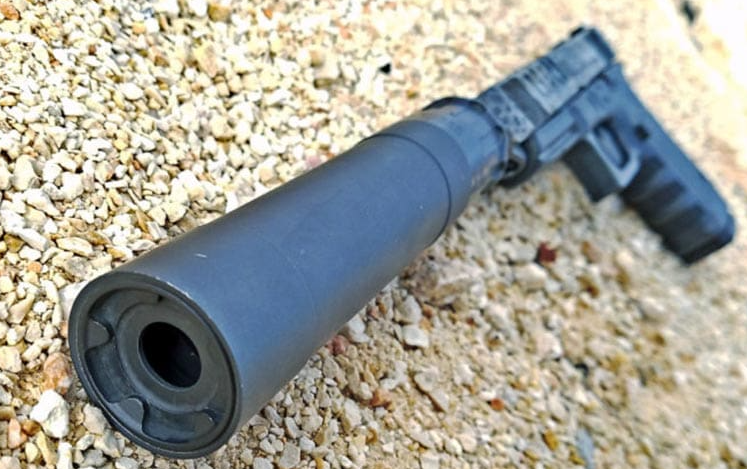
STATEWIDE - The Ohio General Assembly moved decisively today to modernize state firearm regulations, passing sweeping legislation that eliminates archaic state-level restrictions on firearm suppressors, short-barreled rifles, and short-barreled shotguns. The bicameral victory marks a major milestone for Second Amendment advocates across the state, sending the comprehensive deregulation measure straight to Gov. Mike DeWine for his signature.
The Ohio House of Representatives initiated the final legislative push by voting 68–27 to pass an expanded, amended version of Senate Bill 214. Because the House Public Safety Committee added provisions extending the bill’s scope to encompass short-barreled firearms alongside the original suppressor language, the legislation returned immediately to the Ohio Senate for a concurrence vote. Recognizing the importance of the package, the Senate swiftly concurred on the House-passed changes with an overwhelming 21–9 vote, bringing a rapid and successful conclusion to the legislative process.
Originally introduced by State Sen. Kyle Koehler (R-Springfield), Senate Bill 214 represents a targeted effort to refine the Ohio Revised Code and remove redundant regulatory frameworks that have long penalized law-abiding sportsmen and firearms enthusiasts. The core mechanism of the bill alters sections 1533.04, 2923.11, 2923.12, and 2923.17 of the Revised Code. By amending these specific statutes, the legislation officially strips firearm mufflers, suppressors, short-barreled rifles (SBRs), and short-barreled shotguns (SBSs) from Ohio’s rigid legal definition of "dangerous ordnance".
For decades, these common safety and sporting components had been legally lumped into the same dangerous ordnance category as highly volatile, weaponized explosives, including military-grade rocket launchers, dynamite, nitroglycerin, grenades, mines, bombs, and torpedoes. Under previous state law, possessing these items without navigating complex, bureaucratic, state-recognized National Firearms Act registry exemptions could inadvertently expose an ordinary, responsible gun owner to major state felony charges. Advocates have long argued that classifying noise-reducing tubes and shortened long guns alongside artillery pieces was an absurd legal overreach that created severe, unintended traps for law-abiding citizens.
Legislative proponents emphasized that the package provides crucial statutory alignment with recent federal policy updates and monumental judicial precedents. The push for Ohio's legislative fix intensified following federal shifts by the Bureau of Alcohol, Tobacco, Firearms and Explosives regarding enforcement and registry procedures. Notably, a landmark federal court ruling in Texas concluded that extra regulatory registration frameworks and associated fees under the National Firearms Act were fundamentally unconstitutional once federal tax stamp obligations dropped to a zero-dollar threshold. Following these federal shifts, Ohio Attorney General Andy Wilson actively encouraged state lawmakers to clarify and update Ohio’s independent firearm rules to ensure state statutes did not remain needlessly restrictive. Lawmakers like State Rep. Tex Fischer (R-Boardman) noted during floor debates that Senate Bill 214 achieves exactly that, cleanly harmonizing Ohio policy with the prevailing national framework while explicitly safeguarding public safety.
Supporters of Senate Bill 214 have taken steps to assure the public that the legislation maintains robust consumer safety protocols by preserving foundational background check requirements. The bill does not create a completely unregulated environment for retail firearm purchases; instead, it transitions suppressors and short-barreled options into the exact same regulatory pathway used for purchasing standard, everyday firearms. Under the newly passed framework, any Ohioan seeking to purchase a suppressor, short-barreled rifle, or short-barreled shotgun from a federal firearms licensee must successfully pass a thorough National Instant Criminal Background Check System screening. Buyers will also continue to fill out the standard, mandatory federal Form 4473, guaranteeing that all retail transfers are fully vetted and documented. As Sen. Koehler succinctly clarified during legislative hearings, a suppressor or an SBR remains a firearm under the law, and it is entirely appropriate for these items to go through the exact same rigorous point-of-sale screening process that standard pistols and long guns go through today.
The final passage of Senate Bill 214 was met with widespread celebration from prominent outdoor heritage groups, hunting coalitions, and civil rights organizations. Advocacy associations including the Buckeye Firearms Association (BFA), the Sportsmen's Alliance, and the National Rifle Association all contributed testimony, grassroots coordination, and legislative backing to move the bill forward. Dean Rieck, the executive director of the Buckeye Firearms Association, expressed gratitude to legislative leadership and key committee members, noting that the organization took the lead on the bill early on and worked tirelessly alongside multiple Ohio retailers to turn the deregulation effort into a reality.
Sportsmen's groups emphasized that firearm suppressors are vital safety components that significantly reduce hearing damage for hunters and recreational shooters while simultaneously lowering noise pollution near public hunting grounds and outdoor shooting ranges. Similarly, removing the separate state-level felony traps for short-barreled rifles and shotguns provides peace of mind to defensive firearm owners and sport shooters who prefer more compact, maneuverable long guns. Proponents view the bill as a common-sense measure that protects the rich legacy of hunters, anglers, and trappers across Ohio, removing a layer of useless bureaucracy so that responsible citizens can exercise their constitutional rights without fear of overzealous local prosecution.
While the bill enjoyed comfortable, bipartisan majorities in both chambers, it did face pushback from a faction of legislative Democrats who raised familiar arguments regarding the regulation of compact firearms. During committee hearings, State Rep. Cecil Thomas (D-Cincinnati) voiced skepticism regarding the inclusion of SBRs and SBSs, drawing a distinction between auditory accessories like suppressors and compact long guns. Thomas argued that short-barreled rifles and sawed-off shotguns possess significant concealable power, raising concerns that a decrease in distinct state registry oversight could complicate law enforcement efforts, particularly in secondary private markets where point-of-sale background checks are not mandated.
However, these objections were ultimately outweighed by a desire to align Ohio with federal standards, an objective shared by several pro-Second Amendment Democrats who broke ranks to support the measure. State Rep. Mark Sigrist (D-Grove City) explicitly defended his crossover vote, stating that passing Senate Bill 214 successfully aligns state code with evolving federal realities and restores fundamental Second Amendment protections for responsible, law-abiding citizens across the state. The successfully reconciled legislation now sits on Governor DeWine's desk, where executive teams will review the bill's language before the governor decides whether to sign the historic deregulation package into law.