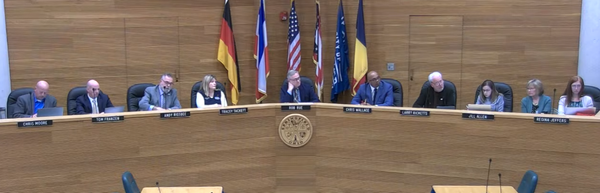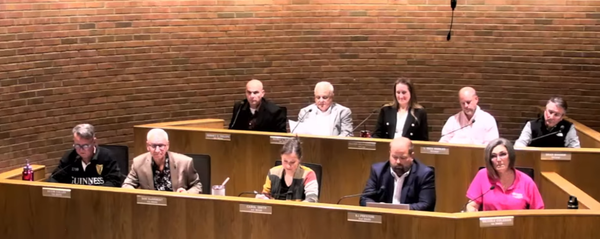
Inside The Pre-Packaged 'Toolkit' Used By Data Center Middle-Men In Ohio

BY JEFF SKINNER
STATEWIDE - As communities across northwest Ohio enact emergency construction moratoriums to evaluate the crippling operational strain of tech infrastructure on municipal grids, state-level economic planners have weaponized a highly choreographed onboarding pipeline to attempt to dismantle local municipal resistance.
Unredacted email archives, internal itineraries, and presentation slide decks obtained by The Ohio Register expose a standardized "data center toolkit" engineered by between the City of New Albany and regional economic brokers. like Regional Growth Partnership (RGP). This pipeline is designed to subject visiting city council members, county commissioners, and school board trustees to a calculated psychological and financial curriculum. The core of the strategy relies heavily on physical chartered bus tours aimed at overcoming grassroots public opposition and rapidly shifting the mindsets of local public officials.
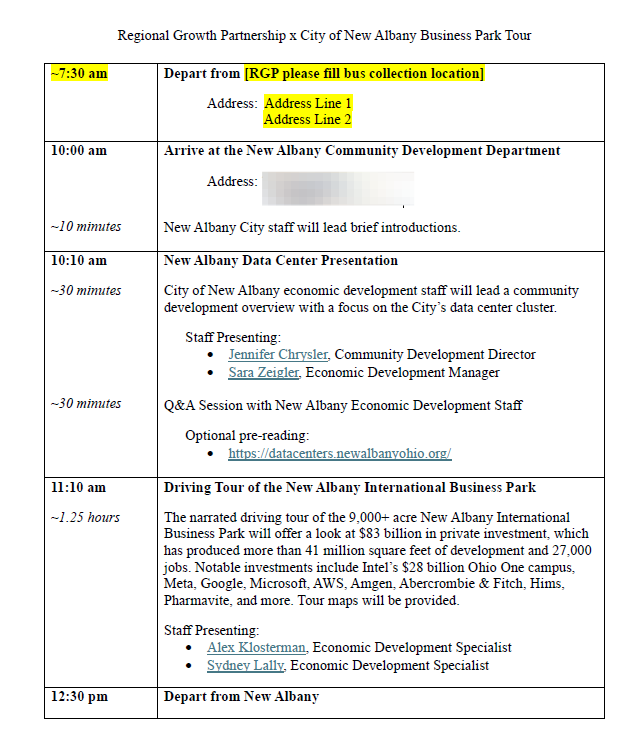
The power structure behind this infrastructure pipeline operates as an interlocking commercial machine. JobsOhio, a private non-profit entity funded entirely by the multi-decade lease of the state's liquor franchise monopoly, provides the capital and regional mandates. Regional brokers like the Toledo-based Regional Growth Partnership (RGP) serve as the frontline scouts, managing developer pitches and orchestrating policy briefings. The City of New Albany’s community development team provides the master-planned logistical blueprint.
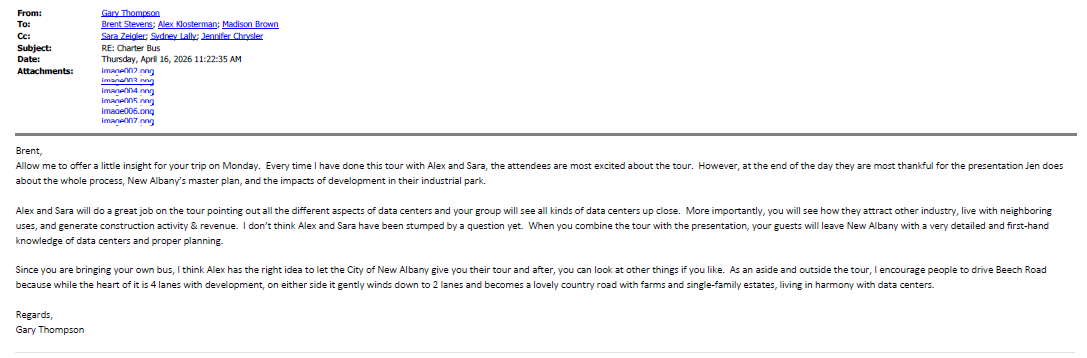
"Every time I have done this tour... the attendees are most excited about the tour," RGP Executive Vice President Gary Thompson wrote in an April 16 advisory email to regional directors. "However, at the end of the day they are most thankful for the presentation... about the whole process, New Albany’s master plan, and the impacts of development."
The re-education curriculum operates as a carefully staged theatrical production on wheels. Internal records reveal that these tours are micro-managed down to the minute to maintain what many argue is an artificial environment. Regional economic brokers seamlessly guide small-town public officials through highly insulated junkets—such as a 50-person delegation from Van Wert County and a parallel tour of officials from Lucas County, the City of Oregon, and the City of Maumee.
To minimize external variables or unscripted community encounters, economic brokers strictly mandate that no members of the media are allowed on the bus. Delegations are insulated from the local public, confined to mandatory "working lunches" consisting of pre-ordered box lunches from local providers like Barry’s Bagels or Jordan's Deli, served inside closed conference rooms at the Brick House Blue small business incubator.
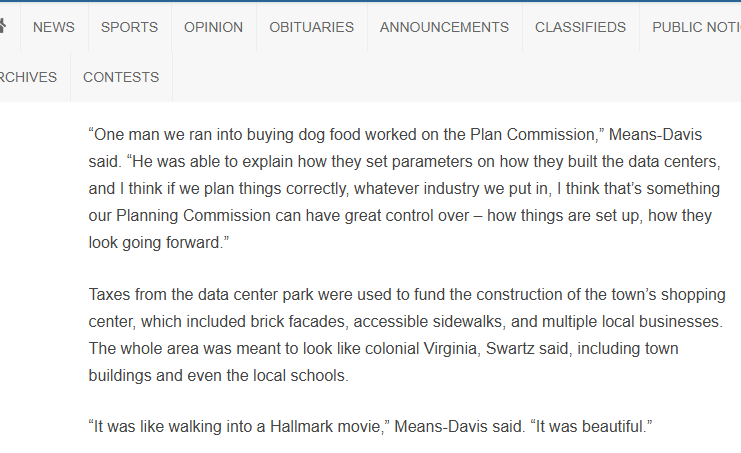
The physical driving tours are narrated directly by New Albany economic development specialists who guide the vehicles along a meticulously chosen route. Visitors are driven past the pristine brick facades, accessible sidewalks, and colonial Virginia-style architecture of New Albany’s commercial center. The manicured aesthetic is so effective that Shelbyville City Council member Betsy Means-Davis openly marveled that the experience was "like walking into a Hallmark movie".
Planners intentionally direct the buses past land-banked properties fronted by mature tree buffers, decorative fencing, and massive earthen berms. This layout ensures that the multi-billion-dollar industrial installations are rendered entirely invisible to the visiting officials.
Where the industrial footprint cannot be hidden by dirt walls, economic brokers spin a pastoral fantasy to pacify visiting politicians. In an April 16 advisory email, RGP Executive Vice President Gary Thompson outlined the exact script used to soothe aesthetic anxieties, writing to regional coordinators:
"I encourage people to drive Beech Road because while the heart of it is 4 lanes with development, on either side it gently winds down to 2 lanes and becomes a lovely country road with farms and single-family estates, living in harmony with data centers".

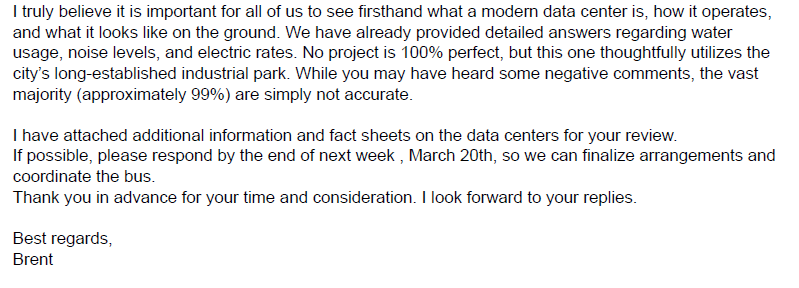
The political conversion driven by this visual filtering is absolute. Following a site visit on April 20, Van Wert Economic Development Director Brent Stevens sent an enthusiastic follow-up email to New Albany planners, writing: "We intentionally brought several individuals who had been skeptical—or even opposed—to data centers... I’m pleased to share that one of them became a strong supporter by the end of the day".
When small-town mayors raise local constituent concerns regarding industrial noise, grid vulnerability, and environmental degradation, planners deploy a pre-packaged defense mechanism designed to distort operational facts. Local directors are instructed to label community pushback as a collection of fabrications, with Brent Stevens assuring his council that approximately 99% of negative comments are simply not accurate.
However, a direct comparison between the presentational toolkit distributed to public officials and actual project data reveals an immense disparity regarding acoustic strain, utility grid resilience, and environmental extraction.
What they say is not accurate
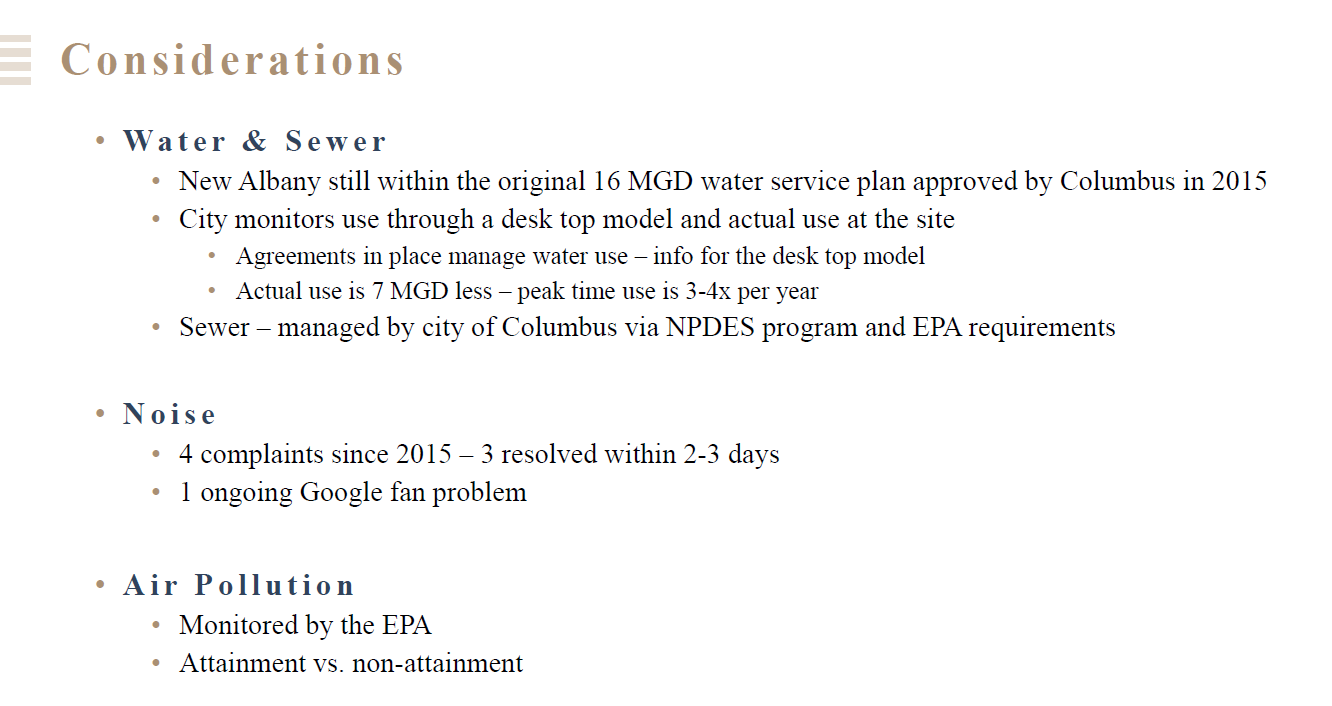
While the public relations script claims the operational hum from these installations mimics nothing louder than a residential clothes dryer running in the background, New Albany’s own internal "Lessons Learned" and presentational slides reveal a far more disruptive reality.
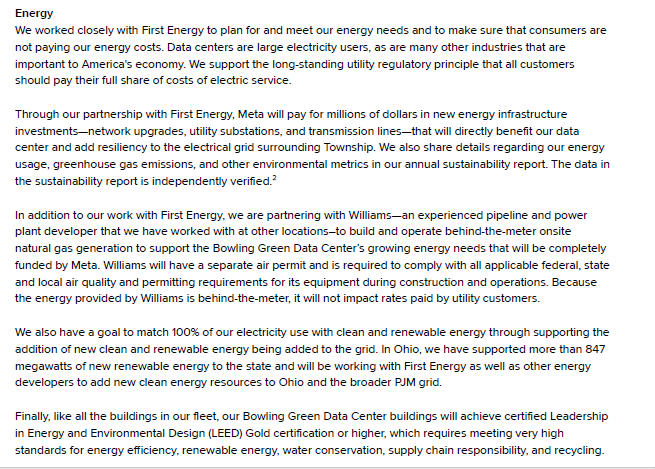
Planners intentionally structure bus tours to showcase properties with massive earthen berms and dense tree buffers, yet internal city documents admit to chronic public friction, including an ongoing Google fan problem that has triggered long-standing neighborhood noise complaints. A parallel deception governs air quality and grid infrastructure, where tech infrastructure is framed as clean and non-disruptive. In reality, these massive complexes rely on immense arrays of industrial diesel backup generators, and major developers like Meta have been forced to partner with power plant developers to build onsite natural gas generation to support their growing behind-the-meter energy needs without crashing the local utility network.
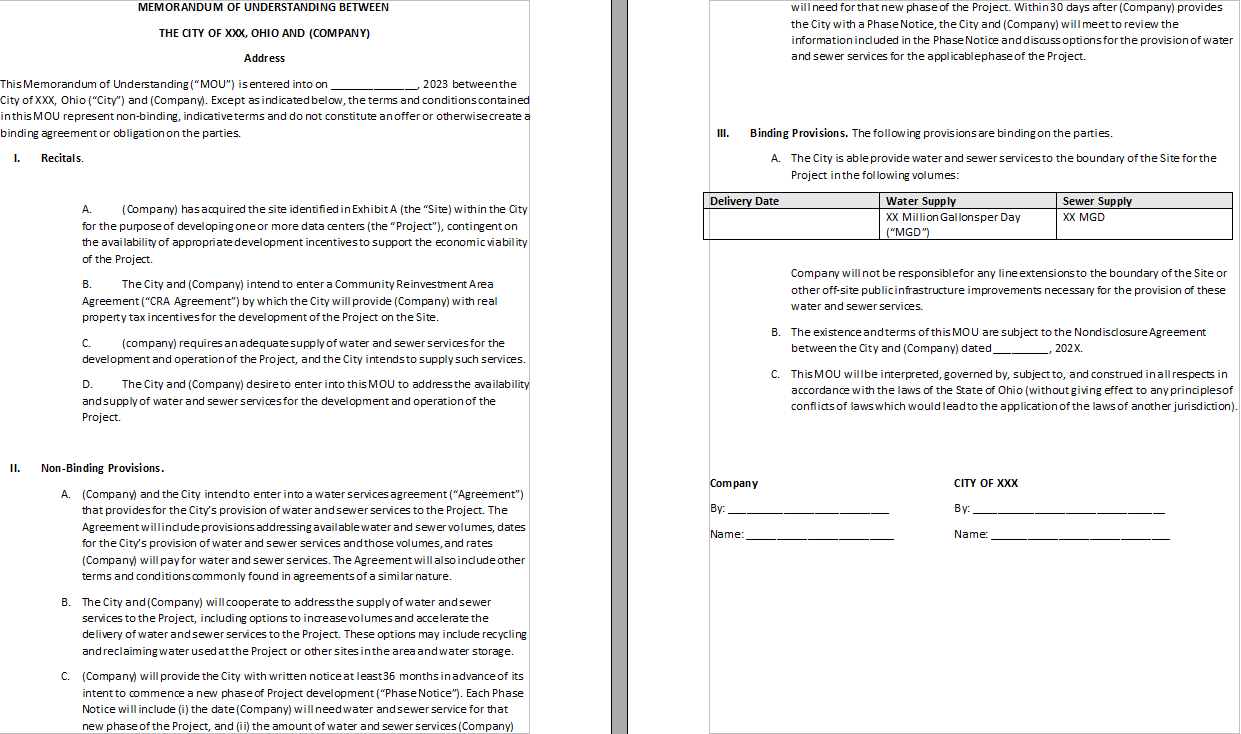
The pipeline's resource footprint is similarly masked by a presentational script designed to smooth over local anxieties. Meta’s public communications to Wood County trustees aggressively claim that their closed-loop, liquid-cooled systems require zero operational water, comparing their consumption to less than what two full-service restaurants use annually, though it omits any discussion on wastewater dumping. Conversely, the binding terms of the boilerplate Water Services Memorandum of Understanding force host towns to deliver millions of gallons of water per day directly to the site boundaries at public expense. This massive extraction forces small municipalities to absorb extensive, taxpayer-funded infrastructure overhauls to keep these facilities from exhausting local systems, requiring cities to construct expansive offsite distribution upgrades and fund 2-million-gallon elevated water storage tanks just to maintain basic utility grid resiliency and protect the local water table.
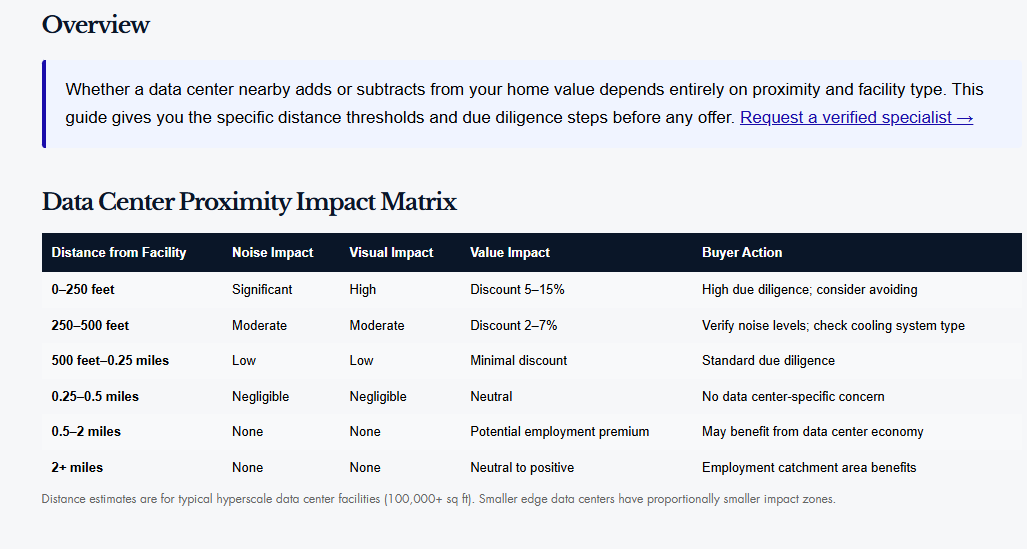
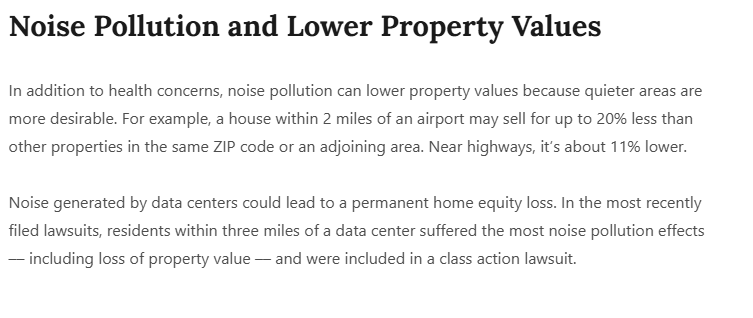
To defuse constituent warnings that proximity to industrial tech infrastructure devalues local real estate, planners direct visiting mayors past luxury properties directly adjacent to active technology corridors. Field logs show tours highlighting open-market home listings commanding $700,000 and thriving master-planned residential subdivisions pricing new construction between $400,000 and $500,000 immediately bordering un-bermed corporate utility fields. The actual reality of 'luxury' home value drops is vastly different based on investment firm guides, not including valuation drops in single family dwellings.
The ultimate hook in the re-education effort is a comparative revenue analysis aimed directly at local school boards, county commissioners, and city managers. Standard slide decks highlight that a single hyper-scale campus generates municipal tax revenues equivalent to a traditional corporate office or manufacturing facility supporting a $178 million payroll. Planners tell local entities they can capture multi-million-dollar cash Payments in Lieu of Taxes (PILOTs) without adding a single new student to local classrooms or increasing residential traffic volumes.
But the actual economic development contracts unmask a profound job creation mirage. While a manufacturing facility with a $178 million payroll would sustain thousands of stable families within a community, the pre-packaged Community Reinvestment Area (CRA) agreements admit that a data center site requires fewer than 100 permanent employees to operate.
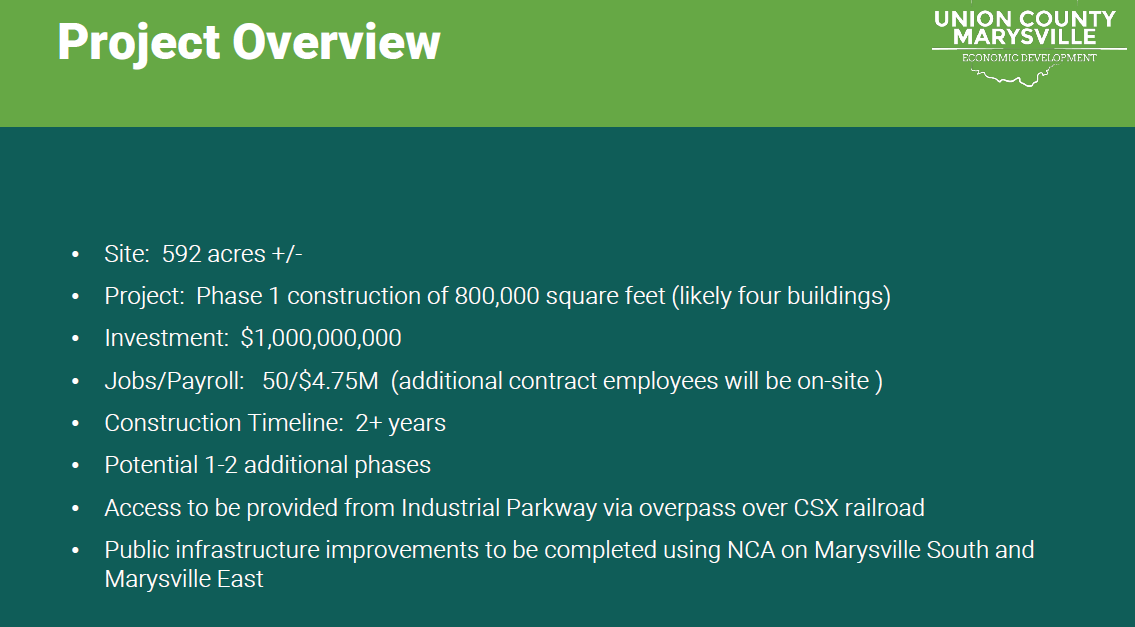
For example, the internal presentation for Union County's "Project Flannel"—a massive $1,000,000,000 hyper-scale data center development consuming 592 acres of land—reveals that the project only guarantees a meager 50 permanent jobs with a $4.75 million aggregate payroll.
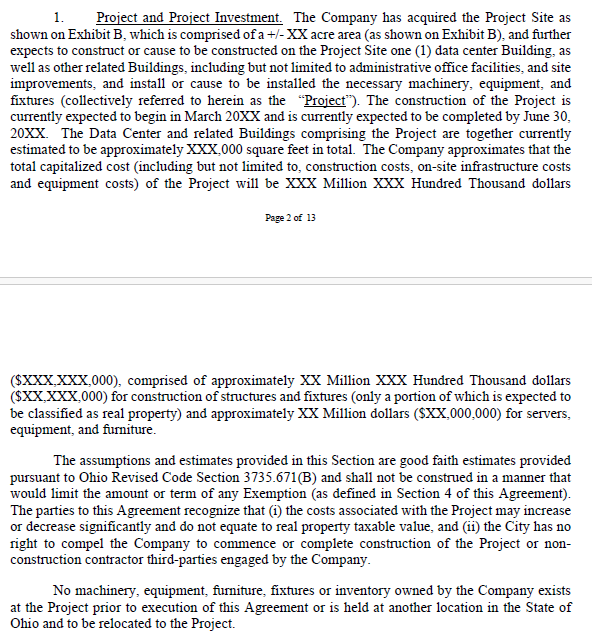
Furthermore, the legal templates lock down a vital protection clause for the multi-billion-dollar technology corporations: the pitched financial estimates are explicitly defined as "good faith estimates". The boilerplate contract language dictates that these assumptions "shall not be construed in a manner that would limit the amount or term of any Exemption" and formally states that corporate costs "do not equate to real property taxable value". If a global firm downsizes its physical layout or changes its equipment parameters, the municipality has no legal right to compel construction or claw back the 15-to-30-year, 100% tax abatements.
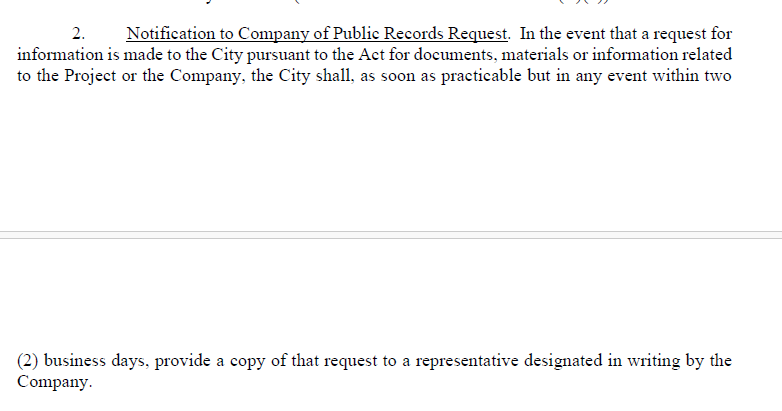
Once local officials complete the tour curriculum, they are sent back to their home districts equipped with a pre-packaged suite of binding legal templates that contain sophisticated, built-in defensive shields engineered to insulate corporate developers from local sovereignty rather than protecting the local public. Section 4 of the boilerplate Non-Disclosure Agreement imposes a radical restriction on public records compliance by establishing a strict four-day operational clock. In the event an ordinary citizen or media outlet issues a valid state public records request regarding a technology project, the municipal administration is legally bound to notify the corporation within two business days. Once notified, the corporate developer has a maximum of four business days to either respond to the requestor or launch an expensive civil lawsuit to stop the city from releasing the marked exempted materials.
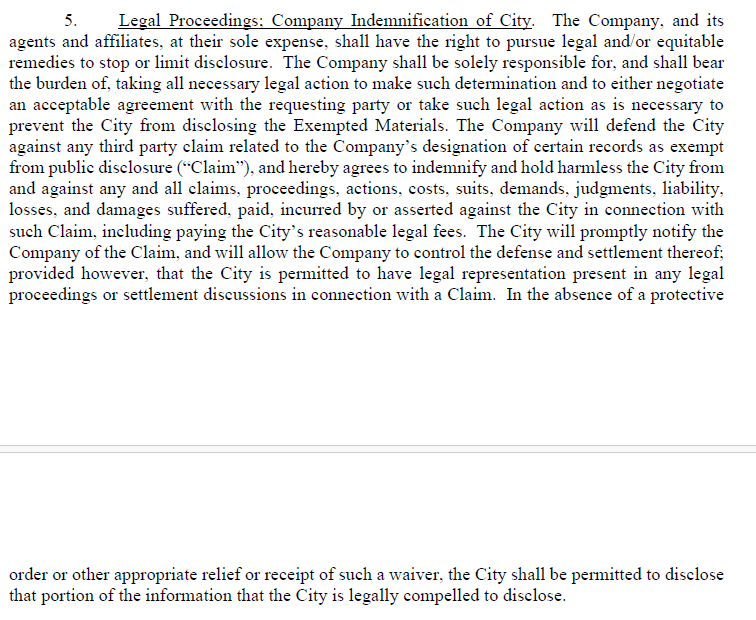
Furthermore, Section 5 of the agreement shifts the financial burden of transparency onto the public, stating that the corporate entity will fully indemnify the municipality and control the legal defense, which includes paying the city's reasonable legal fees to fight its own constituents and records laws in court.
This absolute corporate insulation is mirrored in the utility agreements, where the non-binding sections of the template Water and Sewer Memorandum of Understanding create an immense thirty-six-month infrastructure blindspot for local engineers. Under Section II.C of the memorandum, the corporate developer is only requested to provide a rolling thirty-six-month phase notice before launching a new expansion phase that draws down municipal water treatment resources.
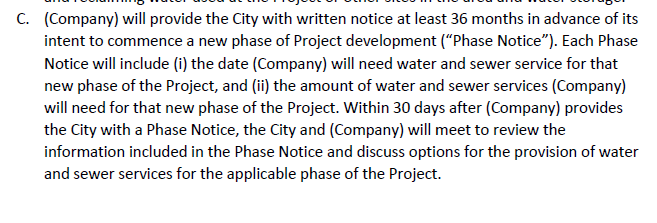
While the contract features binding site-boundary mandates that force the host town to deliver millions of gallons of utility services directly to the campus footprint at public expense, the provisions requiring the technology firm to notify the city of upcoming utility spikes remain entirely non-binding. This buffer zone gives corporate planners a three-year head start to lock down utility allocations completely behind closed doors, leaving local zoning firewalls and infrastructure planning boards entirely powerless to stop the resource draw until the infrastructure is already committed.
Many argue the data center toolkit reveals that the true product being engineered in New Albany is not cloud infrastructure, but local political compliance. By replacing brutal operational realities with a manicured, "Hallmark movie" illusion, the state's onboarding pipeline successfully transforms skeptical local officials into corporate cheerleaders before they even look at a contract. By the time small-town residents discover the true scale of the crushing noise, massive electrical substations, and multi-million-gallon water draws hitting their neighborhoods, their sovereignty has already been signed away behind closed doors—trapping another Ohio community inside a pre-packaged corporate expansion pipeline.
Below is a collection of the blank template documents used to facilitate data center rollouts across the state and beyond secured through public record requests, which are utilized as part of the 'tours'.