Op-ed: Ohio's Secret Data Center Deal Is a Bigger Scandal Than House Bill 6; Nobody Even Had to Break the Law
BY DAKOTA SAWYER
When Larry Householder was sentenced to twenty years for the House Bill 6 scheme, Ohioans got the story they thought they understood. A Speaker of the House took $60 million funneled through a dark money nonprofit, rammed a billion-dollar nuclear bailout through the legislature, and went to prison for it. It was corruption with a face, a verdict, and an ending.
Ohio has a bigger problem sitting in plain sight, and no one will ever be charged for it, because no one broke any law to create it.
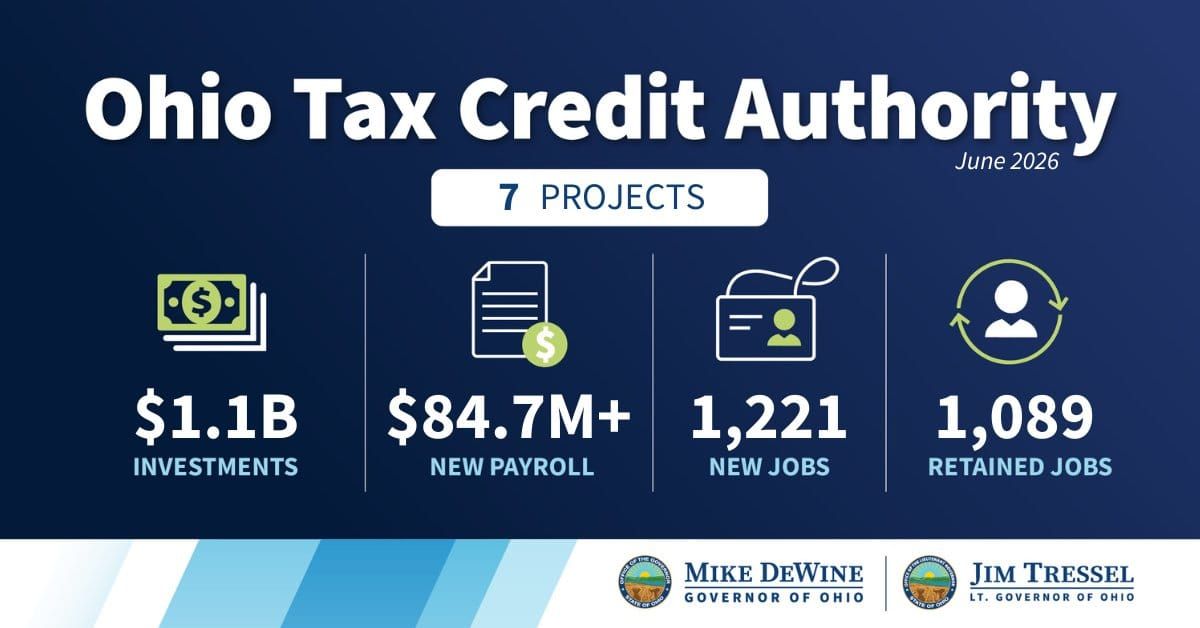
For over a decade, an obscure five-member board called the Ohio Tax Credit Authority has been signing away hundreds of millions, and now billions, of taxpayer dollars a year to Amazon, Meta, and Google, locking the state into agreements that run through 2055, 2056, and 2058. These deals trace back to the Kasich administration, beginning with a 2011 budget amendment and expanding through statewide agreements signed between 2014 and 2018. They grant a 100 percent sales tax exemption on data center equipment, anywhere in Ohio, for up to 40 years, if a company invests $8 billion. The exemption is uncapped. Recent reporting puts the current annual cost above $1.5 billion, with total exposure from the Kasich-era contracts estimated north of $2 billion and climbing.
The legislature did not vote on these terms. It did not see them coming. When the original tax break was inserted into the 2011 budget, the state's own nonpartisan fiscal analysts projected a cost of roughly $150 million. It is now closer to $2 billion, and lawmakers only learned the real scope of it this year, from documents obtained through records requests and press investigation, not from any briefing their own government thought to give them.
Even Republican legislative leadership now admits the process was broken. House Speaker Matt Huffman has said flatly that the Department of Development should not be signing 30-year contracts without the legislature knowing about it. He is right. He also voted for the 2011 budget that created the opening in the first place, which tells you something important: this was not one bad actor exploiting a loophole. It was a structure built to run on autopilot, invisible to the people who were supposed to be watching it, regardless of who was in the room.
That is precisely why it is worse than House Bill 6.
HB6 was a crime. A legislator was bought, a bill was passed under false pretenses, and when the scheme surfaced, the state had a legal mechanism to respond prosecution, repeal, restitution. Ugly as it was, it ran through the front door of representative government, even if that door had been forced open with a bribe.
The data center deals never went through that door at all. They were negotiated by executive branch appointees, wrapped in nondisclosure agreements that shielded even basic terms from public view, and locked in for decades on a statewide basis rather than tied to any single project the legislature could inspect. Nothing here required a bribe, because nothing here required legislative involvement in the first place. That is the more dangerous model, not the more corrupt one. Corruption gets discovered and prosecuted. A design flaw that removes the legislature from billion-dollar decisions just keeps quietly running, administration after administration, until someone finally pulls the thread.
Lawmakers are now scrambling to respond, and the current reform bill is a start, but it does not go far enough. It leaves existing Kasich-era contracts untouched through mid-century. It addresses nondisclosure agreements with language critics have already called toothless, stating an NDA cannot block a public record without banning the NDA itself.
Ohio needs a structural fix, not a patch, and it needs one that outlasts whichever party holds the Statehouse:
- No governor or executive agency should be able to grant a tax exemption, abatement, or credit above a defined dollar threshold without an up-or-down vote of the General Assembly. If it is real money, and $600 million a year per company is real money, it deserves a real vote, not a signature from a five-member board.
- No economic development agreement should bind the state for decades without mandatory legislative reauthorization at fixed intervals. A 15-year deal that can be extended to 40 years by administrative discretion is not an incentive. It is a mortgage on future legislatures who never approved the loan.
- Nondisclosure agreements should never be permitted to limit what the public and the legislature can know about a tax deal, full stop. Not a workaround clause. An outright ban on using an NDA to withhold the terms of any agreement that spends public money.
- Independent fiscal cost estimates should be published and reviewed before a deal is finalized, not discovered years later once the number has grown by a factor of ten.
Ohio prosecuted House Bill 6 because it was a crime with a paper trail and a bagman. The data center deals will never get that kind of ending, because nobody had to break the law. They just had to make sure the legislature was never in the room. That is the part that should worry Ohioans more, not less, and it is the part the current reform effort has to fix before the next governor finds the same open door.