David vs. Goliath: Findlay Residents Mobilize Against Shady Grove Annexation Despite Steep State Hurdles
BY CAREY MORGAN
FINDLAY, Ohio — Resolute local housing advocates have launched a rapid-response petition drive to fight a controversial city annexation plan, battling a massive signature hurdle triggered by an undemocratic change in state law. The grassroots group, Put It on The Ballot Findlay, filed referendum paperwork on June 8 to give community members a voice.
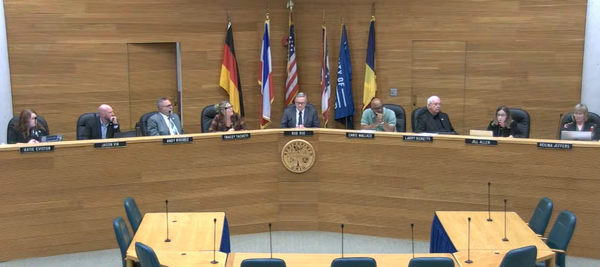
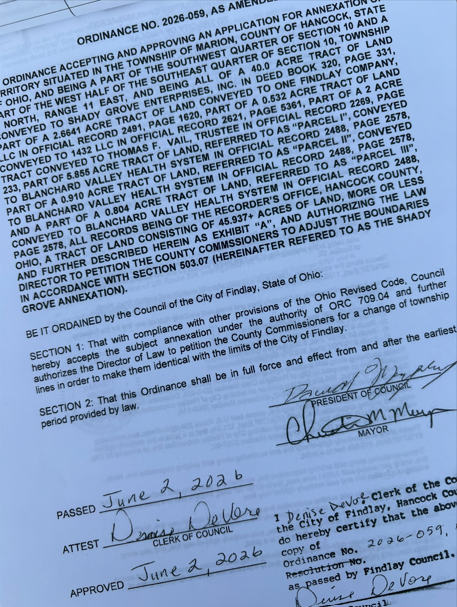
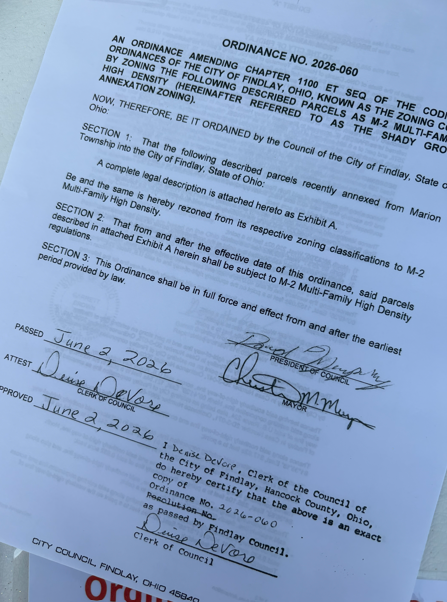
The filings directly target two aggressive ordinances passed by the Findlay City Council in a tense 7-2 vote on June 2. The approved measures bypass local objections to clear the way for Columbus-based Vision Companies to construct a massive 480-unit apartment complex on the former Shady Grove Golf Course. Defending their community, organizers must now secure roughly 5,000 signatures from registered Findlay voters by July 2, a strict 30-day deadline imposed by the city.
The petition drive faces an unprecedented, engineered mathematical challenge due to a legislative amendment quietly slipped into the state operating budget last year. Under House Bill 96, which modified Ohio Revised Code 731.29, the signature threshold to force a referendum on municipal zoning developments was jacked up from 10% to an extreme 35% of the total votes cast in the last gubernatorial election. For Findlay organizers, this unfair state-level change nearly quadrupled the required signature count from a reasonable 1,200 up to the current 5,000-signature mark.
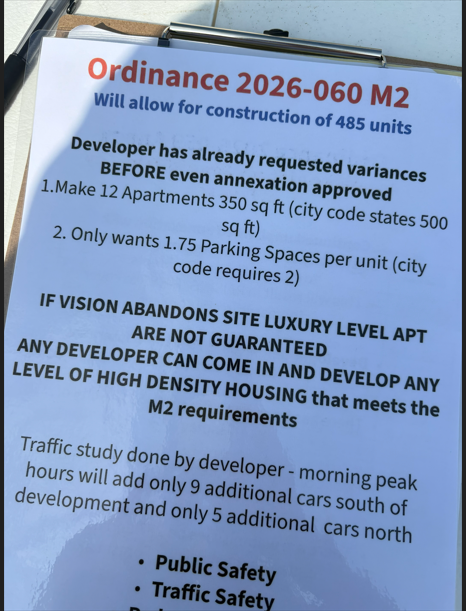
The dispute stems from Ordinance 2026-059, which strips the 40-acre Shady Grove property from Marion Township to annex it into the city, and Ordinance 2026-060, which forces M-2 Multi-Family High Density zoning onto the land. Silenced property owners along Township Road 237, which borders the site, packed the council chambers to voice their deep frustration. Because these immediate neighbors reside just outside city limits in Marion Township, the city's maneuver leaves them with no legal standing to vote or directly protect their own doorsteps from urban encroachment.
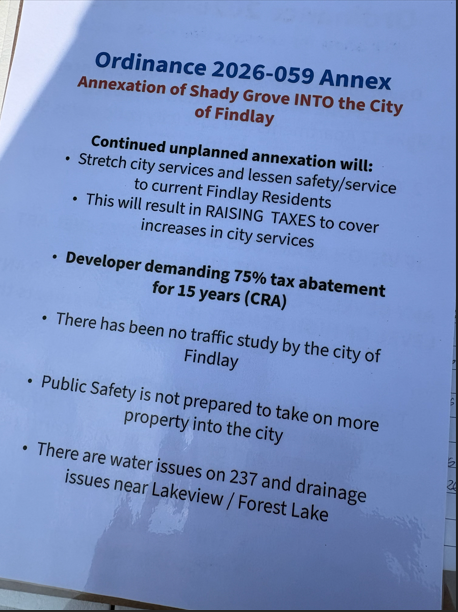
Meanwhile, neighboring city residents and fed-up petition circulators warn that Findlay is dangerously unprepared for the sudden infrastructure load, especially since several other apartment complexes in the immediate area are already expanding. Opponents point to severe risks to the local area, specifically highlighting major concerns over unmanageable stormwater runoff and flooding. Nearby subdivisions like Brookstone, Forest Lake, and Lakeview already suffer from significant water collection, and residents fear this massive project will completely overwhelm local drainage.
Overcrowded roads present another major hazard for the neighborhood, with residents projecting severe gridlock on Township Road 237 and County Road 224, which are already heavily utilized by daily regional commuters. Furthermore, protective residents warn of a severe, unsafe strain on city police, local water pressure, and emergency fire-suppression capacities, which are not equipped to support such a dense population spike.
Refusing to be deterred by the state's elevated 35% signature barrier, a highly mobilized "small army" of residents is actively canvassing the city to reclaim their rights. Led in part by former Findlay Councilwoman Holly Frische, passionate volunteers are deployed door-to-door throughout Findlay neighborhoods to protect the community's character. The group has also established convenient, stationary, drive-up signing locations at local hubs—including Panera Bread, the Hancock County Public Library, and the Main Street Deli—making it easy for voters to push back before the early July deadline.
Any registered voter living within Findlay city limits is eligible to sign the referendum petitions to stop the development, while any registered voter in the county can help circulate them. Dedicated organizers are coordinating the final weeks of the drive online, updating daily pop-up signing locations on their public social media pages to ensure every resident gets the voice the city council denied them.