Border War: How a Data Center Developer Divided an Ohio Community and Its Leaders

BY CAREY MORGAN
ALLEN TWP - A quiet stretch of agricultural land in northwest Ohio has become the epicenter of a bitter regulatory chess match, exposing the ever more present divide between Ohio citizens who want to preserve their way of life and the local governments scrambling to seemingly sell them out.
At the center of the storm is OnSite Partners, a Columbus-based energy infrastructure firm proposing the Hancock Innovation Center—a massive, 240-acre data center along Township Road 215. While hundreds of residents across both Allen Township and the neighboring City of Findlay have packed public meetings to vehemently oppose the project, their elected leaders are instead engaged in a defensive border war. It is a high-stakes game of regulatory hot potato driven not by a desire to host the tech campus, but by a desperate fear of being left holding the bag if the other side blinks first.
The battle hinges on a powerful legal leverage point, namely Ohio’s annexation laws.
Local residents on both sides of the boundary are unified. Township citizens fear the round-the-clock hum of massive cooling systems and the erosion of their water supply. Meanwhile, Findlay residents have expressed deep anxieties over grid stability and the projected strain on local water resources.
OnSite Partners, however, has successfully leveraged the legal divide between the two jurisdictions. Under Ohio law, if a township’s zoning laws are too restrictive to allow a development, the developer can bypass them entirely by petitioning the adjacent city to annex the land, something Findlay's current administration is adamant on pursuing.
If Findlay were to annex the 240 acres, Allen Township would lose all control over the project's layout, setbacks, and environmental mitigation, while watching hundreds of millions of dollars in potential future property tax revenue vanish into city coffers. It may be that exact fear of annexation that drove the Allen Township Trustees to deliver a stunning blow to their own constituents.
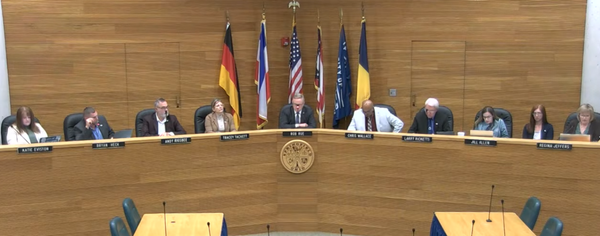
For months, the township’s zoning commission worked alongside residents to craft some of the most restrictive data center regulations in the state: a strict 25-acre size cap, severe utility limits, and a 40-decibel noise ceiling. But when the trustees voted to adopt the rules, they quietly inserted a last-minute amendment that blindsided the zoning commission and the public alike. The amendment completely exempts any data center built within a Planned Unit Development (PUD) from those rigid restrictions.
By carving out the PUD loophole, the trustees effectively handed OnSite Partners a customized path to build their 240-acre campus. Township officials defended the move as a necessity, arguing that keeping the developer at the township negotiating table through a PUD was the only way to prevent them from fleeing to Findlay for annexation. The township's capitulation came just as trust in Findlay’s city government has dissolved entirely.
Findlay citizens may have believed their leadership was fighting the project when the city enacted a strict data center moratorium. However, investigative reporting from TOR shattered that narrative. Public records requests exposed that the administration of Findlay Mayor Christina Muryn had quietly leaked drafts of the city's pending data center zoning framework to private economic brokers well before the public could see them.
Suspicion boiled over when the mayor scheduled a private, unrecorded virtual briefing to connect city council members with officials from established Ohio tech hubs. Following an immense public outcry over the lack of transparency, the meeting was abruptly canceled at 2:30 a.m. on the day it was to occur. To the frustrated taxpayers filling local high school auditoriums, the solution seems simple: tell the developer to walk away. But for the local governments, the financial and legal realities make a total rejection nearly impossible.
First, a flat ban on a legal land use is unconstitutional under Ohio law, a systemic reality that local governments use to justify treating an ecological crisis that many will face from data center projects going online, as an administrative hurdle. If either municipality attempts to permanently bar the facility based on the clear, present danger it poses to the aquifer, grid, or municipal water supply, they face a catastrophic, multi-million-dollar lawsuit from the developer that could bankrupt a small township.
Second, the financial carrot is massive, effectively shifting the government's focus from public safety to a transactional business negotiation. OnSite Partners projects the campus could generate $300 million to $400 million in property tax revenue over its lifespan without utilizing tax abatements. A significant portion of that windfall would target the cash-strapped Van Buren Local Schools, the district specifically targeted by the Muryn administration for participation in Data Center informational meetings and New Albany theatrical presentations, which some argue is further evidence of the administrations goals. For local officials looking at a looming environmental disaster through a purely ledger-based lens, allowing a neighboring municipality to absorb that massive revenue while their own community absorbs dry residential wells and unfilterable chemical contamination is viewed as a political impossibility.
As a result, both municipal governments find themselves actively working against the explicit will of the people they represent. Rather than fighting to stop a data center that threatens the region's basic water security, they are fighting each other for the right to monetize it, leaving local residents to realize that their elected leaders are no longer trying to bar the door against a natural catastrophe, but are simply negotiating the price of admission.