New Study Shows Patients Refusing Transfusions From modRNA Blood Supply
This Article was originally posted on The Heartland Beat
Throughout the nation a growing movement of surgical patients are refusing to accept blood products from standard public donation pools, instead demanding specialized directed donations from individuals who have not received a COVID-19 gene therapy injection. This trend is creating a challenging dilemma inside hospital systems, forcing medical professionals to balance bull-headed practices against a sharp rise in patients asserting bodily autonomy and more clinical forethought.
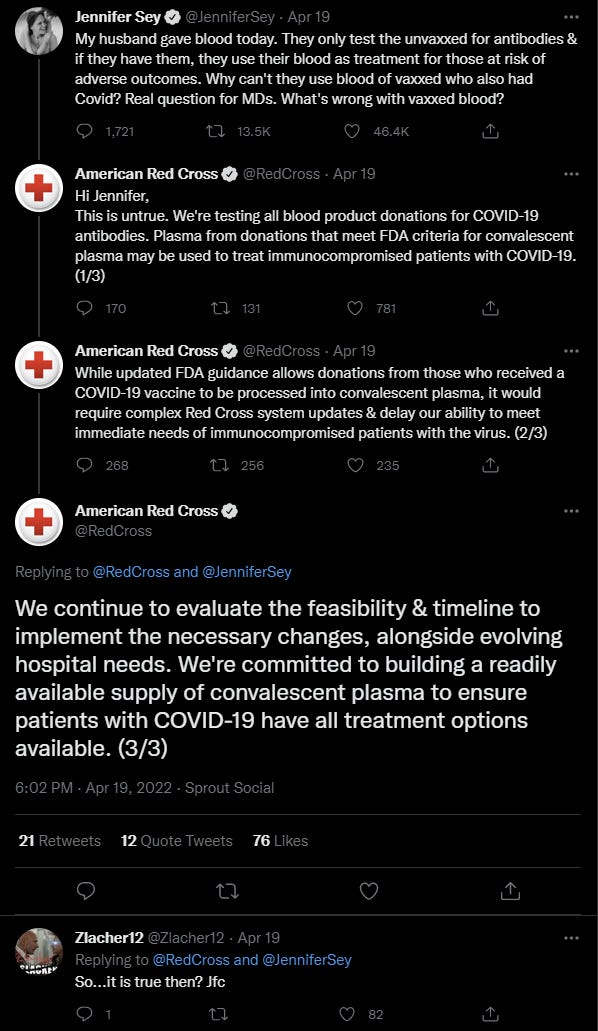
The scope of this phenomenon was recently brought to light in a retrospective single-center study conducted by researchers at Vanderbilt University Medical Center and published in the medical journal Transfusion. Over a two-year observation period, hospital clinicians documented dozens of instances where patients or their legal surrogates flatly refused standard, anonymous blood bank components, electing to postpone essential surgeries or cancel operations entirely until blood from verified unvaccinated donors could be procured. While public health networks and organizations like the American Red Cross emphasize that the standard blood supply is universally safe and thoroughly screened they’re working on it, a dedicated subset of clinical researchers and data analysts argue that the molecular data found in emerging safety surveillance studies justifies these patient anxieties.
While spike protein shedding is still a significant vector of concern, another recent revelation may hold the key to understanding a core scientific rationale behind this clinical resistance. Independent investigators (LIKE US) point to the massive adjustments made to the manufacturing workflow of genetic vaccine lots during the global rollout. During the initial pilot-scale production phase used to prepare the vaccine candidates for human clinical trials, manufacturers relied on a highly controlled, cell-free method known as Process One. This technique utilized polymerase chain reaction amplification to generate a linear template of high purity. However, to upscale production to the billions of commercial doses required for a global campaign, pharmaceutical companies shifted to an industrial fermentation method known as Process Two.

Process Two utilizes circular pieces of bacterial DNA called plasmids, which are multiplied inside industrial tanks containing Escherichia coli bacteria. To harvest the desired messenger RNA from this bacterial mixture, the solution must undergo industrial cleavage using specialized enzymes like DNase I and Proteinase K, followed by ultrafiltration. Emerging bioanalytic evaluations of these commercial batches suggest that this high-volume purification workflow can leave behind residual fragments of double-stranded DNA plasmids, functional expression vectors, and bacterial endotoxins. Because the delivery vehicles are designed to encapsulate genetic material and shield it from standard bodily degradation, these residual manufacturing byproducts are carried directly into host cells alongside the vaccine cargo.
This manufacturing shift introduces an unexamined exposure pathway in transfusion medicine because extensive, long-term biological specimen monitoring has revealed that these vaccine-derived elements survive inside the human body far longer than initially predicted. In a landmark longitudinal case report tracking a patient with multi-organ post-vaccination syndrome, an international team of pathology experts documented the unprecedented long-term persistence of vaccine components across multiple independent laboratories. Using highly sensitive laboratory assays, the researchers detected free spike proteins circulating in both blood plasma and cellular exosomes more than three years after the patient received their final commercial dose.
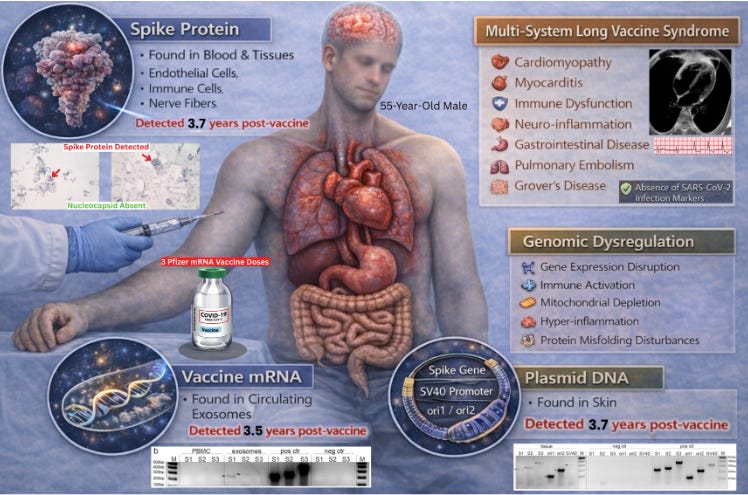
Furthermore, deep-tissue punch biopsies performed on active skin lesions nearly four years post-vaccination confirmed that vaccine-derived DNA fragments remained durably retained inside human somatic tissue. Specialized genetic sequencing validated the exact presence of the spike gene sequence, bacterial origin-of-replication fragments, and the controversial SV40 promoter-enhancer complex. Quantitative mass spectrometry of the patient’s urine specimens corroborated this long-term persistence by revealing a profound, chronic inflammatory profile, marked by extreme elevations in innate immune proteins, oxidative stress markers, and critical components of the body’s complement overactivation pathway.
The physiological consequences of these persistent materials have been outlined by a consortium of medical researchers in a comprehensive review analyzing the unique toxicities of the spike glycoprotein, a condition the authors clinically define as spikeopathy. When blood products derived from vaccinated donors are introduced into a recipient, free circulating spike proteins bind directly to angiotensin-converting enzyme two receptors on vascular endothelial cells. This interaction triggers localized cellular damage, increased vascular permeability, and the direct aggregation of red blood cells and platelets.
Compounding this vascular strain is the fact that the spike protein possesses specific prion-like domains within its receptor-binding region. These domains have a strong potential to accelerate protein misfolding, which promotes the propagation of anomalous, structurally advanced fibrin-microclot complexes. Because these aggregates are heat-resistant and sparingly soluble, they actively resist the body’s natural clot-clearing processes and can culminate in progressive clotting disorders or multi-organ failure. Additionally, prolonged exposure to these persistent expression cassettes has been shown to cause immune imprinting, forcing a profound immunoglobulin class switch toward non-inflammatory IgG4 antibodies. This alteration skews the recipient’s immune tolerance and can foster chronic, localized fibroinflammatory tissue damage.
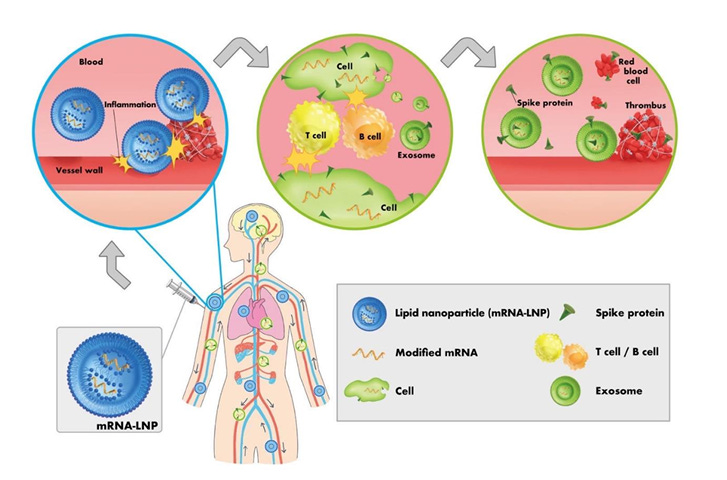
Beyond the genetic and protein byproducts, contemporary pharmacological literature published in the journal Vaccines highlights that the lipid nanoparticle delivery systems themselves introduce significant reactogenicity and immunogenicity risks. Composed of ionizable lipids, cholesterol, and polyethylene glycol, these synthetic nanoparticles are recognized as entirely foreign by the human immune system. Repeated exposure or secondary transfer via blood transfusions can trigger acute inflammatory cascades, prompt the generation of anti-polyethylene glycol antibodies that cause accelerated blood clearance, and induce complement-activation-related pseudo-allergies, which mimic severe anaphylactic reactions.
The clinical and molecular concerns detailed by independent researchers are heavily reinforced by controversial public relations campaigns from major medical institutions, which critics argue represented an active attempt to normalize severe cardiac conditions in children prior to public pushback. A prominent example occurred when New York-Presbyterian Hospital released a promotional video advertisement featuring a young girl detailing her experience with a sudden diagnosis of myocarditis, a condition traditionally rare in pediatric demographics but increasingly documented following modRNA exposure. The advertisement, which described the serious inflammatory heart condition in a casual, matter-of-fact tone, sparked immediate public outcry from advocates and parents who contended it was a calculated effort to desensitize the public to the inevitable, systemic adverse events associated with mass modRNA injections and secondary transfusion exposures. Following intense backlash and accusations of medical gaslighting, the hospital quietly pulled the advertisement and scrubbed it from official internet channels, though the footage has since been durably preserved across alternative video archiving platforms as a key point of reference for those monitoring institutional transparency.
The decision to reject standard blood banking practices introduces immediate, real-world clinical friction for patients and hospital automatons alike, yet the friction only appears to be increasing as the ‘scientific community’ refuses to acknowledge warning signs in the data and stubbornly stands by its position of refusing to study any of this themselves.
The Vanderbilt University series documented that routing directed-donation requests through online portals frequently bypasses transfusion medicine specialists which they argue possess the specialized knowledge required to evaluate blood safety. They argue it is a lack of institutional oversight that resulted in critical care delays, extended hospital stays, and the cancellation of vital surgeries. However, the data and evaluation of the potential mechanism of harm inherit in the injections may stand as reason enough to ensure no complications from infected blood could occur.
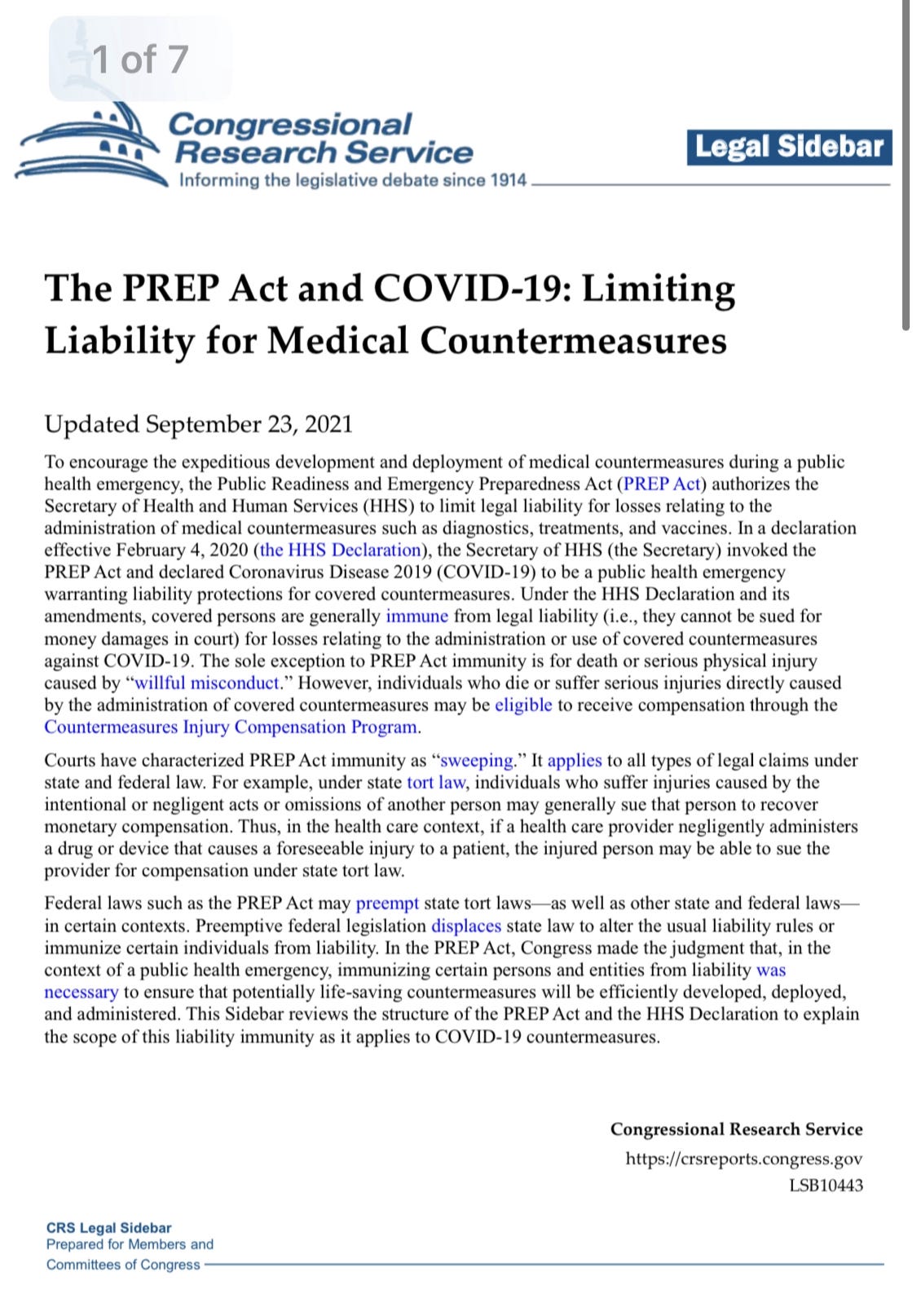
Legal analysts note that public concerns remain heavily reinforced by the sweeping liability protections established during the pandemic response. Under the federal Public Readiness and Emergency Preparedness Act, the United States government granted complete legal immunity to vaccine manufacturers, distributors, and healthcare providers for emergency countermeasures, including the gene therapy injections they developed. Because individuals who suffer severe injuries face an extraordinarily high legal bar to prove willful misconduct, and are otherwise restricted to limited, non-judicial compensation programs, patients are increasingly using their remaining legal avenue of defense—the right to refuse standard blood inventories or demand directed options—as a mechanism for personal risk management over their own medical care.