
Springfield Revenue Flatlines Despite Haitian Influx Promises, Data Center Subsidies Strain Emergency Services
BY JEFF SKINNER
SPRINGFIELD, Ohio (AP) — Despite years of promises that a massive influx of Haitian immigrants would revitalize the local economy, Springfield city officials on Tuesday confronted a sobering financial reality: income tax revenue, the backbone of the general fund, has flattened and is now projected to decline, forcing tough choices on core services while city leaders continue spending on administrative raises, technology upgrades and other priorities.
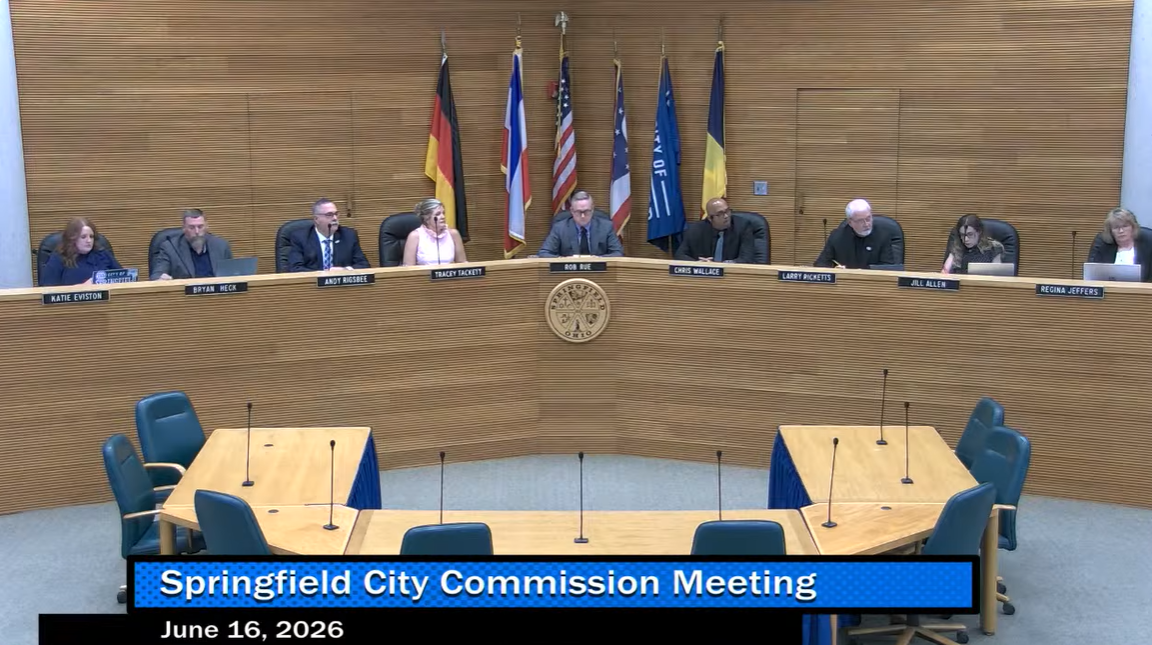
Finance Director Katie Eviston presented the 2027 tax budget during a public hearing, painting a picture of stalled growth after post-pandemic surges. Income tax collections, which account for about 77% of general fund revenues at a projected $45.8 million, increased by more than $9.2 million combined in 2021 and 2022. But from 2023 through mid-2026, growth totaled just $4.1 million — a more than 55% slowdown.
Eviston noted that had the earlier pace continued, collections could have approached $75 million by 2026, generating over $26 million more since 2022. Instead, the city faces roughly $22 million less than expected. For 2027, officials project flat income tax revenue compared to 2026, which itself anticipates a 2% or $1 million decline from 2025.
The presentation highlighted broader pressures: rising service demands for public safety, infrastructure and code enforcement amid inflation, compounded by state-level changes like net profit tax adjustments allowing businesses indefinite carryforward of net operating losses. This has led to refunds and reduced collections, with net profit taxes down significantly while withholding remains steadier.
Critics point to the irony. City leaders, including Mayor Rob Rue, had defended the Haitian arrivals — facilitated through initiatives like the Welcome Springfield program — as an economic boon to fill jobs and boost revenue. Yet the tax budget reveals no such windfall, with the general fund under strain and reliant on one-time fixes like American Rescue Plan Act funds, property sales and transfers.
Compounding the revenue shortfall are generous tax breaks and subsidies granted for data center developments, which officials once hailed as major economic drivers but which deliver minimal jobs while forgoing massive future tax revenue. The city approved a 15-year, 100% property tax abatement under an Enterprise Zone Agreement for the $1.3 billion 5C Data Centers project, valued at more than $93 million in foregone taxes. Similar incentives, including state sales tax exemptions worth tens of millions, have been extended to projects like Crusoe Energy Systems and Constant Company (Vultr), each promising just 20 jobs.
These deals, while requiring significant upfront infrastructure support and increasing demands on emergency services like fire and police due to high energy and water usage, provide limited immediate relief to the general fund. Commissioner Larry Ricketts proposed a six-month moratorium on new data centers pending statewide regulations, noting stalled legislative efforts on tax breaks that had aimed to reduce them from 100% to 50%. The House-Senate disagreements underscored broader concerns over lost revenue.
A preliminary expenditure forecast assuming no operational changes, 4% personnel cost increases and 5% rises in other expenses projects general fund expenditures at $63.4 million against $59.4 million in revenues — a $4 million gap. Eviston stressed this is not the proposed budget but underscores the adjustments needed. The full city manager's budget comes later in 2026.
Real estate taxes provide some relief for earmarked purposes, such as a 3-mill special police levy expected to bring nearly $4 million (offsetting part of the $21.3 million police budget) and a 6-mill levy for police and fire pensions at about $800,000. But the overall picture remains bleak.
Public frustration was palpable, albeit professional, during the meeting, with one resident Diana Daniels urging salary rollbacks for city officials before asking citizens to tighten belts, noting the difficulty of seeing high compensation amid service strains. Firefighters' union President Scott Wolf highlighted ongoing staffing shortages, noting the department has 128 members but faces inadequate levels relative to call volume as the population has ballooned in recent years. Mandatory overtime was suspended in April but reinstated; brownouts at stations occurred temporarily.
Wolf asked if commissioners had received a plan to increase manning. Officials indicated staffing discussions tie to the budget process. The union has pushed for levels around 150, citing retirements, injuries and training lags. Firefighters logged over 1,775 hours of mandatory overtime early in 2026.
This comes as the city awards contracts for HUD-funded programs, including CDBG home repairs and ESG homeless services, and advances projects like new affordable housing units. While Community Development Director Logan Cobbs highlighted accomplishments in the 2025 CAPER report — such as street repaving, park improvements and serving hundreds via shelter programs — critics question priorities when emergency services strain.
City Manager Brian Heck's compensation has risen sharply, from about $145,000 in 2019 to over $229,000 recently, far outpacing the median household income of roughly $46,000. Residents have contrasted this with stagnant revenues and service cuts.
The city is also implementing a $1.2 million utility billing software upgrade with SpryPoint amid fiscal caution, part of broader modernization including water meter replacements. Officials tout efficiency, but some residents see it as misplaced spending when fire staffing falters.
Other expenditures include Google Workspace licenses, traffic signals, sidewalk/curb/gutter programs and housing partnerships. The commission adopted the tax budget and approved various contracts, including for affordable homes on West Euclid Avenue selling around $170,000 with assistance.
Rue and commissioners also issued proclamations and recognitions, including for Women's Veterans Day and the Springfield Fire Department's Ohio Fire Department of the Year award, even as staffing concerns persist.
Critics argue these "pet projects" and think tank-style meetings divert focus from basics, especially as data center developments and related infrastructure demands loom. By granting substantial subsidies and tax abatements that delay or eliminate revenue from major investments, the city is effectively hurting itself — further straining already overburdened emergency services to support projects that add to utility and public safety loads while breaking the bank on upfront costs and forgone taxes.
The meeting featured public comments on diverse issues, from water quality concerns involving synthetic biology to thanks for food bank grants and Underground Railroad history events. Diana Daniels questioned citizen comment rules and charter provisions, highlighting transparency tensions.
Eviston acknowledged positive steps like the transition to the Regional Income Tax Agency (RITA) for better compliance, new development and economic investments. But she emphasized discipline on core services until recurring revenue materializes.
The tax budget sets revenue estimates and millage for real estate taxes, establishing appropriation limits. It must be adopted by July 15 under Ohio law. Full expenditure decisions await the fall budget process.
Residents and officials alike expressed gratitude for police, fire and other essential workers. Yet the disconnect is clear: promises of immigrant-driven growth have not offset slowing revenues, while costs for services, pensions and operations climb. One-time federal aids have masked deeper issues, and without structural changes, service reductions loom — exacerbated by data center incentives that prioritize speculative future gains over immediate fiscal stability.
As Springfield navigates this "critical point," as Eviston described, questions remain about whether leadership will prioritize core emergency services and fiscal restraint over expansive initiatives and costly subsidies — or continue down a path that has left taxpayers shouldering burdens without the promised economic payoff.
Commissioners approved the tax budget unanimously after the hearing.