Hancock County Residents Briefed on Zoning and Legal Tools to Check Data Center Expansion
BY CAREY MORGAN
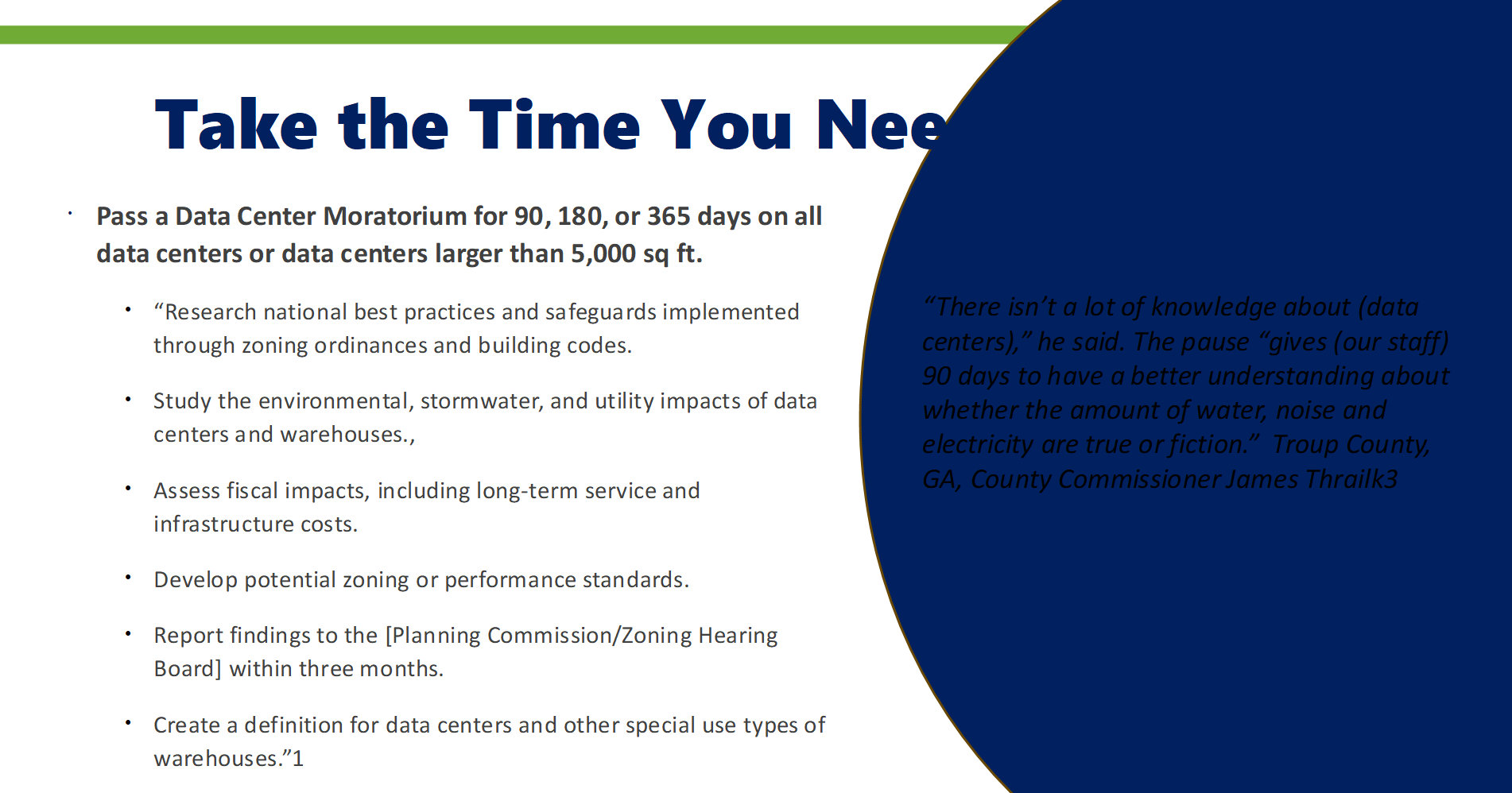
FINDLAY— Facing a rapid push for data center projects by regional brokers across Hancock County, a local advocacy group partnered with legal experts Sunday to brief residents on how rural communities can use zoning laws, ballot initiatives, and strict environmental oversight to check the power of tech developers. The public forum, hosted by the citizen group Put It on the Ballot Findlay at the Goose Hall and Event Center, aimed to equip residents with regulatory tools to manage the mounting pressure of tech infrastructure expansion in the region. Legal specialists from Fair Shake Environmental Legal Services detailed a comprehensive blueprint for local governments and citizens, warning that without proactive regulations, communities risk losing local control to automatic, "by-right" industrial developments.
The organizers highlighted that national pushback is growing as communities realize what is at stake. To illustrate this shift toward transparency, the presentation cited a statement from Frederick County, Maryland, Executive Jessica Fitzwater, who emphasized that her administration is being extremely open about meeting with businesses because of widespread public concern over big tech companies signing non-disclosure agreements behind closed doors.
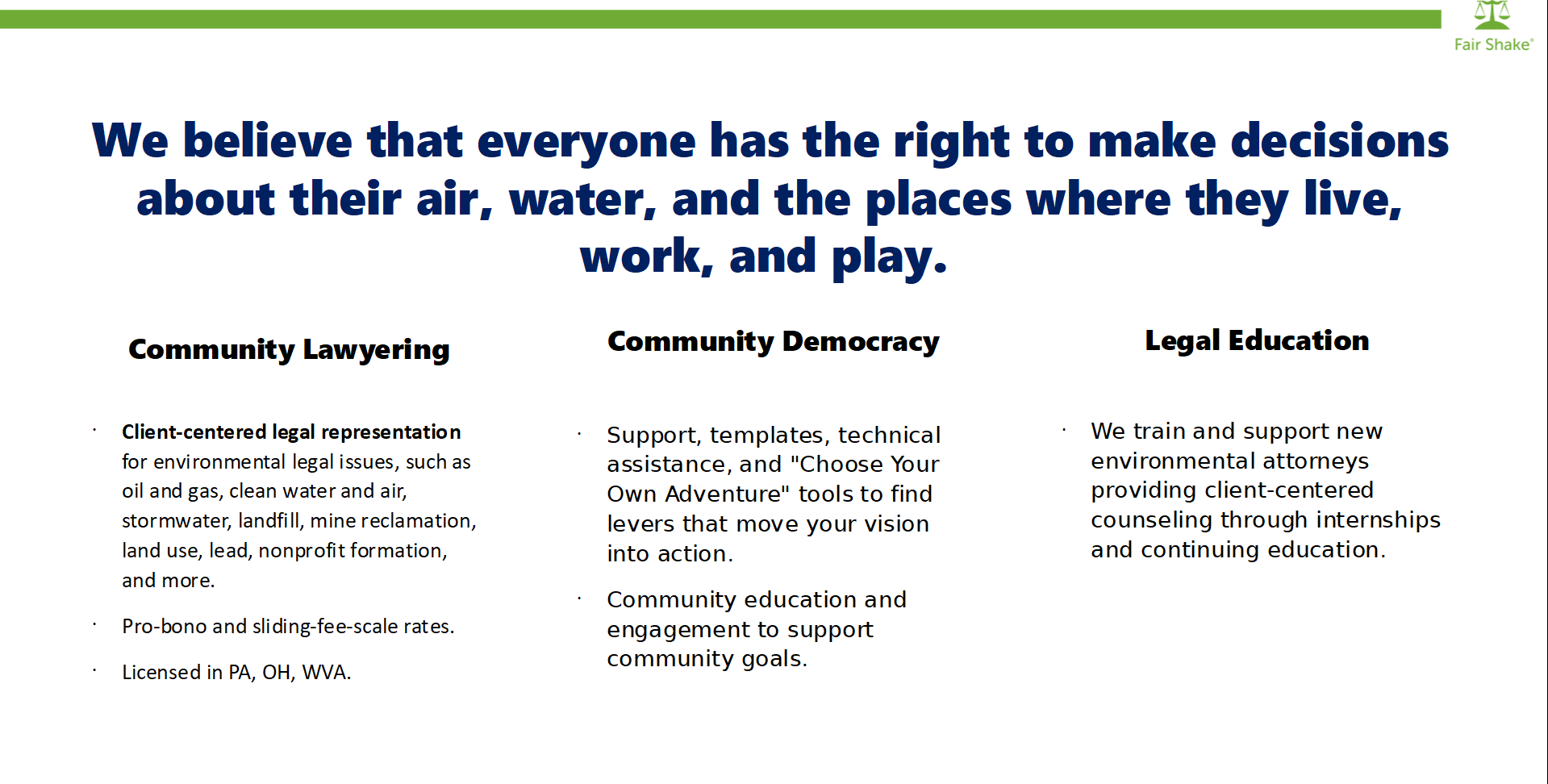
To combat fast-moving developments, the primary recommendation delivered to local officials was the immediate enactment of data center moratoriums lasting anywhere from 90 to 365 days. Legal experts noted that a temporary pause gives short-staffed municipal planning boards the critical time required to assess the fiscal impacts on infrastructure, define data centers properly within local codes, study environmental impacts, and draft rigorous performance standards before construction begins. This strategy was recently utilized in Troup County, Georgia, where officials paused approvals specifically to separate true facts from fiction regarding the vast amounts of electricity, water, and noise generated by these facilities.
A central theme of the presentation was the total elimination of "by-right" development loopholes. When a project is designated as a by-right use under outdated zoning codes, developers can build automatically without triggering public hearings or requiring city council approval. Legal experts pointed to Loudoun County, Virginia—long considered the data center capital of the world—which moved in March 2025 to eliminate by-right data center development entirely. That county now requires a legislative Special Exception review for every project, granting local officials final decision-making power and guaranteeing public comment opportunities. Furthermore, the forum highlighted legislative efforts to ban local officials from signing non-disclosure agreements (NDAs). To prevent tech companies from negotiating taxpayer-funded incentives or land annexations in secret, experts recommended local ordinances like those in Big Rapids Township, Michigan, and Pima County, Arizona, which prohibit municipal employees from entering into secrecy agreements involving the public interest.
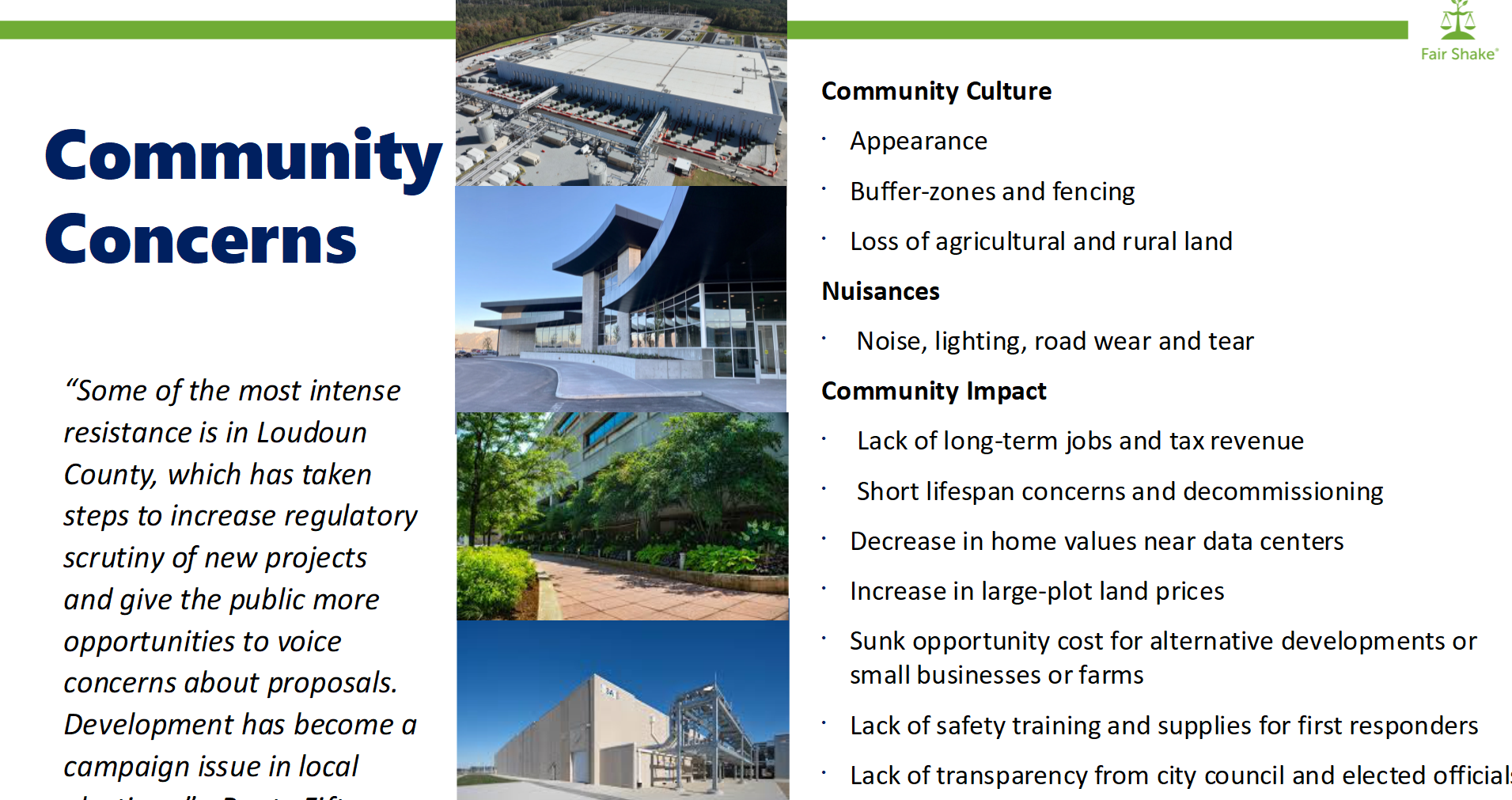
For rural communities like Hancock County, the visual and physical footprint of data center complexes presents a drastic change to the local landscape, impacting everything from home values to historical rural culture. The presentation detailed aggressive zoning standards used by other U.S. municipalities to protect agricultural identity, explaining that cities can restrict data center footprints to less than one percent of a county's total landmass. Additionally, codes can mandate that for every single acre of land developed for a data center, the developer must fund the preservation of five acres of local farmland. To manage daily nuisances, ordinances can enforce a minimum 500-foot buffer zone from residential areas, cap noise levels at 50 decibels during the day and 45 decibels at night, and dictate that backup diesel generators only be tested during specified off-peak hours and never be used to supplement high grid demand. Long-term protection also includes requiring tech companies to secure upfront financial assurances, such as bonds or letters of credit, covering 100 percent of the anticipated cost to tear down facilities and restore the land to its pre-development state if operations cease or the company goes under.
Beyond local zoning boards, residents were briefed on state-level environmental checkpoints where public pushback is legally recognized. Because data centers require massive power configurations, developers are increasingly proposing "behind-the-meter" on-site power plants to bypass grid connection delays. Experts explained that citizens and local governments have the legal right to formally "intervene" in these cases before the Ohio Power Siting Board. As an official intervenor, a community can cross-examine corporate witnesses, enter independent evidence, and call their own experts before administrative law judges. Additionally, the Ohio EPA oversees the necessary Permit-to-Install and Operate air permits for backup generators, as well as National Pollutant Discharge Elimination System water permits. Both processes trigger mandatory public comment windows where local residents can voice opposition, demand public hearings, or force developers to use reclaimed water and install advanced pollution control systems.
If developments do move forward, organizers stressed that municipalities must use their leverage to extract binding, community-driven benefits. The presentation urged local governments to pass Community Benefit Ordinances or negotiate legally binding Community Benefit Agreements before issuing permits. These agreements can lock in local hiring targets, secure funding for community programs, mandate monthly public disclosure of water and power usage, and heavily limit property-tax abatements. Experts warned that local property-tax breaks should last no longer than three years and grant no more than a 50 percent abatement, backed by an independent cost-benefit analysis. For residents unable to convince local officials to adopt these measures, the forum concluded with a review of Ohio’s ballot initiative and referendum laws, noting that citizens can bypass local government bodies entirely to gather signatures and place zoning standards or development restrictions directly onto the ballot for a public vote.