Springfield Commissioners Make Panic Move Among Potential Decrease in Replacement Labor Pipeline
BY JEFF SKINNER
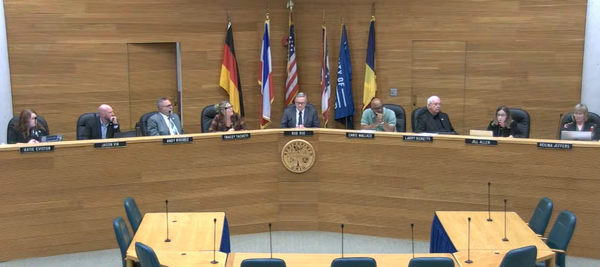
SPRINGFIELD - Facing a stagnating revenue base and a looming contraction of its low-cost labor pool, the Springfield City Commission is moving aggressively to expand a corporate tax subsidy program, a move that critics warn could starve the city’s already strained emergency services.
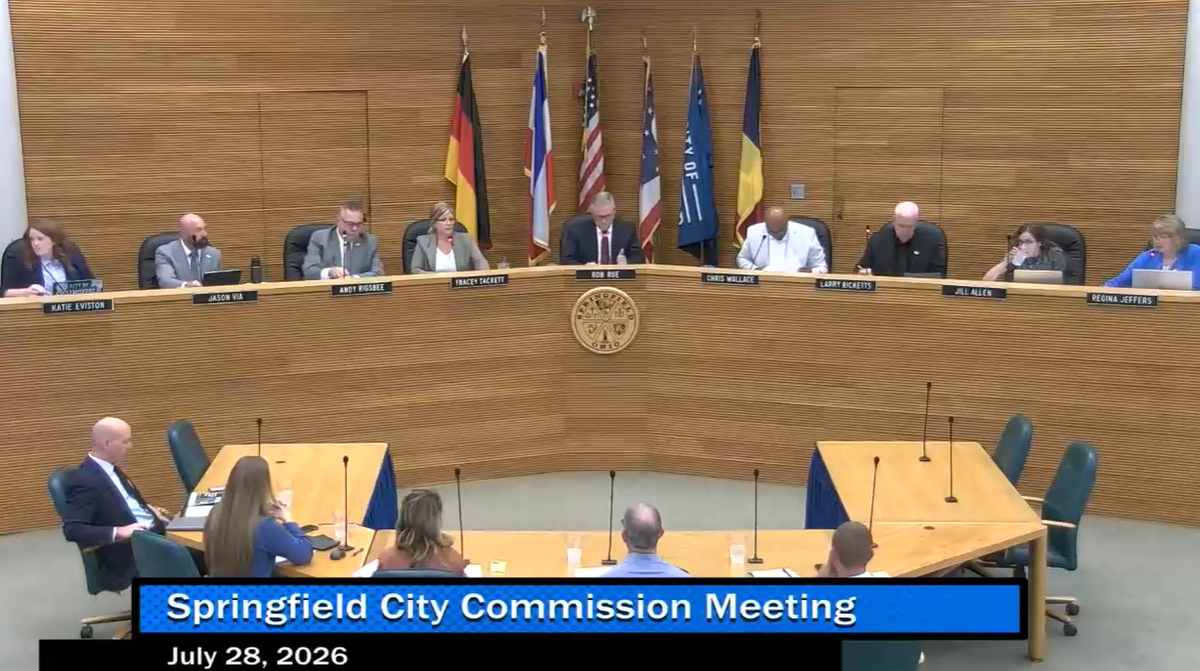
During a contentious work session ahead of their regular July 28 session, local officials proposed extending the Community Reinvestment Area (CRA) program citywide. The policy shifts the city's economic strategy toward aggressive property tax abatements. It comes as federal protections for thousands of local Haitian nationals enter their final months, threatening the very pipeline of cheap labor that local industries have relied upon to suppress costs at the expense of domestic workforces.
The policy shift represents what political observers characterize as a quiet panic within the municipal administration. For nearly a decade, Springfield’s economic model has quietly braced itself on a rapid influx of foreign labor, which local developers openly acknowledge has insulated the construction and housing sectors from macroeconomic shocks.
Addressing the commission, Sean Murphy of Middle Development noted that local developers have been battered by a staggering 121% increase in construction costs. Under the current economic squeeze, Murphy and other industry representatives explicitly stated that further development in Springfield would freeze entirely without major tax interventions from the local government.
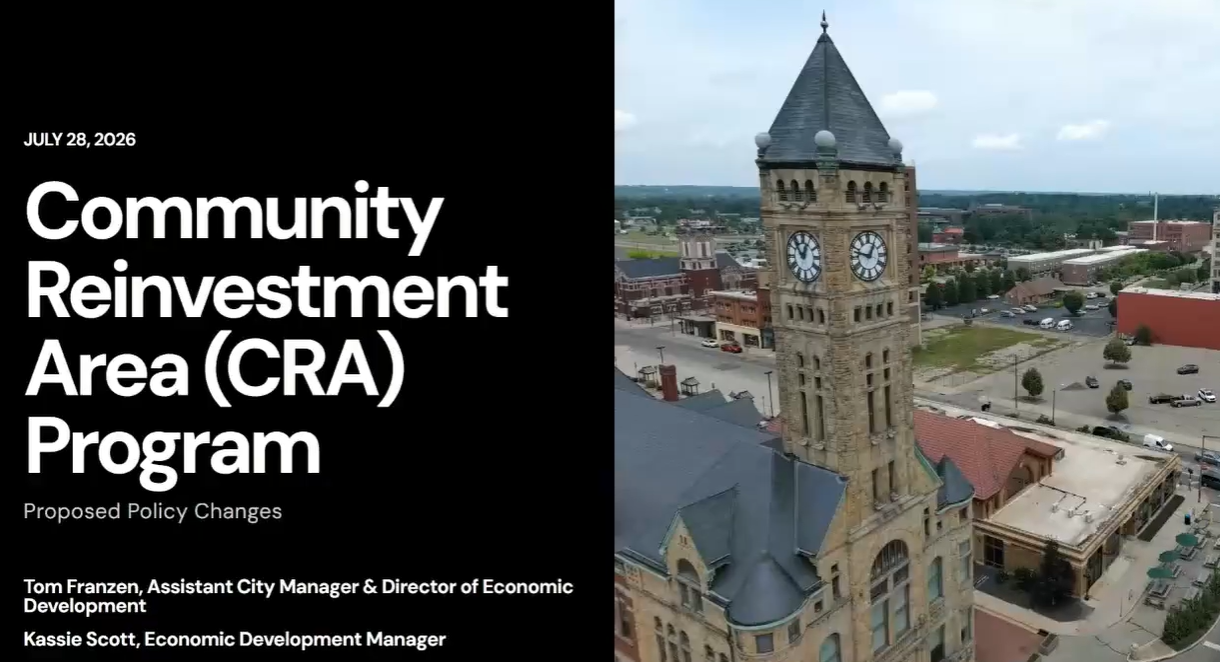
Rather than allowing the labor market to naturally correct through increased domestic wages, the city commission is instead choosing to subsidize corporate bottom lines. The proposed expansion would grant property owners a 100% tax abatement on property restorations for 15 years, matching the incentives already given to new commercial builds.
The strategy, however, relies on volatile economic assumptions that could easily backfire, leaving Springfield taxpayers to absorb the bill. While the city's income tax revenue stream has completely flatlined, the demand for municipal services has dramatically intensified.
The primary risk stems from an imbalance in population and public infrastructure. While federal changes to Temporary Protective Status (TPS) are expected to disrupt the local labor pipeline, economic analysts note that a significant portion of Springfield’s estimated 20,000 Haitian residents will remain in the city due to deep-rooted community ties, familial integration, and ongoing legal status adjustments, despite social media teases from political pundits and poor attempts at garnering support among federal initatives that are increasingly focused on foreign entaglements over domestic priorities.
Consequently, the city’s infrastructural burden will not drop. Municipal services—ranging from the Springfield Police Division to emergency medical response and localized unhoused shelters—are already operating at peak capacity.
During the public comment period, frustrated constituents repeatedly lambasted the commission for prioritizing corporate balance sheets over crumbling local resources. Residents pointed to a visible rise in local poverty, a lack of affordable housing, and unresolved environmental concerns regarding rapid industrialization.
By locking in 15-year tax abatements citywide, the government is effectively freezing its ability to collect new property tax revenues from future structural improvements. If the gamble fails to attract fresh, high-revenue commercial enterprises, Springfield faces a catastrophic fiscal scenario: a permanently flatlined income tax base paired with a artificially depressed property tax revenue stream.
"This program has strayed from what its original intention was," warned Commissioner Larry Ricketts, a former developer who voiced deep skepticism over the citywide expansion.
Ricketts argued that by spreading tax write-offs "evenly like peanut butter" across the entire municipal map, the city is needlessly leaving guaranteed future tax money on the table for projects that may have developed organically.
The administration has attempted to downplay the structural risks. Economic Development Manager Cassie Scott emphasized that the policy will undergo annual reviews, which would theoretically allow the city to scale back the subsidies if the market shifts. Furthermore, the city plans to introduce new administrative fees to prevent the program from becoming a direct administrative drain on the general fund.
But for a city whose public utilities and emergency response networks are already under a microscope, an annual review may offer too little protection, too late. If structural labor shortages cause ongoing projects to stall mid-construction, the city will be left holding the bag for expanded infrastructure networks with no new tax base to maintain them.
As federal immigration shifts alter the landscape of America's rust-belt manufacturing towns, Springfield's choice to aggressively cushion corporate margins through localized tax starvation stands as a risky municipal experiment. If new businesses fail to pop up and generate immediate economic velocity, the city’s play for cheap labor insulation may ultimately ensure its fiscal insolvency.
In the regular session, public discourse briefly turned towards demands for suspension of the use of Flock cameras within the city. During the formal first readings, the commission reviewed the renewal of a $114,000 services agreement with Flock Group Incorporated for the city’s automatic license plate reader (ALPR) camera system.
In response to past community and commissioner concerns, Police Chief Allison Elliott argued again that the technological capabilities of the system, noting that the cameras take snapshots of vehicle license plates and identifying rear vehicle information but do not gather data identifying the drivers themselves. Despite repeated statements from LEO's across the country, this information has been habitually disproven. Information collected by the cameras track movement of registered vehicles, with registration tied directly to individuals, sometimes incorrectly associating with the wrong individuals resulting in life-threatening encounters or wrongful arrests and charges. The devices provide blanket tracking and surveillance of any and all citizens that cross their path.
The main reason why LEO's have habitually repeated this line despite its inaccuracies is because of two landmark Supreme court cases, namely Carpenter v. United States (2018) ruling and its massive expansion in Chatrie v. United States (2026). In these cases the Supreme Court ruled that law enforcement conducts a Fourth Amendment "search" whenever it accesses historical digital location data, making utilization of these devices unconstitutional based on the fourth amendment, should they be utilized without a warrant. If a city installs enough Flock cameras to seamlessly reconstruct a citizen's entire daily routine, it crosses the line into the "retrospective, absolute surveillance" that the Supreme Court has explicitly deemed unconstitutional without a warrant.
Chief Elliott attempted to address public accountability concerns by announcing the active development of a public-facing "Flock accountability portal" provided by the company to openly track local agency usage data, while emphasizing that officers face strict departmental discipline or criminal charges for non-legitimate use. Though this does not address the issue many critics have of the technology, namely its accessibiltiy by foreign nations or anyone tech savy enough to walk up to the camera and push a button.
Youtuber Ben Jordon has previously demonstrated that by pressing a physical button on the back of the camera in a specific sequence, the device generated an unencrypted wireless access point (Wi-Fi hotspot). Connecting to this hotspot allowed researchers to use the Android Debug Bridge (ADB) to gain root shell control over the system. The physical tear-down revealed the hardware was running Android 8, an operating system that stopped receiving security patches from Google years prior. The hardware featured completely unshielded USB ports. This allowed anyone to plug in a malicious USB scripting device (like a Rubber Ducky) to execute automated commands.
Seperately, researchers utilized Shodan, an Internet of Things (IoT) search engine, to find Flock Safety cameras that were openly exposed to the web. They identified dozens of Flock "Condor" cameras streaming live video feeds onto the public internet without requiring a password. Through these open web interfaces, outsiders could not only view the live streams but also download up to 30 days of archived police footage, alter administrative settings, and even delete data from the system.
Chief Elliot has not addressed these concerns.